
"Here's Johnny" on a Portable Toilet: Carson and the Catchphrase as Identity
The Sixth Circuit held that a celebrity's signature catchphrase can be appropriated even when his name and likeness are never used.
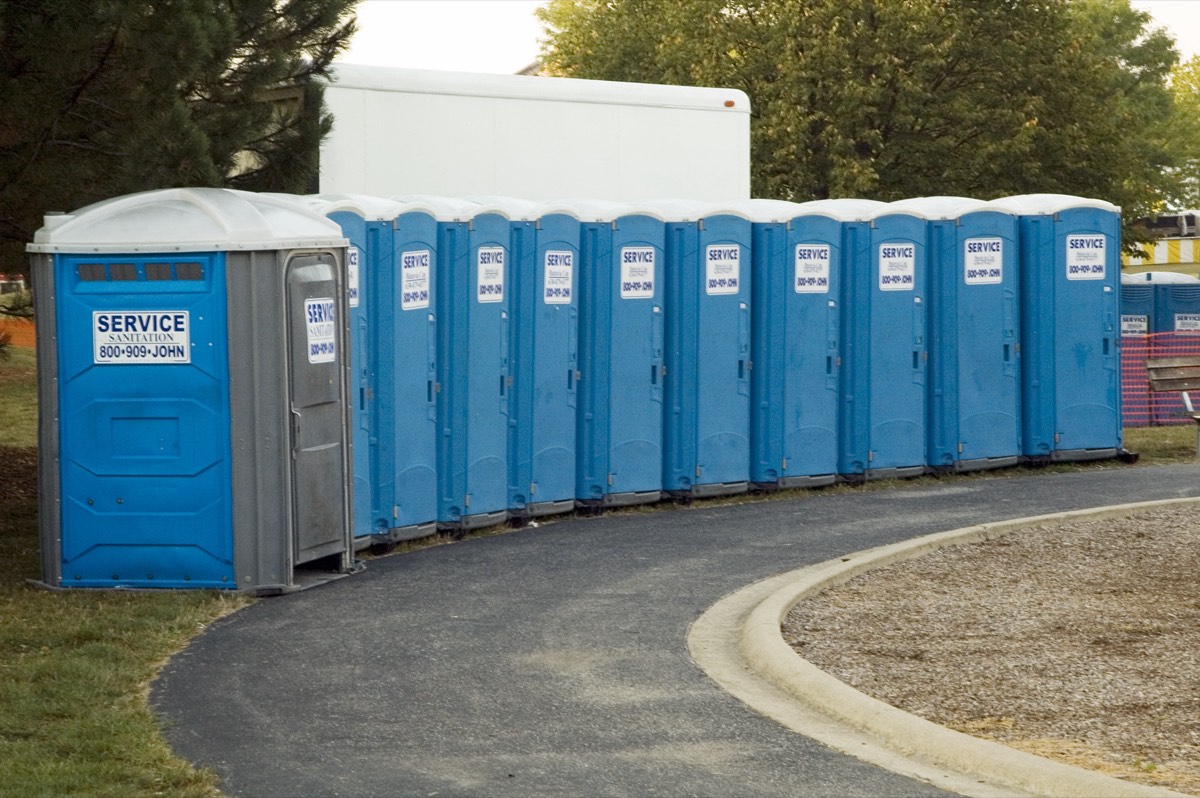
In Carson v. Here’s Johnny Portable Toilets, Inc., No. 80-1720 (6th Cir.), decided February 1, 1983, the United States Court of Appeals for the Sixth Circuit took one of the strangest fact patterns in the publicity canon and used it to settle a serious doctrinal point: a celebrity’s identity can be appropriated through a phrase the public associates with him, even when the defendant never touches his name, face, or voice. Johnny Carson hosted NBC’s Tonight Show, where for decades he was introduced each night by Ed McMahon’s drawn-out announcement, “Here’s Johnny.” A Michigan entrepreneur, Earl Braxton, founded a company that rented and sold portable toilets under the name “Here’s Johnny Portable Toilets,” coupling the phrase with the slogan “The World’s Foremost Commodian,” a pun trading openly on the connection to the comedian. Carson sued. The district court ruled for the defendant on every theory. The Sixth Circuit (Bailey Brown, Senior Circuit Judge, writing, joined by Senior Circuit Judge Swygert; Kennedy, J., dissenting in part) affirmed on unfair competition but held that the right of publicity protects a celebrity’s identity broadly and that Braxton had invaded Carson’s right by appropriating the phrase that identified him. It vacated the judgment and remanded.
At a glance
- Case: Carson v. Here’s Johnny Portable Toilets, Inc., No. 80-1720 (6th Cir.), decided February 1, 1983; reported at 698 F.2d 831.
- Posture: Appeal from a judgment for the defendant after a bench trial in the Eastern District of Michigan, Carson v. Here’s Johnny Portable Toilets, Inc., 498 F. Supp. 71 (E.D. Mich. 1980), which dismissed the complaint. The Sixth Circuit vacated the judgment and remanded.
- Theories pleaded: unfair competition under section 43(a) of the Lanham Act and Michigan common law; trademark infringement under federal and state law; and invasion of the rights of privacy and publicity.
- Holding on publicity: The district court’s conception of the right was too narrow; the right protects against appropriation of a celebrity’s identity, and a phrase associated with the celebrity can do that even absent name or likeness. On the correct standard, Carson was entitled to judgment.
- Holding on unfair competition: Affirmed. Carson did not establish a likelihood of confusion sufficient for the Lanham Act and common-law unfair-competition theories.
- Privacy: The panel said the facts did not appear to invade any interest protected by the right of privacy, but expressly declined to accept or reject that claim because the publicity holding made it unnecessary.
- Dissent: Judge Cornelia Kennedy would have confined the right to a celebrity’s “name, likeness, achievements, identifying characteristics or actual performances,” and warned that extending it to phrases merely associated with a person would sweep too broadly.
A right that protects the person, not the label
The case turned on how widely the right of publicity reaches. Michigan law governed, and it had not yet clearly addressed the right of publicity; the panel predicted in a footnote that Michigan courts would adopt it, noting that Michigan already recognized a right of privacy. The district court had read that right to cover only the appropriation of a celebrity’s “name or likeness.” Braxton had used neither: the toilets did not say “Johnny Carson,” carry his photograph, or mimic his voice. On that narrow view, there was no appropriation.
The Sixth Circuit rejected the premise. The right of publicity, it held, is not a list of forbidden signifiers but a protection of the person behind them. The relevant question is whether the defendant has appropriated the plaintiff’s identity, and “identity” can be evoked by signals other than name and face. The phrase “Here’s Johnny,” the court found, was so firmly linked to Carson in the mind of a substantial segment of the viewing public that to invoke it commercially was to invoke him. Braxton conceded as much: he chose the phrase precisely because of its Carson association, and the “Commodian” slogan removed any doubt about whose celebrity he was harnessing. Having taken the value that flowed from Carson’s fame, Braxton could not escape liability merely because he had been clever enough to avoid the obvious identifiers.
Why the unfair-competition claims failed
It matters that Carson’s other theories failed. The panel affirmed dismissal of his Lanham Act and common-law unfair-competition claims because those theories require a likelihood of consumer confusion about source, sponsorship, or endorsement. The district court had found, and the appellate court accepted, that consumers were unlikely to believe Carson sponsored or was connected to a portable-toilet business. The privacy theory went nowhere either, though the panel stopped short of ruling on it: it said the facts did not appear to invade any interest the right of privacy protects, then held that its publicity ruling made it unnecessary to accept or reject the claim. What survived was the distinctly different publicity claim. That distinction is the doctrinal payoff of the case.
Unfair competition asks whether the public is deceived. The right of publicity asks whether the defendant has helped itself to the commercial magnetism of a famous identity, deception or not. Carson did not need to prove that anyone thought he endorsed the toilets; he needed to prove that the defendant had cashed in on his persona. The phrase did exactly that. By separating the two inquiries, the Sixth Circuit clarified that publicity liability does not depend on confusion, a point that distinguishes it from trademark-style theories and gives it independent force.
The catchphrase as appropriable property
Carson is the leading authority for the proposition that a catchphrase can be the vehicle of misappropriation. The court placed the phrase alongside other non-name, non-likeness identifiers that earlier courts had protected (a distinctive race car in Motschenbacher v. R.J. Reynolds Tobacco Co., a nickname in Hirsch v. S.C. Johnson & Son, Inc., and a drawing of a boxer captioned “Mystery Man” but identified in an accompanying verse as “The Greatest” in Ali v. Playgirl, Inc.) and treated the underlying principle as constant. The protected subject matter is recognition value. If the public uses a particular cue to call a specific celebrity to mind, an advertiser who deploys that cue to sell goods has appropriated something that belongs, in commercial terms, to the celebrity.
The court located the limit in identification rather than in the words themselves. Its test was whether a celebrity’s identity had been intentionally appropriated for commercial purposes, and it made the point with a striking illustration: a “J. William Carson Portable Toilet” or a “J.W. Carson Portable Toilet” would have used Carson’s literal name and yet, the panel said, would not have invaded his right, because it would not have appropriated his identity as a celebrity. The phrase mattered because it summoned the man, not because it was distinctive as language. That framing suggests where the boundary sits: the right attaches to cues that genuinely identify a particular person, not to every expression a celebrity happens to have used.
Judge Kennedy’s partial dissent pressed on exactly this limit. She would have confined the right to a person’s name, likeness, achievements, identifying characteristics, or actual performances, and kept it away from phrases “merely associated” with the individual. Her objection was about authorship as much as breadth: “Here’s Johnny” was not created by Carson and was not even said by him, she wrote, but said of him, generally by Ed McMahon, so protecting it handed Carson a windfall for the work of others. A rule keyed to association alone, she warned, would remove common words from the public domain, create a common-law monopoly with no notice requirement and no fixed duration, and chill commercial innovation. Her concern anticipated the central anxiety of modern misappropriation law: a doctrine defined by what brings a celebrity to mind has no natural stopping point.
Open questions
- How strong must the association be? The panel relied on a stipulation that the public associates the phrase with Carson and on Braxton’s admission that he picked it for that reason, but it offered no test for how widely or strongly a public must connect a phrase to a person before it becomes appropriable.
- Must the celebrity have created or performed the thing taken? Judge Kennedy would have asked whether “Here’s Johnny” was the product of Carson’s own talents and energy. The majority did not require it, resting instead on intentional appropriation of identity, which leaves the role of the plaintiff’s own contribution unsettled.
- Where is the line for expressive or parodic uses? The defendant’s slogan was a joke, yet liability attached. Carson predates the modern transformative-use and First Amendment frameworks that later courts use to protect commentary and humor.
- Does the principle extend beyond entertainers? The recognition-value theory presumes a famous persona whose cues the public has learned. Its application to ordinary individuals, or to phrases with multiple associations, remains uncertain.
Implications
- Catchphrases are appropriable identity. A signature phrase tied to a single performer can support a right-of-publicity claim even when name, likeness, and voice are absent.
- Publicity is not confusion. The claim survived even though the unfair-competition theories failed; a plaintiff need not show consumers were deceived about endorsement.
- Avoiding the obvious identifiers is not a safe harbor. Designing a campaign to evoke a star while omitting his name and face does not defeat liability if the chosen cue identifies him.
- Identity, not the words, is the protected thing. The panel said even Carson’s literal name on a portable toilet would not have violated the right if it failed to appropriate his identity as a celebrity, which is what both supports and bounds the holding.
- The boundary problem was present at the creation. Judge Kennedy’s dissent framed the overbreadth worry that still dominates disputes over evoked personas, sound-alikes, and digital replicas.
Frequently asked questions
Did the toilet company use Johnny Carson’s name or picture? No. It used neither his legal name nor his photograph nor his voice. It used the phrase “Here’s Johnny,” with which Ed McMahon introduced Carson on the Tonight Show, plus a punning slogan. The Sixth Circuit held that appropriating that phrase appropriated Carson’s identity for purposes of the right of publicity.
Why did Carson win on publicity but lose his unfair-competition claims? The Lanham Act and unfair-competition theories require a likelihood of consumer confusion about sponsorship or endorsement, which the courts found absent for a portable-toilet business. The right of publicity is different: it protects the commercial value of identity regardless of whether consumers are confused, so it could succeed where the confusion-based claims could not.
Is Carson still cited today? Yes. It remains a foundational authority for the rule that non-name, non-likeness identifiers (including catchphrases) can be the subject of misappropriation, and it is frequently paired with later identity-appropriation cases that wrestle with how far the principle should extend.
Authorities and sources
- Carson v. Here’s Johnny Portable Toilets, Inc., No. 80-1720 (6th Cir. Feb. 1, 1983), reporter text: https://law.resource.org/pub/us/case/reporter/F2/698/698.F2d.831.80-1720.html
- Carson v. Here’s Johnny Portable Toilets, Inc., 810 F.2d 104 (6th Cir. 1987) (second appeal, after remand: nationwide injunction and profits award affirmed): https://law.resource.org/pub/us/case/reporter/F2/810/810.F2d.104.85-1447.html
- Casebriefs summary, Carson v. Here’s Johnny Portable Toilets, Inc.: https://www.casebriefs.com/blog/law/torts/torts-keyed-to-twerski/defamation-and-right-to-privacy/carson-v-heres-johnny-portable-toilets-inc/
- Quimbee case brief, Carson v. Here’s Johnny Portable Toilets, Inc., 698 F.2d 831 (6th Cir. 1983): https://www.quimbee.com/cases/carson-v-here-s-johnny-portable-toilets-inc