Name, Image & Likeness
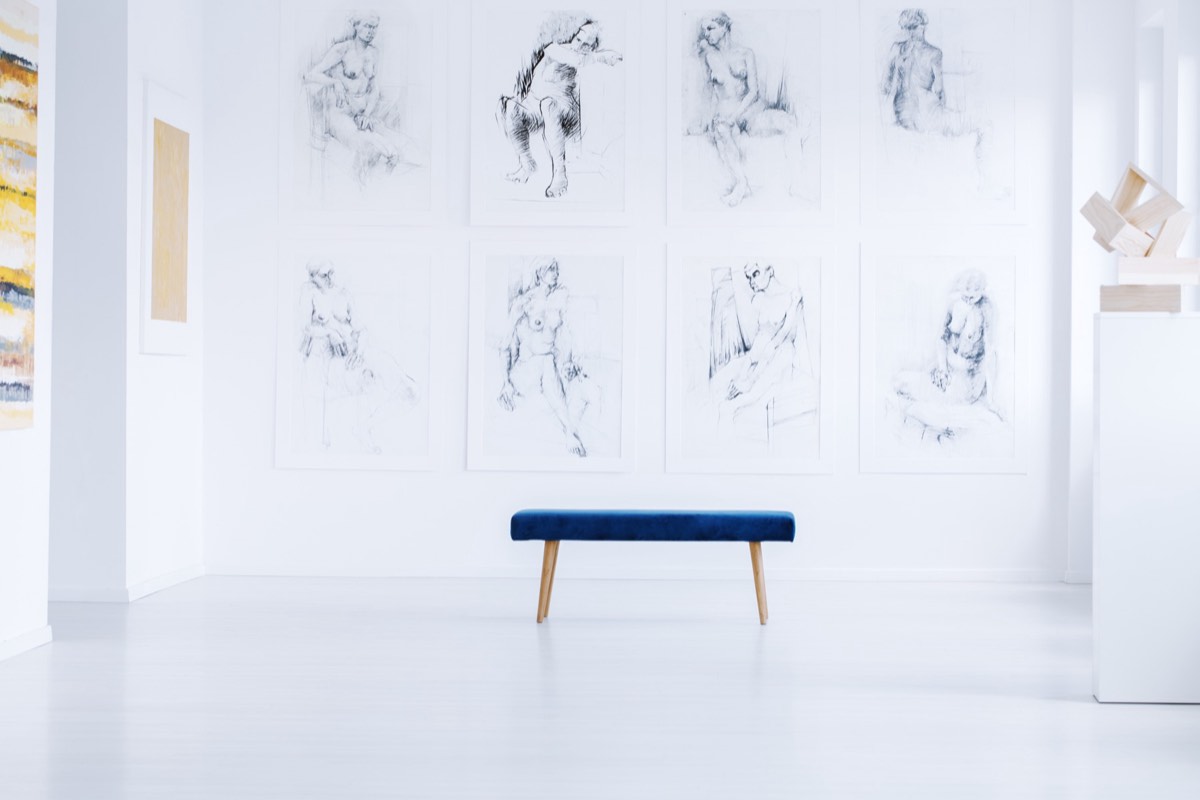
Ali v. Playgirl: A Drawing Can Be a Likeness
A federal court enjoined a nude drawing recognizable as Muhammad Ali, holding New York's statute reaches any portrait, not just photographs.
July 11, 2026

Name, image, likeness, and voice. The state-law right of publicity at the frontier of generative artificial intelligence.
A federal court enjoined a nude drawing recognizable as Muhammad Ali, holding New York's statute reaches any portrait, not just photographs.
The Ninth Circuit held Fred Astaire clips in a dance-lesson video fell within California section 990's film exemption, a ruling that triggered the Astaire Act.
The Ninth Circuit revived surfers' misappropriation claims over a catalog photo, holding a likeness is not preempted by copyright in the image.
The N.D. Cal. refused to dismiss section 3344 claims over Facebook's Sponsored Stories, holding ordinary users plausibly alleged their endorsements had value.
The Second Circuit held the law of a celebrity's domicile at death governs descendibility, and under then-current California law the Marx estates had no claim.
The Ninth Circuit refused to hold a Paris Hilton birthday card transformative as a matter of law, letting her 'That's hot' publicity claim proceed.
A federal court approved a novel settlement giving the class a 23% equity stake in Clearview AI over its scraping of billions of face images. The Seventh Circuit vacated it in July 2026.
The Ninth Circuit held that a right-of-publicity claim over a licensed vocal sample was preempted by the Copyright Act, drawing the line at imitation.
The Fifth Circuit held Texas misappropriation law protects name and likeness but not a person's life story, defeating an ex-officer's claim over the novel Rush.
The Ninth Circuit held a race car's distinctive markings could identify its driver, extending misappropriation past name and face to any evocative indicia.
The Ninth Circuit revived Don Newcombe's misappropriation claim, holding a beer-ad drawing of a distinctive windup could be readily identifiable as him.
A federal court enjoined the NCAA's transfer sit-out rule as a Sherman Act restraint, then a consent decree permanently ended it in 2024.
The Second Circuit held Astrud Gilberto had no Lanham Act mark in her famous 'Girl from Ipanema' recording, channeling the grievance to publicity law.
A federal court enjoined the NCAA's JUCO eligibility rule for Diego Pavia, treating lost NIL income as the competitive injury under the Sherman Act.
The Tennessee Court of Appeals held the right of publicity is descendible common-law property, making Tennessee the epicenter of post-mortem rights.
The S.D.N.Y. held New York's privacy statute is not intellectual property, so Section 230 shielded retailers, while a model's claim against the brand survived.
The California Court of Appeal held Rick Ross's use of a drug kingpin's name and persona was transformative, First Amendment-protected art.
The court held Marilyn Monroe could not devise a post-mortem publicity right through her will because no such right existed at her 1962 death.
New York's high court held a model's photo in a consumer fashion column was newsworthy, not trade use, and that sections 50 and 51 are the exclusive remedy.
A Georgia court granted OpenAI summary judgment over a ChatGPT hallucination, holding no reasonable reader would take the fabricated output as fact.
When a beer ad hired Fat Boys imitators, a New York court let the look-alike, copyright, and Lanham Act claims proceed but held that copying a distinctive voice did not, by itself, violate the state privacy statute as it then read. The legislature added voice in 1995.
New York's highest court refused to recognize a common-law right of privacy after a young woman's photo was used on flour ads, prompting the legislature to enact one within a year.
In 1905 Georgia's high court became the first in the nation to recognize a common-law right of privacy, after an insurer used an artist's photo in a fabricated advertisement.
A federal court held that New Jersey's common-law post-mortem right of publicity lasts no more than 50 years, so Albert Einstein's rights had expired before GM ran its 2009 ad.
A federal court let voice actors' right-of-publicity and contract claims against an AI voice-cloning company proceed while dismissing their copyright theories. The decision maps the legal terrain for performers facing synthetic replicas of their voices.
The Sixth Circuit held that college athletes have no right of publicity in the televised broadcasts of their own games, calling the claim a legal fantasy under Tennessee law.
The Ninth Circuit held that British law, not California's, governed Princess Diana's post-mortem publicity claim, and because Britain recognizes no such right, the estate's claim failed.
A jury rejected a $5 million right-of-publicity and false-light suit over Cardi B's 2016 mixtape cover, which photoshopped a man's distinctive back tattoo onto a model.
Missouri's high court let NHL enforcer Tony Twist sue Spawn creator Todd McFarlane, adopting a 'predominant purpose' test to balance the right of publicity against free speech.
The Sixth Circuit held that an artist's print of Tiger Woods's 1997 Masters win was transformative First Amendment speech, defeating both Lanham Act and right-of-publicity claims.
Judge Jerome Frank coined the phrase 'right of publicity' in a 1953 fight over baseball-card photos, recognizing a transferable property interest in one's own image.
The Eighth Circuit held that the Copyright Act preempts retired players' right-of-publicity claims over NFL Films productions, treating the historical highlight reels as expressive speech rather than ads.
A federal court blocked the NCAA from enforcing its ban on name-image-likeness deals during recruiting, finding the rule a likely antitrust violation that suppressed athletes' compensation.
George Carlin's estate sued the makers of an AI-generated comedy special impersonating him, and the case ended in a consent judgment and permanent injunction barring the fake from ever resurfacing.
The Third Circuit held that EA's photorealistic use of a college quarterback's avatar in NCAA Football was not transformative enough to defeat his right of publicity, adopting the transformative-use test as the circuit's framework for likeness-in-media disputes.
The Ninth Circuit held that deliberately imitating a widely known singer's distinctive voice to sell a product is a California tort, even though a voice itself is not copyrightable.
Experience Hendrix v. HendrixLicensing.com upheld Washington's post-mortem publicity statute as applied to a New York-domiciled rock legend, exposing how a fractured state-law patchwork now governs the dead.
How California's appellate court used the First Amendment to dismiss Olivia de Havilland's publicity and false-light suit over the 'Feud' docudrama.
The Ninth Circuit held that a game-show robot could appropriate Vanna White's identity, untethering the right of publicity from name and likeness.
Judge Wilken's final approval of the $2.8 billion House settlement converts decades of amateurism doctrine into a licensed, revenue-shared market for athlete name, image, and likeness.
The Second Circuit revived right-of-publicity claims by professional models whose photographs were lifted to advertise strip clubs online, holding that a release signed for one purpose is not consent against the world.
The Seventh Circuit's Toney decision holds that the Copyright Act does not preempt an Illinois Right of Publicity Act claim, anchoring the rule that a persona is neither fixed nor authored.
The Ninth Circuit held that Marilyn Monroe's estate, having sworn for forty years that she died a New Yorker to dodge California estate tax, was judicially estopped from claiming California domicile to capture a posthumous right of publicity worth millions.
A Southern District of New York court held that imitating an actress's famous voice (without using her name or likeness) was not unfair competition, defamation, or a Lanham Act violation.
The Third Circuit held that Section 230 does not immunize platforms from state right-of-publicity claims, splitting from the Ninth Circuit on the law's intellectual-property carve-out.
Georgia's Supreme Court held that Dr. King's right of publicity survived his death and was inheritable even though he never licensed his identity for profit, uncoupling descendibility from lifetime commercial exploitation and reshaping what a non-commercial figure's estate can protect.
California's two 2024 digital-replica laws take different routes. One voids consent-by-contract for living performers; the other extends the post-mortem right of publicity to AI replicas of the deceased. Together they reset the rules for Hollywood.
The Ninth Circuit held that former NCAA players' publicity claims over an online photo-licensing service were preempted by copyright, because the suit attacked control of the photographs themselves rather than use of the players' identities on merchandise or in ads.
The Seventh Circuit held that a supermarket's tribute ad to Michael Jordan was commercial speech, stripping it of full First Amendment protection and reviving his publicity claims.
A California appellate court held that Band Hero's exact avatars of No Doubt were literal reproductions, not transformative use, so the band's right-of-publicity claim could proceed.
The Ninth Circuit held that a celebrity's discarded birth name remains part of his identity, reviving claims over an Oldsmobile commercial.
A soldier who said The Hurt Locker was built on his life lost to the First Amendment, which protects storytellers who transform real people into art on matters of public concern.
The Eighth Circuit held that a fantasy-sports operator's use of player names and statistics was protected by the First Amendment, overriding the players' right of publicity.
The Third Circuit refused to treat amateurism as a bar to wage claims, adopting an economic-realities test that could make some college athletes employees entitled to pay under the Fair Labor Standards Act.
California's Supreme Court held that comic-book villains loosely based on musicians Johnny and Edgar Winter were transformative expression protected by the First Amendment.
The Ninth Circuit held that EA's unlicensed use of thousands of former NFL players on Madden's historic teams was central, not incidental, and that Keller foreclosed EA's transformative-use, public-interest, and Rogers defenses.
The Tenth Circuit held that Cardtoons' parody baseball cards were protected First Amendment commentary that outweighed the players' union's Oklahoma right of publicity.
New York's highest court held that even a video-game character built from a reality star's biography is not actionable when the avatar is not recognizable as her.
The California Supreme Court's 1979 companion to Lugosi denied a descendible right of publicity, but Chief Justice Bird's concurrence on fictionalized portrayals of the dead became enduringly influential.
A California appellate court held that models' statutory right-of-publicity claims under Civil Code § 3344 are not preempted by federal copyright, because a human likeness is not copyrightable even when captured in a copyrighted image.
The Ninth Circuit held that Nancy Sinatra could not stop a tire company from using sound-alike singers on a song it had lawfully licensed, because federal copyright policy preempted her state passing-off claim.
Tennessee's 2024 ELVIS Act was the first U.S. law written for AI voice cloning: it made voice an express attribute of Tennessee's right of publicity and reached the tools that clone it. It is a statute, not a court ruling, and a template other states are now copying.
The Supreme Court unanimously held that NCAA limits on education-related benefits violate the Sherman Act, and Justice Kavanaugh's concurrence signaled that the broader amateurism model was living on borrowed time.
A New Jersey court held that Elvis Presley's right of publicity descended to his estate and barred impersonator merchandise and confusing marketing, but declined to shut down the live 'Big El Show' itself because the estate never proved an identifiable economic loss from the performance.
The Ninth Circuit let two Cheers actors take their right-of-publicity claim to trial over airport-bar robots evoking their characters.
Why the Sixth Circuit held in 1980 that Elvis Presley's right of publicity died with him and passed into the public domain, an Erie prediction Tennessee would later reject.
The Ninth Circuit held that a Hall of Famer's Lanham Act false-endorsement claim over his avatar in Madden NFL was governed by the Rogers artistic-relevance test (and lost) even as a right-of-publicity claim on similar facts survived.
California's Supreme Court borrowed copyright's transformation idea to decide when celebrity art is protected speech, and held that literal Three Stooges drawings are not.
The Ninth Circuit reversed a $3 million judgment for Dustin Hoffman, holding that a digitally altered photograph in an editorial fashion feature was protected speech, not a commercial appropriation of his likeness.
Long before the right of publicity protected a voice, the First Circuit held that imitating a famous comedian's distinctive vocal style to sell a product could state a claim for unfair competition.
The Ninth Circuit let a Big Brother contestant's putative class action over the Reface deepfake app proceed, rejecting both a copyright-preemption defense and a transformative-use shield at the pleading stage.
On materially identical facts to Hart, the Ninth Circuit held that EA's photorealistic depiction of college football players in NCAA Football flunked California's transformative-use test and enjoyed no First Amendment shield.
The Ninth Circuit held that NCAA rules barring athletes from sharing in the commercial use of their own names, images, and likenesses violated antitrust law, but capped the remedy at the cost of attendance.
New York's highest court held that a video-game avatar can be a 'portrait' under the right of publicity, but only if the public can actually recognize the plaintiff in it.
When a TV station aired a human cannonball's entire fifteen-second performance, the Supreme Court held the First Amendment does not immunize broadcasting a performer's complete act.
The Sixth Circuit held that a celebrity's signature catchphrase can be appropriated even when his name and likeness are never used.
The Second Circuit first upheld, then withdrew, an exclusive licensee's power to enforce Elvis Presley's posthumous identity: a whiplash that exposed how fragile a celebrity-estate license is when the underlying right depends on an unsettled state law.
How the California Supreme Court held in 1979 that the right of publicity is personal, dies with its owner, and is not descendible to heirs, prompting the statute that overturned it.