
American Rice v. Arkansas Rice Growers: The Lanham Act Reaches Sales in Saudi Arabia
The Fifth Circuit applied the Lanham Act to a U.S. cooperative's rice branding sold only in Saudi Arabia, an effects-based reach now narrowed by Abitron.
Registration, infringement, and remedies under the Lanham Act, plus the constitutional limits on what the government may refuse to register.
The Fifth Circuit applied the Lanham Act to a U.S. cooperative's rice branding sold only in Saudi Arabia, an effects-based reach now narrowed by Abitron.
The Ninth Circuit holds trademark counterfeiting requires likelihood of confusion, with no presumption from identical EYE DEW marks on dissimilar products.
The Ninth Circuit shielded a noncommercial gripe site from infringement and dilution claims but held that ACPA cybersquatting requires no commercial use.
The Seventh Circuit froze a good-faith Illinois junior user inside a 20-mile Mattoon enclave and gave the federal registrant the rest of the state.
The Second Circuit holds that a literally false ad can be enjoined without proof of consumer deception, a template for competitor false-advertising suits.
The Ninth Circuit held that verb use of google does not prove genericide because primary significance to consumers, not grammar, controls under the Lanham Act.
The Ninth Circuit extended Rogers v. Grimaldi to video games: GTA's Pig Pen strip club beat the Play Pen's Lanham Act claims with artistic relevance above zero.
The Third Circuit held Pocky's snack-stick design functional and unprotectable as trade dress, reading functional to mean useful rather than essential.
The Ninth Circuit held a nonprofit abandoned its FREECYCLE marks through naked licensing, having kept no contractual or actual control over its member groups.
The Ninth Circuit held that ACPA registration means initial registration only, so transferring a domain that predates the mark is not cybersquatting.
In re E.I. du Pont, 476 F.2d 1357 (CCPA 1973), built the thirteen-factor confusion test that still governs every Section 2(d) refusal and TTAB dispute.

The Federal Circuit holds the Paris Convention is not self-executing and Section 44 foreign-registration filings must satisfy the Lanham Act's Section 2 bars.
The Federal Circuit held a webpage lacking price and ordering information is mere advertising, not a point-of-sale display showing use in commerce.
The Federal Circuit affirmed refusal of .SUCKS because consumers see a gTLD, not a brand: the leading appellate word on failure to function as a mark.
The 1918 Supreme Court decision that treated fresh news as quasi property between competitors and founded the misappropriation branch of unfair competition.
The Ninth Circuit revived a small developer's SmartSync claim, holding a jury could find reverse confusion when a giant junior user swamps a senior mark.
The Fifth Circuit held a franchisor's approved-source rule was not a tie because franchisees never had to buy from KFC, and found infringement where mark use was part of a scheme to mislead franchisees.
The Federal Circuit held a single Tennessee restaurant serving interstate travelers satisfies the Lanham Act's use in commerce requirement for registration.
The D.C. Circuit held Lanham Act section 42 bars gray market imports that are physically and materially different from U.S. goods, even affiliate-made ones.
The Ninth Circuit holds a Madrid Protocol extension confers nationwide priority without U.S. use, but priority alone does not win an infringement suit.
The Third Circuit reads the TMA's presumption of irreparable harm as a bursting bubble: slight rebuttal evidence defeats it, and Nichino's injunction fails.
The Ninth Circuit holds FTDA fame must exist before the defendant's first arguably diluting use, moving the date to 1991 and unsettling Nissan's win.
The Federal Circuit affirmed cancellation of SCHIEDMAYER under Section 2(a) and held that TTAB judges are lawfully appointed after Arthrex.
The Ninth Circuit lets laches bar Lush's trademark infringement and cancellation claims, holding Petrella and SCA Hygiene do not reach the Lanham Act.
The Ninth Circuit reached counterfeit sales in Mexican border towns and upheld a pretrial asset freeze, a holding reshaped by Abitron in 2023.
In reviving oppositions to O.J. Simpson's marks, the Federal Circuit held any opposer with a real interest and a reasonable belief of damage may be heard.
The Ninth Circuit held that a junior user who knows of a senior user's mark cannot claim the remote good-faith defense, deepening a circuit split.
The Second Circuit affirms the Wavy Baby injunction, holding Jack Daniel's bars Rogers when a parody sneaker uses Vans' marks as source identifiers.
The Second Circuit held a strong arbitrary mark on related goods made confusion likely, ordering an injunction against VIRGIN WIRELESS phone stores.
Judge Kozinski held that eVISA likely dilutes the famous VISA mark, explaining how blurring erodes a brand even when it borrows an everyday word.
The Second Circuit held Wallace's baroque silverware elements aesthetically functional because protecting them would significantly hinder competition.
Zatarain's FISH-FRI appeal gave trademark law its four descriptiveness tests and confirmed that competitors' fair use survives secondary meaning.
The Supreme Court upheld the Lanham Act's bar on registering marks that use a living person's name without consent. The 9-0 result conceals a methodological fracture over whether history alone can resolve a First Amendment question.
A unanimous Supreme Court held that a trademark plaintiff awarded the 'defendant's profits' may recover only the named defendant's profits, not those of its non-party affiliates. The result is a $43 million award vacated and a lesson in how to plead.
The Supreme Court rejected a categorical rule that 'generic.com' terms are unregistrable, holding that consumer perception alone determines whether such a composite is generic, reshaping distinctiveness analysis for the domain-name economy.
A unanimous Supreme Court held that whether a later mark may 'tack' onto an earlier mark's priority date is a question for the jury, locating the decisive moment in a clearance dispute in the fact-finder's assessment of consumer perception.
The Federal Circuit affirmed a refusal to register CHESTEK LEGAL because the applicant used a P.O. box rather than a domicile address, and in doing so it treated the USPTO's domicile rule as a procedural rule exempt from notice-and-comment.
The Federal Circuit holds that a fraudulent Section 15 incontestability declaration cannot, by itself, justify cancellation of a trademark registration under Section 14.
The Ninth Circuit holds that a rushed, litigation-driven app launch is not the bona fide use in commerce the Lanham Act demands, and Apple gets the MEMOJI registration cancelled.
The Ninth Circuit reversed itself after Jack Daniel's, holding that Rogers cannot shield a name used as a source identifier and sending the dispute back for an ordinary likelihood-of-confusion analysis.
A Manhattan jury found that Mason Rothschild's MetaBirkins NFTs infringed and diluted the famous Birkin mark, and that the First Amendment did not save them. The case maps how dilution doctrine and Rogers v. Grimaldi apply to digital goods.
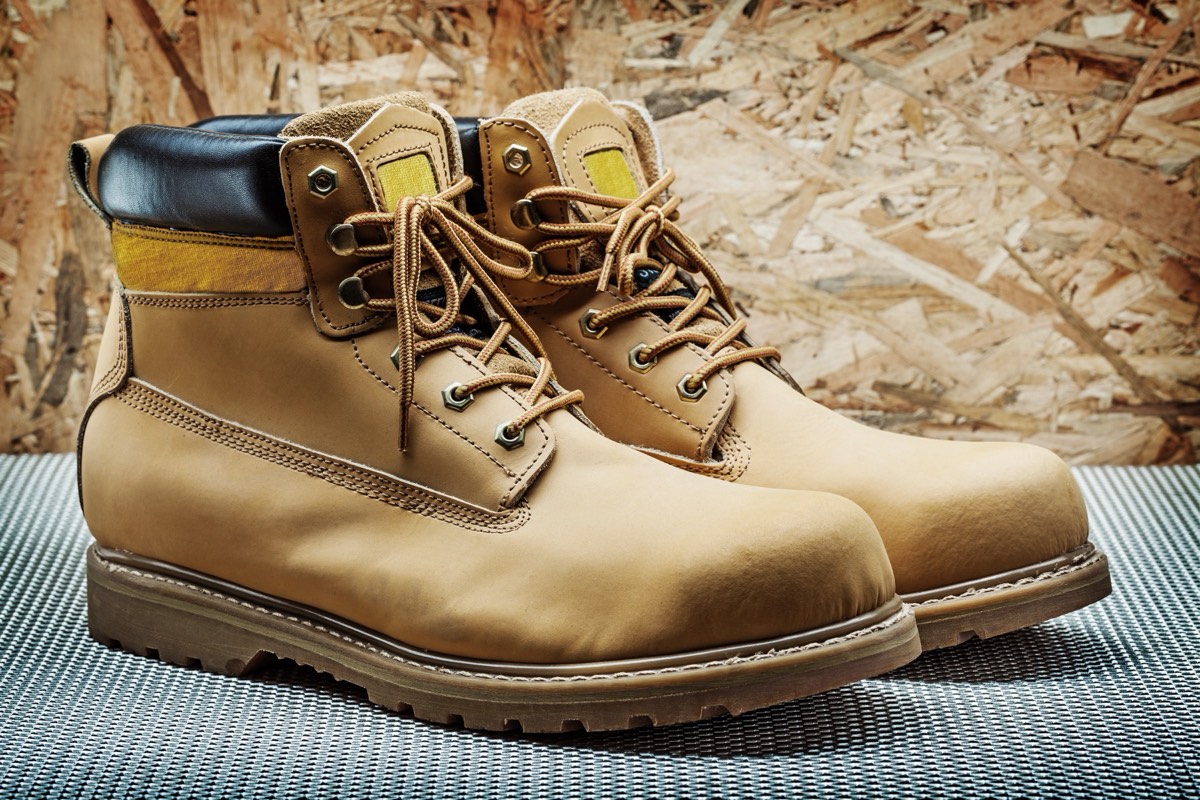
The Fourth Circuit refused to register the configuration of Timberland's iconic tan work boot, holding that Timberland's evidence proved the fame of the whole boot but not acquired distinctiveness in the discrete features it claimed.
The Fourth Circuit held that a domain 'registration' actionable under the Anticybersquatting Consumer Protection Act includes later re-registrations, then sustained in rem jurisdiction over PRU.COM and a bad-faith finding against its Chinese owner.
A New York jury found a luxury reseller liable for willful counterfeiting and false association over Chanel-branded bags, holding that even items that left a Chanel factory can be 'counterfeit' when they fail the brand's quality controls.
The Supreme Court held that a debtor-licensor's rejection of a trademark license in bankruptcy breaches the contract but does not strip the licensee of its right to keep using the mark.
The Supreme Court holds the Lanham Act's core infringement provisions reach only conduct where the infringing use in commerce is domestic, vacating a $96 million judgment.

The Fourth Circuit's FLANAX decision held that a Mexican trademark owner who never used its mark in U.S. commerce may nonetheless pursue Lanham Act unfair-competition and false-advertising claims, unsettling the conventional assumption that U.S. use is the price of admission.
The Federal Circuit held that a false claim that a product feature is 'patented' can support a Lanham Act false-advertising claim, provided it misleads consumers about the nature, characteristics, or qualities of the goods, not merely their authorship.
Two clothing makers picked the same TIME OUT mark within weeks. The Fifth Circuit held that only genuine, public use in trade, not token shipments, establishes trademark priority.
The Supreme Court held that the federal food-labeling statute does not preclude competitors from bringing Lanham Act false-advertising suits over food and beverage labels.
A divided Federal Circuit held that a petitioner can challenge a trademark registration without owning proprietary rights in its own mark, even after signing away those rights in a settlement.
The Federal Circuit held that the Supreme Court's Lexmark framework governs who may petition to cancel a trademark registration, while affirming default judgment as a sanction for bad-faith litigation.
The CCPA separated de facto from de jure functionality and gave trade-dress law its four-factor test for deciding when a product's design can be a trademark.
After years of litigation over the 'Auditor's' pen mark, the Ninth Circuit confirmed that an accounting of an infringer's profits is an equitable remedy, not an automatic award.
The Supreme Court held that an incontestable trademark cannot be defended against on the ground that it is merely descriptive, giving registration real teeth after five years.
When two companies used the Lapp name on non-competing electrical goods, the Third Circuit produced the ten-factor framework courts still use to gauge trademark confusion.
The Ninth Circuit held that forcing franchisees to buy supplies as the price of a trademark license was an unlawful tie, reshaping how franchisors police quality.
A divided Fourth Circuit held that a Monaco casino's U.S. advertising, paired with services rendered to American visitors abroad, was use in commerce supporting Lanham Act protection for the Casino de Monte Carlo mark.
The Supreme Court's 2023 ruling that the First Amendment Rogers test does not apply when a parody uses another's trademark as a source identifier for its own goods.
The Second Circuit's classic three-factor framework for the Lanham Act's reach abroad, refusing to apply U.S. trademark remedies against a Canadian retailer holding a valid Canadian mark.
The Ninth Circuit's answer to the original cybersquatter, holding that registering a famous mark as a domain name to sell it back to the owner was commercial use that diluted the mark under federal law.
How the Ninth Circuit imported initial interest confusion into web search, holding that a rival's domain name and hidden metatags could infringe a trademark even without point-of-sale confusion.
How the Supreme Court let Kellogg use the generic name and functional pillow shape of shredded wheat, anchoring the rule that expired patents and generic terms pass into the public domain.
How the Second Circuit let Toyota keep the LEXUS name and, in Judge Sweet's concurrence, gave trademark law its influential six-factor framework for analyzing dilution by blurring.
The Ninth Circuit's first ruling on the contributory trademark knowledge standard holds that willful blindness requires specific knowledge of infringers, and that counterfeiting needs no stitch-for-stitch copy.
How a fight over look-alike generic capsules gave trademark law its enduring 'induces or knowingly supplies' standard for holding suppliers liable for someone else's infringement.
How the Supreme Court protected a good-faith Louisville druggist against a senior 'Rex' user from Massachusetts, establishing that common-law trademark rights are territorial, not national.
After more than a decade of litigation, the Second Circuit held that even a famous mark cannot prove dilution by blurring without meaningful similarity and real evidence of association, affirming judgment for a tiny New Hampshire roaster.
The Ninth Circuit became the first court of appeals to declare squarely that trademark plaintiffs no longer enjoy a presumption of irreparable harm. They must prove it, like everyone else seeking an injunction.
The Fourth Circuit held that fallwell.com was neither infringing nor cybersquatting, because likelihood of confusion turns on the whole site and the ACPA targets profit-seeking, not criticism.
On rehearing, a divided Ninth Circuit held that a clearly labeled list of substitute products is not trademark infringement, narrowing initial-interest confusion for the era of online search.
The Supreme Court's unanimous 2000 decision held that a product's design can qualify as protectable trade dress only on proof of secondary meaning, and told courts to classify ambiguous cases as design, drawing the line that *Two Pesos* had left open.
The Federal Circuit held that the Cuban embargo did not strip a Cuban tobacco entity of its statutory cause of action to cancel General Cigar's COHIBA registrations.
A unanimous Supreme Court held that a trademark defendant asserting descriptive fair use bears no burden to disprove likelihood of confusion, which remains the plaintiff's to prove.
The Supreme Court held that repaired, resold spark plugs may keep the maker's trademark if plainly marked used or reconditioned, and denied an accounting of profits absent fraud.
The Supreme Court held that Coca-Cola's name had come to mean a single product from a single source, and rejected the claim that its history barred trademark relief.
The Second Circuit held that Google's sale and recommendation of trademarks as AdWords keyword triggers is a 'use in commerce' under the Lanham Act, reviving the suit.
The Second Circuit holds that Congress has not incorporated the famous-marks doctrine into the Lanham Act, then certifies the state-law question to New York's high court.
The Ninth Circuit adopted the Rogers test, protected a pop song that lampooned an American icon, and closed with one of the most quoted lines in trademark law: the parties are advised to chill.
The Fifth Circuit held that the SUGARBUSTERS service mark, bought from a diabetic-supply store and used for a diet book, was assigned in gross and invalid because the goodwill did not transfer with it.
The Federal Circuit's analogous-use decision held that promotional activity can establish trademark priority before sales, but only on proof that it reached a substantial portion of the relevant consuming public, not merely that the user intended an association.
The Ninth Circuit revived Trader Joe's claims against a Canadian reseller, holding that the Lanham Act's foreign reach is a question on the merits (not federal jurisdiction) and that buying and harming a brand inside the U.S. can supply the needed domestic nexus.
The Ninth Circuit recognized that imitating a celebrity's distinctive voice to imply sponsorship can be a false-endorsement violation of Section 43(a) of the Lanham Act.
The Supreme Court upheld Customs' common-control exception for gray-market imports while striking the authorized-use exception, defining when genuine foreign goods can be stopped at the U.S. border under the Tariff Act.
A unanimous Supreme Court held that Nike's broad, irrevocable covenant not to sue mooted a competitor's counterclaim attacking the validity of Nike's Air Force 1 trademark.
Learned Hand held that a trademark's validity turns on what buyers understand the word to mean. To consumers, "Aspirin" meant the drug itself, not Bayer.
A single in-state sale of two caps to an out-of-state buyer was enough use in commerce to defeat cancellation, as the Federal Circuit rejected a de minimis test for Lanham Act use.
The Supreme Court upheld the USOC's exclusive control of the word "Olympic" against a First Amendment challenge and held the committee is not a government actor.
A 6-3 Supreme Court held that the Lanham Act's bar on registering 'immoral or scandalous' marks is viewpoint discrimination that violates the First Amendment.
The Second Circuit saved Christian Louboutin's red-sole trademark from an aesthetic-functionality death sentence but narrowed it to soles that contrast with the rest of the shoe, leaving YSL's all-red shoe free to walk.
The Federal Circuit vacates a genericness refusal but affirms that a highly descriptive domain-name mark failed to prove the heightened acquired distinctiveness it needed under Section 2(f).
When a tire giant rolled out a 'Bigfoot' campaign over a small dealer's prior mark, the Tenth Circuit fashioned a remedy borrowed from the FTC (corrective advertising damages) and capped it at a fraction of the offending ad spend.
The Federal Circuit's golf-mark decision supplies the canonical two-part test for cancellation standing and shows how one DuPont factor can decide a likelihood-of-confusion case.
The Fourth Circuit held that 'People Eating Tasty Animals' could not shield peta.org behind the First Amendment, because a domain identical to a mark conveys ownership before any visitor sees the joke.
The Supreme Court's 1992 decision held that inherently distinctive trade dress is protectable under Section 43(a) without proof of secondary meaning, extending to a restaurant's look the same first-day protection long given to coined word marks.
The Fourth Circuit held that a successful parody can defeat both blurring and tarnishment claims under the revised dilution statute, because a good parody depends on, and reinforces, the very distinctiveness it pokes fun at.
The Ninth Circuit held that a web host that ignores notices and keeps serving counterfeit-selling sites can be liable for contributory trademark infringement, but capped statutory damages at one award per mark, jointly and severally.
The Ninth Circuit recognizes a famous-marks exception to trademark territoriality, allowing a foreign mark to be protected in the United States when a substantial share of the relevant American market knows it.
The Supreme Court replaced three competing circuit tests with a single rule: a false-advertising plaintiff must fall within the Lanham Act's zone of interests and show proximate cause.
The First Circuit's 2005 decision built a separate, tougher test for foreign defendants (demanding a substantial effect on U.S. commerce) and refused to let a Japanese-language website carry an American trademark claim across the Pacific.
The Seventh Circuit's ZAZU decision held that token sales and an intent to register cannot establish trademark priority: only genuine market use that links the mark to a source in consumers' minds will do.
The Seventh Circuit held that owners who licensed the EVA'S BRIDAL name to a relative without retaining any authority over how the store was run abandoned the mark through naked licensing.
Polaroid lost its 1961 infringement suit to laches, but Judge Friendly's catalogue of variables for gauging confusion became the most cited multifactor test in American trademark law.
The Federal Circuit affirms that CHURRASCOS is generic for restaurant services and that owning a prior registration does not insulate a later application from a genericness refusal.
The Supreme Court held that a feature claimed in an expired utility patent is presumptively functional and barred from trade dress protection, and that the availability of alternative designs does not rescue a functional feature.
Decades of planning an air-taxi reservation service could not satisfy the Lanham Act's use requirement, because the AIRFLITE service was never actually rendered to the public.
Ginger Rogers lost her suit over a Fellini film, but the Second Circuit's opinion gave expressive works a durable First Amendment shield against Lanham Act claims that survived for more than three decades.
The Supreme Court holds that a Trademark Trial and Appeal Board likelihood-of-confusion ruling can bind a federal court in later infringement litigation.
A unanimous Supreme Court held that a trademark plaintiff need not prove willful infringement as a precondition to recovering the infringer's profits under Section 35(a), reshaping the calculus of every infringement demand letter.
The 1976 Second Circuit decision that sorted every word mark into fanciful, arbitrary, suggestive, descriptive, or generic (and cost Abercrombie its oldest 'Safari' registration and its whole infringement case) still governs how courts measure distinctiveness today.
Decided weeks after the ACPA became law, the Second Circuit's sportys.com ruling supplied the template for how courts would read bad-faith intent, distinctiveness, and a brand-new statute applied to conduct that predated it.
The Supreme Court held that the original Federal Trademark Dilution Act required proof of actual dilution rather than a mere likelihood of it. That reading was so demanding that Congress rewrote the statute three years later.
A 1979 dispute over Slickcraft and Sleekcraft boats gave the Ninth Circuit its enduring eight-factor framework for likelihood of confusion, and a template courts still run today.
The Ninth Circuit held that a trademark owner who licensed its Leonardo Da Vinci wine mark without meaningful quality control abandoned the mark, even though the licensee made well-regarded wine.
The Federal Circuit holds that advertising a service you have not yet performed cannot support a use-based service-mark registration, voiding the PLAYDOM mark ab initio.
The Second Circuit held that an online marketplace is contributorily liable for counterfeit sales only when it knows of specific infringing listings, not because counterfeiting is rampant on its platform generally.
The Supreme Court held that 'origin of goods' in the Lanham Act means the producer of the tangible product sold, not the author of the ideas it embodies, sharply narrowing reverse passing off.
The Second Circuit's foundational concurrent-use decision held that a federal registrant cannot enjoin a good-faith remote junior user until it is likely to expand into that user's trading area, a rule that still shapes every trademark clearance opinion.
The Federal Circuit reset the bar for fraud on the Trademark Office, holding that a registration falls only on clear and convincing proof of a subjective intent to deceive.
A unanimous Supreme Court held that trademarks are private speech and that the disparagement clause was viewpoint discrimination the First Amendment forbids, even when the speaker is reclaiming a slur.
The Federal Circuit holds that use of a mark abroad creates no priority in the United States, and that knowledge of a foreign mark does not by itself defeat good-faith domestic adoption.
A unanimous Supreme Court held that a single color can serve as a trademark once it acquires secondary meaning, while making functionality the gatekeeper that keeps color from becoming a competitive chokehold.
The 1952 decision that first let an American trademark owner reach a U.S. citizen's infringing conduct abroad, and seeded seven decades of doctrinal fights over the foreign reach of the Lanham Act.