Latest Analysis

Every case analysis on the site — copyright, trademarks, patents, trade secrets, and the right of publicity — newest first.

All Articles
AI & Copyright

Bartz v. Anthropic: Transformative Training, Unforgivable Acquisition

Judge Alsup held that training a large language model on books is 'exceedingly transformative' fair use — while refusing to extend that blessing to the pirated library that fed it. The $1.5 billion settlement that followed shows where the real exposure lies.

June 24, 2026

AI & Copyright

Kadrey v. Meta: A Fair-Use Win That Reads Like a Plaintiffs' Brief

Two days after Bartz, Judge Chhabria also found AI training to be fair use — but went out of his way to say the result reflected a failure of advocacy, not a vindication of the practice. His 'market dilution' theory is the doctrine to watch.

June 22, 2026

AI & Copyright

Thomson Reuters v. Ross: The First Refusal of Fair Use in the AI Era

Before the generative-AI rulings, a Delaware court rejected fair use for using copyrighted material to build an AI legal-research tool — and pointedly distinguished the software cases the technology industry had relied upon. Its reach is narrower than its reputation.

June 19, 2026

Enablement & Written Description

Amgen v. Sanofi: The Enablement Tax on Functional Genus Claims

A unanimous Supreme Court invalidated Amgen's antibody patents for failing to enable the full scope of what they claimed. The decision revives a demanding, century-old conception of the patent bargain with particular force in the life sciences.

June 8, 2026

Misappropriation

Kadant v. Seeley: Reverse Engineering as a Complete Answer

A Northern District of New York court denied a trade-secret injunction where a former employee's new employer plausibly reverse-engineered publicly available parts—and the plaintiff could not prove its specifications were secret or improperly taken.

November 11, 2025
Trade Secret vs. Patent Strategy

Sears v. Stiffel: The Pole Lamp That Made Copying a Federal Right

When Stiffel's lamp patents were held invalid, the Supreme Court ruled that no state unfair-competition law could stop Sears from copying the unpatented design — establishing that exclusivity flows only from the federal patent bargain.

November 5, 2025
Distinctiveness & the Spectrum

Wal-Mart v. Samara Brothers: Product Design Is Never Inherently Distinctive

The Supreme Court's unanimous 2000 decision held that a product's design can qualify as protectable trade dress only on proof of secondary meaning, and told courts to classify ambiguous cases as design — drawing the line that *Two Pesos* had left open.

October 13, 2025
Utility Patents

In re Fisher: Gene Fragments and the Limits of 'Useful'

The Federal Circuit refused patents on five expressed sequence tags whose only disclosed uses were generic research applications, sharpening the 'specific and substantial' utility standard for the genomics era.

September 15, 2025
Athletes & College NIL

Johnson v. NCAA: Can a College Athlete Be an Employee?

The Third Circuit refused to treat amateurism as a bar to wage claims, adopting an economic-realities test that could make some college athletes employees entitled to pay under the Fair Labor Standards Act.

September 15, 2025
Life Sciences & Biotech

Merck v. Integra: How Wide Is the Research Safe Harbor?

A unanimous Supreme Court read the Section 271(e)(1) safe harbor broadly, shielding preclinical experiments on patented compounds whenever there is a reasonable basis to believe they could inform an eventual FDA submission.

September 14, 2025
International (PCT)

Deepsouth v. Laitram: The Loophole That Built §271(f)

The Supreme Court holds that exporting the unassembled parts of a patented machine for assembly abroad is not 'making' the invention—prompting Congress to rewrite the statute a decade later.

September 8, 2025
Definiteness & Claim Drafting

Interval Licensing v. AOL: When a Term of Degree Has No Anchor

The Federal Circuit's first major post-Nautilus decision held the phrase 'in an unobtrusive manner that does not distract the user' indefinite, illustrating how purely subjective language fails the reasonable-certainty test.

July 21, 2025
Misappropriation

Smith v. Dravo: When Sale Talks Create a Duty of Confidence

The Seventh Circuit held that a would-be buyer who received a target's secret designs during acquisition negotiations and then built a competing product had breached a confidential relationship the law implied from the dealings themselves.

July 9, 2025
Damages & Injunctive Relief

TAOS v. Renesas: Disgorgement, Apportionment, and the Head-Start Clock

The Federal Circuit dismantled a $48.8 million trade-secret disgorgement award on three fronts at once — who decides it, how to apportion among secrets, and how long the unjust-enrichment clock runs once reverse engineering becomes possible.

July 7, 2025
Athletes & College NIL

NCAA v. Alston: A Unanimous Court Removes Amateurism's Shield

The Supreme Court unanimously held that NCAA limits on education-related benefits violate the Sherman Act, and Justice Kavanaugh's concurrence signaled that the broader amateurism model was living on borrowed time.

June 22, 2025
The Exclusive Rights

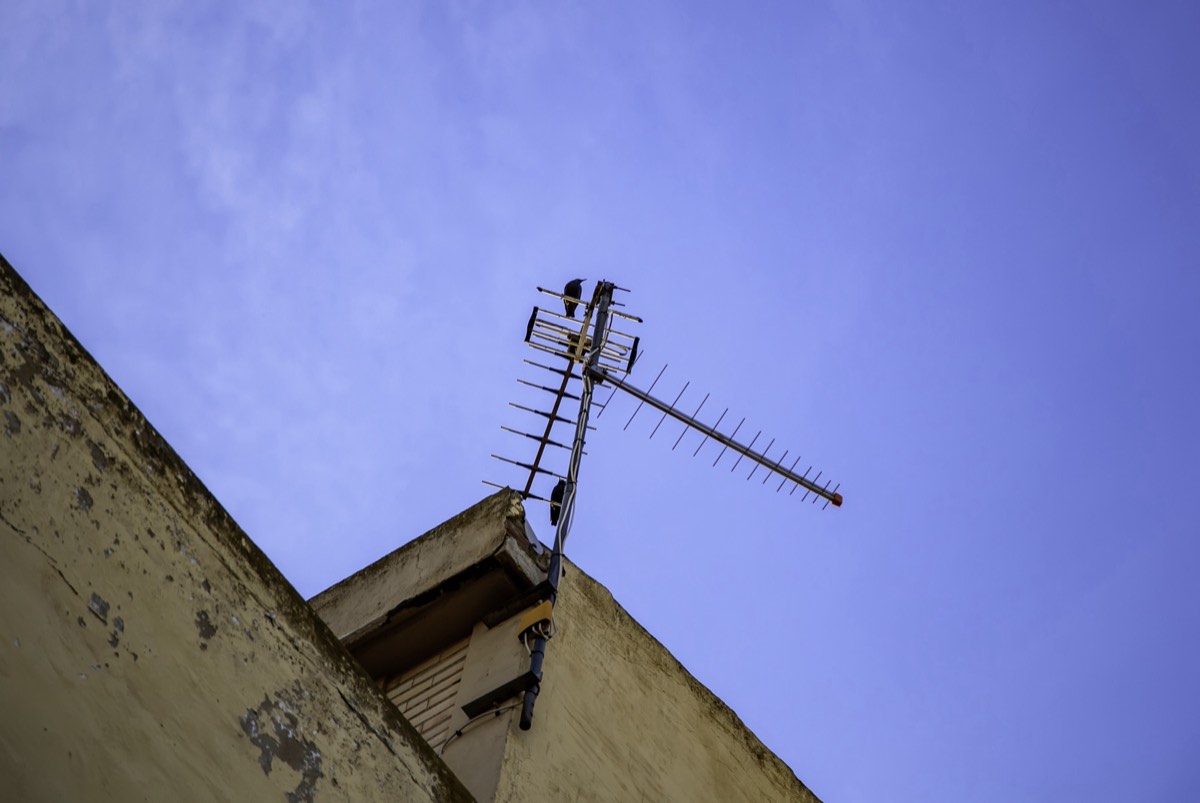
ABC v. Aereo: When 'Looks Like Cable' Beat the Engineering

The Supreme Court held that Aereo's array of dime-sized antennas publicly performed broadcast television, treating the service as functionally identical to a cable system despite its individualized architecture.

May 19, 2025
Athletes & College NIL

O'Bannon v. NCAA: The Likeness Case That Cracked Amateurism

The Ninth Circuit held that NCAA rules barring athletes from sharing in the commercial use of their own names, images, and likenesses violated antitrust law, but capped the remedy at the cost of attendance.

February 17, 2025
Utility Patents

Brenner v. Manson: Why a Patent Is Not a Hunting License

The Supreme Court held that a novel process for making a chemical with no known use fails the utility requirement, planting the doctrinal seed of 'substantial' utility that still governs the chemical and biotech arts.

February 10, 2025
Non-Obviousness

KSR v. Teleflex: The Day the Rigid Obviousness Test Died

The Supreme Court replaced the Federal Circuit's mechanical teaching-suggestion-motivation test with a flexible, common-sense obviousness inquiry that still governs every Section 103 dispute today.

February 10, 2025
Life Sciences & Biotech

Sandoz v. Amgen: The Patent Dance Is a Choice, Not a Command

The Supreme Court's first reading of the biosimilars statute held that the BPCIA's elaborate pre-litigation information exchange cannot be forced by federal injunction, and that a biosimilar applicant may give its marketing notice before the FDA licenses the product.

February 10, 2025