A photograph is protected by copyright the instant the shutter fires, with no registration, notice, or publication required. The person who pressed the button owns it, not the subject, not the client, and not the venue. That default has been settled American law since 1884, and almost every dispute over images turns on how far it reaches rather than whether it exists.
Visual art sits at the difficult end of copyright because it is the category where the idea and the expression are hardest to pull apart. A novel’s plot is distinguishable from its sentences. A photograph of a sunset is a sunset. The doctrine that follows exists mostly to draw that line.
Who owns a photograph, and when
Copyright vests automatically under 17 U.S.C. § 102 the moment an original work is fixed in a tangible medium. For a photograph, fixation happens at capture. No filing is needed for the right to exist.
Three parties routinely believe they own an image and do not:
- The subject. Being photographed conveys no copyright interest. Subjects have publicity and privacy interests in their likeness, which is a separate body of state law, and that is what a model release addresses.
- The client. Commissioning a photo does not buy the copyright. Work made for hire under 17 U.S.C. § 101 covers employees acting within the scope of employment, or one of nine enumerated categories of commissioned work under a signed agreement. Ordinary freelance photography is not on that list. Absent a written assignment, the shooter keeps the copyright and the client gets a license, express or implied.
- The platform. Uploading grants the service a license under its terms. It does not transfer ownership.
Registration with the Copyright Office is still worth doing. It is a precondition to filing an infringement suit under 17 U.S.C. § 411, and timely registration unlocks statutory damages and attorney’s fees under § 412. Without it, a plaintiff is limited to actual damages, which for a single photograph is often less than the cost of the lawsuit.
What copyright in an image actually covers
Burrow-Giles Lithographic Co. v. Sarony, 111 U.S. 53 (1884), is the origin point. A lithographer copied Napoleon Sarony’s portrait of Oscar Wilde and argued that a photograph is a mere mechanical reproduction of reality, so there is no author to protect. The Supreme Court disagreed, pointing to Sarony’s choices of pose, costume, drapery, lighting, and expression. Those choices are the authorship.
The consequence is that copyright protects the photographer’s creative choices, not the subject matter. Nobody owns the Golden Gate Bridge, a bowl of fruit, or a person’s face. Someone standing beside you can shoot the same scene and owe you nothing, so long as they did not copy your particular arrangement of it.
This produces the distinction between thin and broad protection. A tightly staged studio portrait, elaborately lit and directed, is packed with authorial decisions and gets a correspondingly wide scope. A straightforward record shot of a public object, where nearly everything was dictated by the object itself, gets thin protection: only near-identical copying infringes. The more the photographer controlled, the more the copyright reaches.
Where design crosses into copyright
Copyright covers pictorial, graphic, and sculptural works under § 102(a)(5), but it refuses to protect useful articles: things with an intrinsic utilitarian function beyond conveying information or appearance. A chair, a lamp, a shirt. Without that rule, copyright would become a backdoor patent on ordinary products, and for a far longer term.
The escape hatch is separability, and the Supreme Court finally gave it a single test in Star Athletica, L.L.C. v. Varsity Brands, Inc., 580 U.S. 405 (2017). A design feature on a useful article is protectable if it (1) can be perceived as a two- or three-dimensional work of art separate from the article, and (2) would qualify as a protectable work on its own, either standing alone or fixed in some other medium, if it were imagined apart from the article. The stripes, chevrons, and color blocks on a cheerleading uniform passed: imagine them peeled off and hung on a wall, and you have a graphic work.
What did not change is that the cut of the garment stays unprotected. You may own the surface graphics and still have no copyright in the shape, fit, or function of the thing they sit on. Designers who need the shape look to design patents or trade dress instead.
American copyright is overwhelmingly economic. The Visual Artists Rights Act of 1990 is the narrow exception, adding personal rights at 17 U.S.C. § 106A that stay with the artist even after the physical work and the copyright are sold.
VARA covers a deliberately small class: paintings, drawings, prints, sculptures, and exhibition photographs, existing as a single copy or a signed, numbered edition of 200 or fewer. It excludes posters, advertising, merchandise, and work made for hire. Within that class an artist holds the rights of attribution (to be named, and to refuse being named on work that is not theirs) and integrity (to prevent intentional distortion or mutilation prejudicial to their honor, and to prevent destruction of a work of recognized stature). The rights last for the artist’s life and cannot be transferred, only waived in writing.
Castillo v. G&M Realty L.P., 950 F.3d 155 (2d Cir. 2020), showed the teeth. The developer of the 5Pointz warehouse complex in Queens whitewashed 49 aerosol works overnight in November 2013, before he had even applied for a demolition permit. The building did not actually come down for another ten months. The district court found 45 works of recognized stature, found the destruction willful, and awarded the statutory maximum of $6.75 million. That ten-month gap was the reason for the willfulness finding: the court said plainly that if the developer had waited for his permits and demolished on schedule, it would not have found willfulness at all. The Second Circuit affirmed, holding that even temporary art can achieve recognized stature. The lesson was procedural as much as doctrinal: VARA gives artists a 90-day notice mechanism for removable work, and the owner simply did not use it.
Fair use when art borrows from photography
Artists have long treated existing photographs as raw material, and for years the operative question was whether the new work added new expression or meaning. Andy Warhol Foundation for the Visual Arts, Inc. v. Goldsmith, 598 U.S. 508 (2023), tightened that considerably.
Lynn Goldsmith photographed Prince in 1981. Warhol silkscreened it, and decades later the Foundation licensed one of those silkscreens to Condé Nast for a magazine cover. The Court held the first fair use factor favored Goldsmith, because the specific use at issue served substantially the same purpose as the original, illustrating a magazine story about Prince, and was commercial. Warhol’s new aesthetic did not rescue it. The Court was careful to confine itself to that licensing use rather than condemning the artworks themselves.
The practical shift: the analysis now runs on the purpose of the challenged use, not on how transformed the image looks. That favors uses in a genuinely different market and disfavors substitutes.
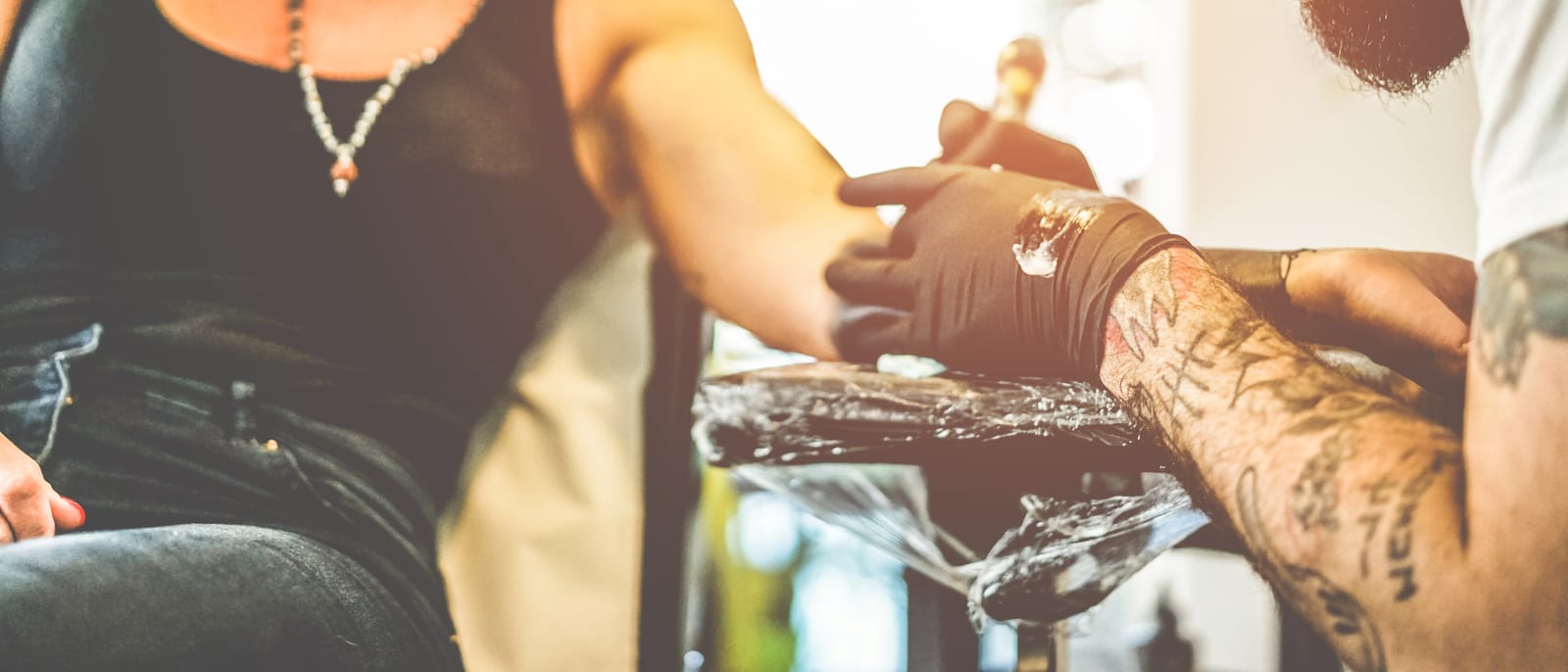
Sedlik v. Von Drachenberg shows the other side, though it is unsettled. Photographer Jeff Sedlik sued over tattoo artist Kat Von D’s use of his 1989 portrait of Miles Davis as a reference for a tattoo she inked for free. A California jury found for the defense in January 2024, concluding the tattoo and the sketch were not substantially similar to the photograph and that her social media posts about the work were fair use. A Ninth Circuit panel affirmed on January 2, 2026, but the full court granted rehearing en banc on June 9, 2026 and vacated that panel opinion, so it is no longer precedent, and the appeal is now pending before an eleven-judge court that is reconsidering the circuit’s long-standing “intrinsic test” for substantial similarity. The defense jury verdict stands for now. The underlying intuition is the one to hold onto: a non-commercial rendering in a different medium, serving a different market, fares better than a competing magazine license.
Frequently asked questions
Who owns the copyright to a photograph?
The photographer owns it automatically the instant the shutter fires, because copyright attaches to any original work the moment it is fixed in a tangible medium under 17 U.S.C. § 102. The subject of the photo owns nothing in it. The client who commissioned it owns nothing either unless there is a signed work-made-for-hire agreement covering a statutory category, or a written assignment. A model release addresses the subject’s likeness rights, not copyright.
Are photographs protected by copyright?
Yes. Burrow-Giles Lithographic Co. v. Sarony, 111 U.S. 53 (1884), settled that photographs are original works of authorship because the photographer makes creative choices about pose, lighting, framing, and timing. What copyright protects is those choices, not the subject itself. Anyone may photograph the same landmark from a different angle without infringing.
What rights does a visual artist have besides copying?
Beyond the exclusive rights in 17 U.S.C. § 106 to reproduce, adapt, distribute, and display the work, authors of paintings, drawings, prints, sculptures, and exhibition photographs hold moral rights under the Visual Artists Rights Act, 17 U.S.C. § 106A: the right to be credited, the right to disclaim authorship of a distorted version, and the right to prevent destruction of a work of recognized stature.
Is using a photo as artistic reference fair use?
Sometimes, but the answer narrowed after Andy Warhol Foundation v. Goldsmith, 598 U.S. 508 (2023), which held that adding new meaning is not enough when the copy serves substantially the same purpose as the original and competes in the same market. Courts now ask what the use is for, not just whether it looks different. Non-commercial reference use in a different medium fares better, as in the Kat Von D tattoo litigation.
Authorities and sources
- 17 U.S.C. § 102: Subject matter of copyright (Cornell LII)
- 17 U.S.C. § 101: Definitions, including “useful article” and “work made for hire” (Cornell LII)
- 17 U.S.C. § 106: Exclusive rights in copyrighted works (Cornell LII)
- 17 U.S.C. § 106A: Rights of certain authors to attribution and integrity (Cornell LII)
- 17 U.S.C. § 107: Fair use (Cornell LII)
- 17 U.S.C. § 411: Registration as a prerequisite to suit (Cornell LII)
- 17 U.S.C. § 412: Registration as a prerequisite to statutory damages and fees (Cornell LII)
- Burrow-Giles Lithographic Co. v. Sarony, 111 U.S. 53 (1884) (official U.S. Reports, Library of Congress)
- Star Athletica, L.L.C. v. Varsity Brands, Inc., 580 U.S. 405 (2017) (Cornell LII)
- Andy Warhol Foundation for the Visual Arts, Inc. v. Goldsmith, 598 U.S. 508 (2023) (Cornell LII)
- U.S. Copyright Office Circular 40: Copyright Registration of Pictorial, Graphic, and Sculptural Works
- U.S. Copyright Office Circular 42: Copyright Registration of Photographs
- U.S. Copyright Office, Authors, Attribution, and Integrity: Examining Moral Rights in the United States
- Sedlik v. Von Drachenberg, No. 24-3367 (9th Cir. June 9, 2026) (order granting rehearing en banc and vacating the panel opinion) (U.S. Court of Appeals for the Ninth Circuit)
Going further: How to Protect Your Content From Theft .
This page is general legal information, not legal advice, and it does not
create an attorney-client relationship.