
Curver v. Home Expressions: A Design Patent Protects a Pattern On Its Article
The Federal Circuit held a design patent for a pattern for a chair was not infringed by baskets, because claim language limits a design to its named article.
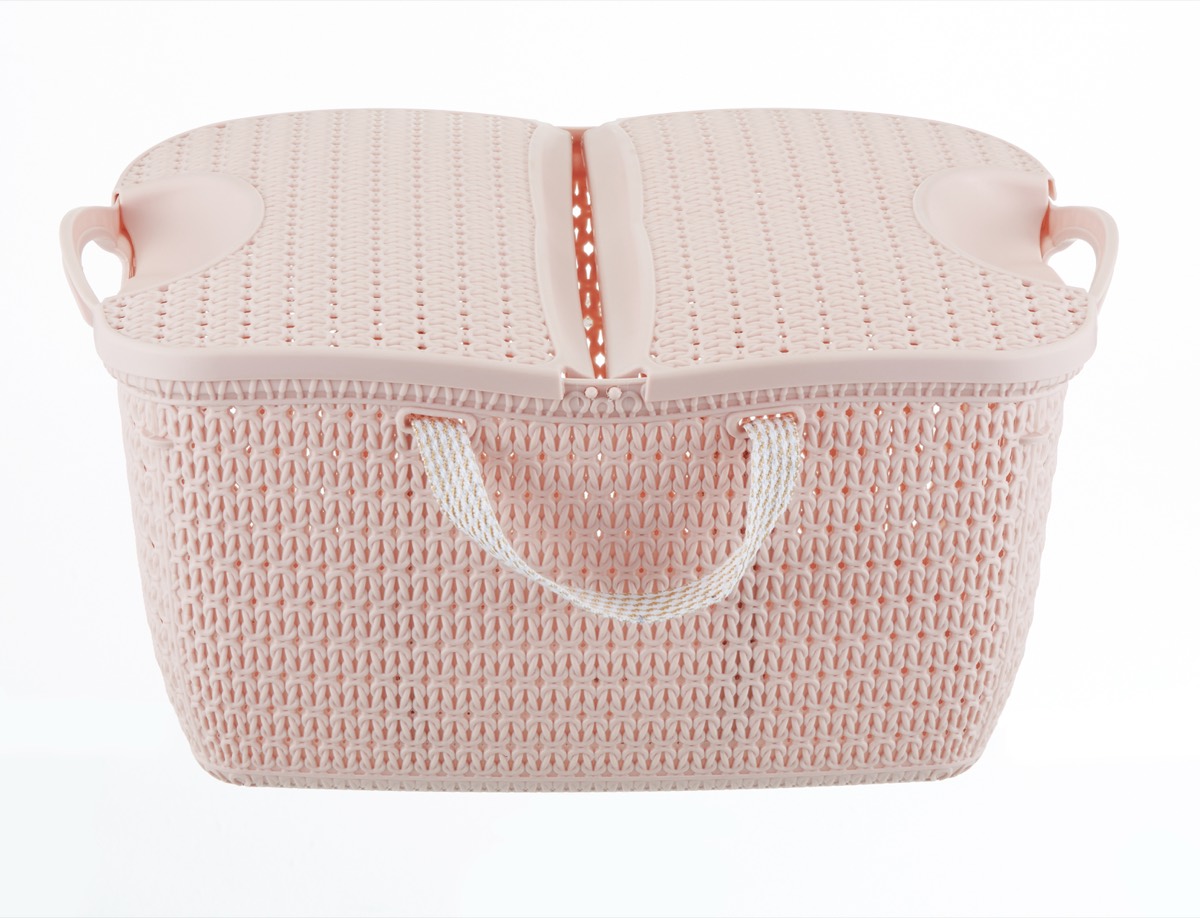
Curver Luxembourg, SARL v. Home Expressions Inc., 938 F.3d 1334 (Fed. Cir. 2019), settled a question the Federal Circuit called one of first impression: can claim language limit the scope of a design patent when the patent’s figures show only a surface pattern and no article at all? Decided September 12, 2019, the court answered yes. A design patent titled and claimed as an “ornamental design for a pattern for a chair,” but illustrated with a disembodied pattern, protects that pattern only as applied to a chair. Baskets bearing the identical pattern did not infringe. The decision is the companion bookend to In re SurgiSil, L.L.P., 14 F.4th 1380 (Fed. Cir. 2021): together they hold that a design patent is tethered to its claimed article of manufacture, both for infringement and for prior art.
At a glance
- Case: Curver Luxembourg, SARL v. Home Expressions Inc., 938 F.3d 1334 (Fed. Cir. 2019)
- Decided: September 12, 2019; U.S. Court of Appeals for the Federal Circuit; dismissal affirmed
- Holding: Where a design patent’s figures depict only a disembodied surface pattern, the claim language identifying an article of manufacture (“pattern for a chair”) limits the scope of the patent to that article, so a differently articled product bearing the same pattern does not infringe.
- Significance: Establishes that design patents protect a design as applied to the claimed article, not in the abstract; a case of first impression on claim-language scope for design patents.
The statutory frame: a design is always a design for something
Section 171 of the Patent Act, 35 U.S.C. § 171, authorizes a patent for a “new, original and ornamental design for an article of manufacture.” The phrase “for an article of manufacture” is not decorative. Long-standing doctrine, reaching back to Ex parte Cady and reflected in the Manual of Patent Examining Procedure, holds that a design cannot exist in the abstract; it must be embodied in or applied to an article. A pattern, a shape, or an ornamentation is patentable as a design only in connection with the object it adorns.
That principle sits comfortably alongside the ordinary way design patents are claimed and infringed. Design-patent scope is defined primarily by the figures, and infringement is judged under the ordinary-observer test of Gorham Co. v. White, 81 U.S. (14 Wall.) 511 (1871), which asks whether an ordinary observer would be deceived into thinking the accused article is the patented one. Curver presented an unusual wrinkle: what happens when the figures alone do not identify the article, and only the words of the claim and title do?
The patent and its unusual prosecution history
Curver owned U.S. Design Patent No. D677,946. Its figures depicted an overlapping, interwoven Y-shaped surface pattern. Critically, the figures showed the pattern by itself. No chair, no basket, no object of any kind appeared in the drawings. The article of manufacture existed only in words: the title and claim recited an “ornamental design for a pattern for a chair.”
How that came to be is central to the case. As originally filed, the application was titled “FURNITURE (PART OF-)” and its claim recited a “design for a furniture part.” The examiner allowed the claim but objected to the title, finding the use of “Part of” too vague to designate a particular article under 37 C.F.R. § 1.153(a), which requires that “[t]he title of the design must designate the particular article,” and under the Manual of Patent Examining Procedure. The examiner then suggested the specific replacement: “Pattern for a Chair.” Curver adopted that suggestion, amending the title, the claim, and the figure descriptions to recite a pattern for a chair. It did not amend the figures, which continued to show only the disembodied pattern. Curver thus obtained a patent whose sole textual link to any article was the word “chair.”
Curver then sued Home Expressions, alleging that its baskets, which incorporated a similar interwoven pattern, infringed the D677,946 patent. Home Expressions moved to dismiss, arguing that the patent was limited to the pattern as applied to a chair and that baskets are not chairs.
The court’s reasoning: claim language can supply the article
The United States District Court for the District of New Jersey agreed with Home Expressions. It construed the patent’s scope as limited to the pattern applied to a chair and, because the accused products were baskets, dismissed. Curver appealed, arguing that a design patent’s scope is defined by its figures alone and that the word “chair” in the claim should not restrict protection to chairs.
The Federal Circuit affirmed. It acknowledged the general rule that design-patent figures usually define the claimed design, but noted that none of those precedents confronted the atypical situation here, where the drawings depict no article at all. Given that precedent, regulation, and agency practice all support the view that design patents are granted only for a design applied to an article of manufacture “and not a design per se,” the court held that claim language can limit the scope of a design patent “where the claim language supplies the only instance of an article of manufacture that appears nowhere in the figures.” In such a case the words are not surplusage; they are the sole identification of the article that § 171 requires every design patent to have. To ignore them would be to grant a patent on a design in the abstract, which the statute forbids.
The court reinforced its reading with the prosecution history. Curver had amended the title, claim, and figure descriptions to recite “pattern for a chair” in order to satisfy the article-of-manufacture requirement and secure its patent. Having obtained the patent on that basis, Curver could not now assert a scope untethered from the article it had specified. The interweaving of statutory text, longstanding “no abstract design” doctrine, and the applicant’s own amendments all pointed the same way: the design was protected only as applied to a chair.
Applying that construction, infringement failed as a matter of law. Under the ordinary-observer test, the comparison is between the patented design as applied to its article and the accused product. Because the patent covered the pattern on a chair and the accused products were baskets, an ordinary observer purchasing baskets would not be deceived into believing they were the patented chair design. The baskets did not infringe.
What it changed: article identification carries legal weight
Curver delivered a clear drafting lesson and a doctrinal one. Doctrinally, it confirmed that a design patent never protects ornamentation in the abstract; the article of manufacture is always a limit on scope, and where the figures do not supply it, the claim language will. A surface pattern claimed for one article does not reach the same pattern on a different article.
The companion relationship with In re SurgiSil completes the picture. In SurgiSil the Federal Circuit held that a design claim’s article limits what prior art can anticipate it, so an art tool could not anticipate a lip-implant design. In Curver the same article limits what can infringe, so baskets could not infringe a chair-pattern design. Read together, the cases hold that the claimed article of manufacture bounds a design patent on both sides: it narrows the anticipating prior art and it narrows the field of infringing products.
Open questions
Curver involved the stark case of a pattern claimed for a chair and asserted against baskets, plainly different articles. The doctrine is less certain when articles are close cousins. How different two articles must be, and whether functionally or commercially related products count as the same article, will be litigated case by case. The decision also leaves open how broadly a design applicant should identify an article to preserve scope without inviting a § 171 objection, since “furniture” was too generic here but a narrow term like “chair” may cost enforceable breadth. Finally, the interaction of Curver with the design-patent obviousness analysis, where analogous-art principles differ, remains to be fully mapped.
Implications for creators and businesses
- Show the article in the figures when possible. The cleanest way to fix design scope is to depict the design on its article. Relying on claim words alone, as Curver did, invites a narrowing construction.
- Choose the article designation with scope in mind. The named article limits both infringement and prior art. Too generic a term risks rejection; too narrow a term risks leaving competitors’ variants uncovered.
- Watch prosecution amendments. Adding an article term to secure allowance can bind the patentee to that article later. Consider whether multiple applications directed to different articles better protect a versatile design.
- Assess infringement by article, not appearance alone. A competitor selling the same pattern on a different product may not infringe. Enforcement analysis must start with whether the accused product is the claimed article.
Frequently asked questions
Why did the baskets not infringe Curver’s design patent? Curver’s patent claimed an ornamental design for a pattern for a chair, but its figures showed only the surface pattern with no chair. The Federal Circuit held that the claim language identifying a chair limited the patent’s scope to that article, so baskets carrying the same pattern, being a different article, did not infringe.
Can a design patent protect a surface pattern in the abstract? No. A design patent under 35 U.S.C. Section 171 protects a design for an article of manufacture, not a design floating free of any object. Curver confirms that where the figures show only a disembodied pattern, the claim language naming an article defines and limits the scope of protection.
How is Curver related to In re SurgiSil? The two decisions are companions. Curver holds that the article named in a design claim limits what infringes, and In re SurgiSil holds that the same article identification limits what prior art can anticipate. Together they establish that design patents are tied to their claimed article of manufacture on both sides of the ledger.
Authorities and sources
- Curver Luxembourg, SARL v. Home Expressions Inc., 938 F.3d 1334 (Fed. Cir. 2019), Federal Circuit opinion PDF.
- 35 U.S.C. § 171, design patents, Cornell LII.
- Gorham Co. v. White, 81 U.S. (14 Wall.) 511 (1871), the ordinary-observer test, Cornell LII.
- Brooks Kushman analysis, “Article of Manufacture in Design Patent Law After Curver,” brookskushman.com.
- Morgan Lewis, “Federal Circuit Narrows Scope of Prior Art Available for Design Patents,” morganlewis.com.
- In re SurgiSil, L.L.P., 14 F.4th 1380 (Fed. Cir. 2021), the companion anticipation decision, Federal Circuit opinion PDF.