
Egbert v. Lippmann: How One Hidden Corset Spring Defined Public Use
The Supreme Court's corset case held that use by one person, with no duty of secrecy, is an invalidating public use even when no one can see the invention.
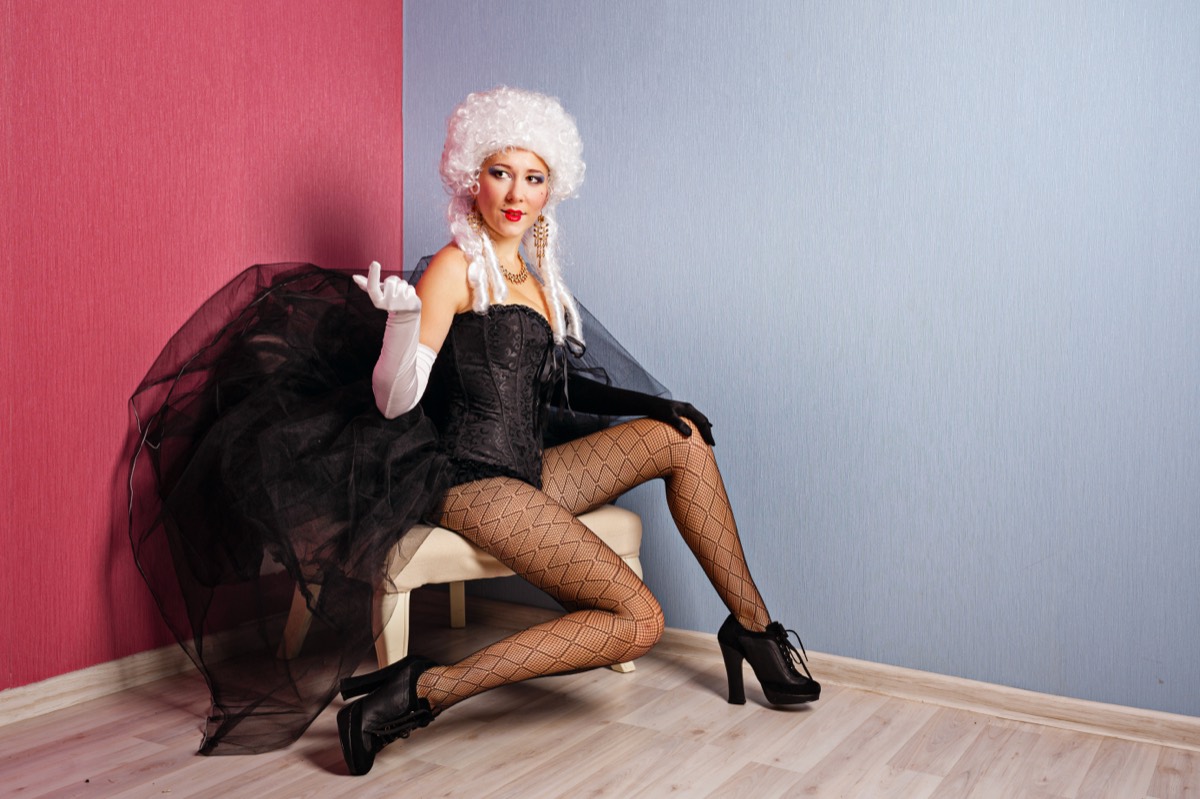
Egbert v. Lippmann, 104 U.S. 333 (1881), known to generations of law students as “the corset case,” is the Supreme Court’s most vivid lesson in how little it takes for an invention to be in “public use.” The inventor gave a pair of steel corset springs to a woman who wore them, concealed beneath her clothing, for years before any patent was sought. No member of the public ever saw the invention in operation. Yet the Court held the later patent invalid, ruling that a single person’s unrestricted use of an invention, with no obligation of secrecy, is a public use that forfeits patent rights. The decision fixed a principle that still governs the on-sale and public-use bars today: the statutory bar turns on the absence of confidentiality, not on public visibility.
At a glance
- Case: Egbert v. Lippmann, 104 U.S. 333 (1881)
- Court: Supreme Court of the United States
- Decided: 1881; opinion by Justice William B. Woods (Justice Miller dissenting)
- Holding: Use of an invention by a single person, given without any restriction or obligation of secrecy, is a “public use” that bars a patent even if the invention is never visible to the general public
- Significance: The canonical statement of the public-use bar; still cited as of July 2026.
The facts behind the doctrine
The invention was modest. Samuel Barnes devised improved corset springs, the flexible steel stays that stiffen a corset and let it flex with the body. In 1855, well before he applied for a patent, Barnes made a pair of the springs and gave them to Frances Lee, whom he later married. She sewed them into her corsets and wore them for years. Barnes gave her a second set when the first wore out. At no point did he ask her to keep the springs secret, and at no point did he impose any restriction on how she used them.
Barnes did not apply for his patent until 1866, more than a decade after that first use. The patent eventually passed to Frances (by then his widow, later Frances Egbert), who sued Lippmann for infringement. The defense was that the invention had been in public use for years before the patent application, forfeiting any right to the monopoly. The question for the Court was whether a private gift of a concealed article to one person could amount to “public use” within the meaning of the patent statute.
The statutory bar and its purpose
The governing statute, the Act of 1836 as modified in 1839, made a patent void where the invention had been in “public use or on sale” with the consent and allowance of the inventor for more than two years before the application (the ancestor of the modern bar codified over time in 35 U.S.C. Section 102). The policy behind the bar is to prevent an inventor from exploiting an invention while withholding it from the patent system, and then claiming a full monopoly term years later. An inventor who lets an invention enter use, and delays filing, risks losing the right to patent it. The doctrinal difficulty is defining “public”: does it require that the public actually observe or have access to the invention, or is something less sufficient?
The Court’s reasoning: secrecy, not visibility
Justice Woods held that visibility is not the test. The Court identified several principles that decided the case. First, to constitute public use, it is not necessary that the invention be used by more than one person. A single user suffices. Second, whether a use is public or private depends not on the number of people who see it but on whether the inventor allowed the invention to be used without any restriction or obligation of secrecy. Third, some inventions, by their nature, are used in private (a corset spring worn beneath clothing being the perfect example), and the bar would be meaningless if such inventions could be used indefinitely without ever counting as public.
Applying those principles, the Court found the springs had been in public use. Barnes allowed Frances to use the invention for years with no confidentiality condition and no limit on her use. He “slept on his rights” while the invention was employed in the ordinary way for its intended purpose. That the springs were hidden from view was immaterial, because the inventor had surrendered control over the invention without securing any promise of secrecy. The gift, unrestricted and unconditional, placed the invention in public use as a matter of law.
The dissent and the tension it exposed
Justice Miller dissented, and his objection identifies the doctrine’s hard edge. He thought it absurd that an invention worn out of sight, known to essentially no one, could be deemed in “public” use in any ordinary sense of the word. The disagreement highlights the choice the majority made: it defined “public use” functionally, by reference to the inventor’s loss of control and failure to impose secrecy, rather than literally, by reference to whether the public could perceive the invention. The majority’s approach won, and it has framed the doctrine ever since. An inventor cannot avoid the bar merely because the invention is small, concealed, or used by only one trusted person.
What the case teaches about secrecy and experimentation
Egbert also draws the line against which the experimental-use exception operates. An inventor who puts an invention into use to test and perfect it, under the inventor’s supervision, may avoid the bar, because such use is not use for the invention’s ordinary commercial or personal purpose. But Barnes could claim no experimental purpose. Frances wore the springs simply to use them, not to help him test them, and he exercised no control over the process. The absence of any experimental character, any secrecy obligation, or any restriction on use combined to make the use unambiguously public. The case thus stands at the intersection of three doctrines: the public-use bar, the requirement of a secrecy obligation to preserve non-public status, and the narrow experimental-use exception that can excuse pre-filing use.
Open questions
Although Egbert is old and settled, its themes recur in modern disputes. How does its logic apply to inventions used in secret by a business, where secrecy is maintained but the invention is nonetheless commercially exploited before filing? Later authority, including Metallizing Engineering Co. v. Kenyon Bearing & Auto Parts Co., 153 F.2d 516 (2d Cir. 1946), addressed secret commercial use, and the America Invents Act of 2011 rewrote Section 102 with “otherwise available to the public” language whose effect on secret uses courts have continued to work out. The reach of Egbert to third-party and confidential uses, and its interaction with the reworded post-AIA bar, remain live questions as of July 2026. What Egbert settles is the narrow but powerful core: unrestricted use by even one person, without a duty of secrecy, is public use.
Implications for inventors and businesses
- File before you share. Any use of an invention outside a confidentiality obligation can start or trigger the bar. The safest course is to file before allowing anyone to use the invention.
- Get secrecy in writing. If pre-filing use is unavoidable, impose an explicit obligation of secrecy and restrictions on use. Egbert turned on the absence of exactly that.
- Concealment is not protection. Do not assume that an invention hidden from public view is safe from the bar. The test is loss of control without secrecy, not whether outsiders can see it.
- Document any experimental purpose. If early use is genuinely for testing, keep records showing the inventor’s supervision and the experimental objective, because that is the recognized path around the bar.
Frequently asked questions
What is the public use bar? Under patent law, an inventor forfeits the right to a patent if the invention was in public use before the critical date. Egbert established that even a single person’s unrestricted use, with no obligation of secrecy, counts as public use, regardless of whether the invention is visible to others.
Why did it matter that the corset springs were hidden under clothing? It did not save the patent. The Court held that public use turns on the absence of secrecy restrictions, not on public visibility. Because the user wore the springs for years without any duty of confidentiality, the use was public even though the springs were concealed.
Is Egbert v. Lippmann still good law? Yes. Decided in 1881, it remains a foundational authority on the public use bar. The America Invents Act reworded the statute in 2011, but courts and commentators still treat Egbert as the classic illustration of how little public exposure the bar requires.
Authorities and sources
- Egbert v. Lippmann, 104 U.S. 333 (1881). Full-text opinion, including Justice Miller’s dissent, via Cornell Legal Information Institute.
- 35 U.S.C. Section 102 (novelty and statutory bars), including the post-AIA “otherwise available to the public” language.
- Metallizing Engineering Co. v. Kenyon Bearing & Auto Parts Co., 153 F.2d 516 (2d Cir. 1946) (secret commercial use).
- Egbert v. Lippmann, overview of facts, disposition, and Justice Woods’s authorship.