The Fifteen Factors That Run Patent Damages: Georgia-Pacific v. U.S. Plywood
How a 1970 plywood dispute produced the fifteen-factor framework that still governs reasonable-royalty damages in nearly every U.S. patent case decades later.
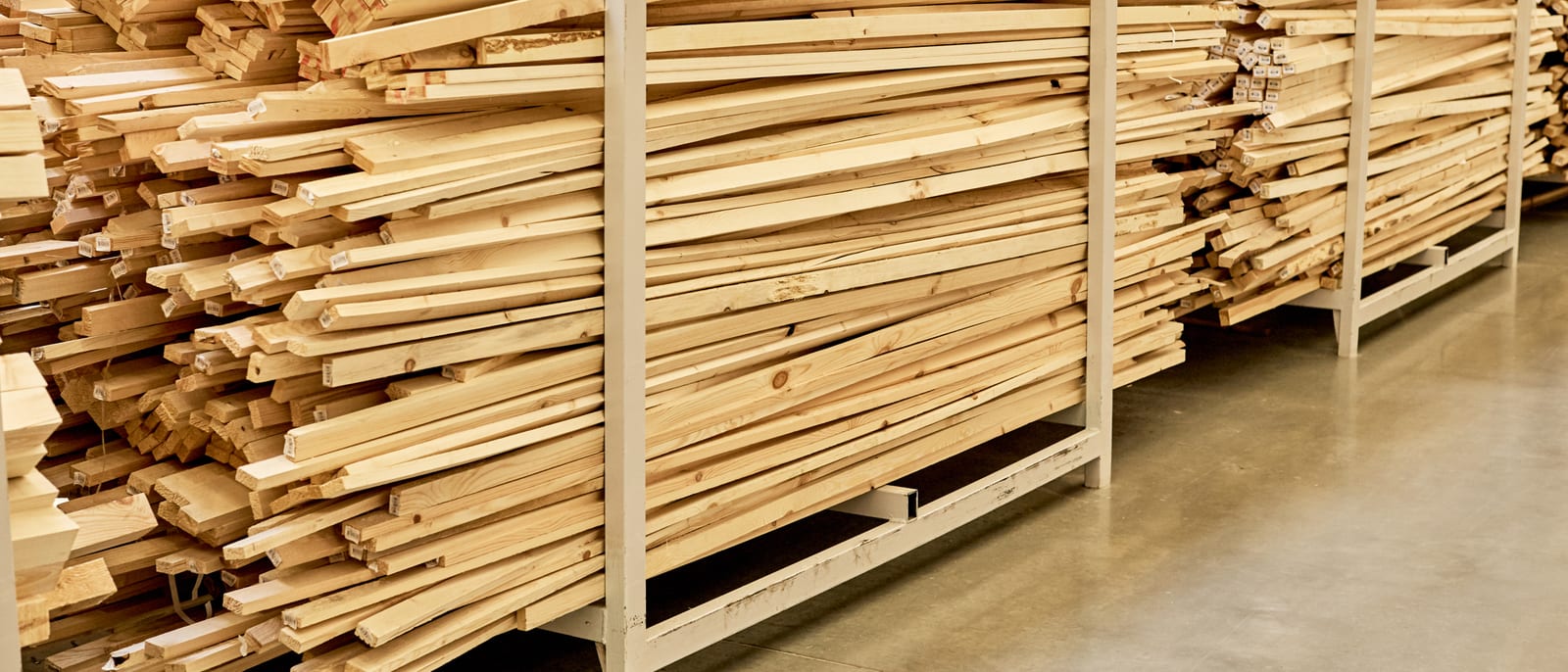
Few district-court opinions outlive their facts the way Georgia-Pacific Corp. v. United States Plywood Corp., 318 F. Supp. 1116 (S.D.N.Y. 1970), has. The underlying fight was about striated fir plywood. The legacy is a fifteen-item checklist that, more than half a century later, structures how American courts and damages experts value almost every infringed patent. When Judge Charles H. Tenney sat down to fix a reasonable royalty for U.S. Plywood’s “Weldtex” patent, he distilled the sprawling case law on patent damages into a list of “evidentiary facts relevant, in general, to the determination of the amount of a reasonable royalty for a patent license,” drawn, he wrote, “from a conspectus of the leading cases.” That list, now universally called the Georgia-Pacific factors, became the lingua franca of patent damages.
At a glance
- Case: Georgia-Pacific Corp. v. United States Plywood Corp., 318 F. Supp. 1116 (S.D.N.Y. 1970).
- Court: U.S. District Court for the Southern District of New York; opinion by District Judge Charles H. Tenney.
- Posture: Damages accounting after liability had been established; U.S. Plywood’s Deskey Patent No. 2,286,068 on “Weldtex” striated fir plywood had been held valid and infringed in earlier proceedings.
- Holding: A reasonable royalty is best found through a hypothetical arm’s-length negotiation, informed by fifteen enumerated factors; the district court set the royalty at $50 per thousand square feet, yielding an award of $800,000 plus interest.
- On appeal: The Second Circuit sustained the trial court’s basic findings but modified the award, holding that a $50 rate left Georgia-Pacific no reasonable profit. It cut the royalty to $35.65 per thousand square feet and fixed damages at $570,000 before interest. Georgia-Pacific Corp. v. U.S. Plywood-Champion Papers Inc., 446 F.2d 295 (2d Cir. 1971).
- Significance: Created the canonical fifteen-factor framework for reasonable-royalty damages, later adopted and refined by the Federal Circuit and used in nearly every modern patent-damages analysis.
The dispute over Weldtex
The patent covered a distinctive product: “Weldtex,” a striated fir plywood with a brushed, grooved surface marketed by U.S. Plywood as a premium decorative wall paneling. The Deskey patent had survived validity challenges, and Georgia-Pacific had been found to infringe by selling competing striated plywood. What remained was money. Because U.S. Plywood had never granted an ordinary license to the patent (it preferred to keep the product as an exclusive line), there was no established royalty to plug in, and the court could not simply award lost profits on every infringing sale. That gap is exactly where reasonable-royalty analysis lives: when an established rate is unavailable, the law still guarantees the patentee “damages adequate to compensate for the infringement, but in no event less than a reasonable royalty,” the floor Congress codified in 35 U.S.C. 284.
Building the fifteen factors
Rather than improvise, Judge Tenney surveyed decades of damages decisions and organized the relevant considerations into a single list. The factors include the royalties the patentee has actually received; the rates the infringer pays for comparable patents; the nature and scope of the license (exclusive or not, restricted by territory or field); the patentee’s licensing policy and any program to preserve a monopoly; the commercial relationship between the parties (competitors or not); the effect of selling the patented item in promoting sales of other products; the patent’s remaining term and the duration of the license; the established profitability and commercial success of the patented product; its advantages over old devices; the nature of the invention and the benefits to those who used it; the extent of the infringer’s use and proof of its value; customary profit-sharing in the trade; the portion of profit attributable to the invention as opposed to non-patented elements; expert opinion; and (the synthesizing factor) the amount a willing licensor and willing licensee would have agreed upon in a hypothetical negotiation.
The hypothetical negotiation
The fifteenth factor is the analytical engine that ties the others together. The court imagined a voluntary negotiation conducted just before infringement began, between a patent owner willing to grant a license and a manufacturer willing to take one, both assuming the patent was valid and would be infringed. Within that frame, Judge Tenney weighed Weldtex’s strong profitability and market reputation, Georgia-Pacific’s expected profits from selling striated plywood, U.S. Plywood’s reluctance to license away an exclusive product, and the absence of any established rate. Balancing those pressures, he settled on $50 per thousand square feet of infringing plywood, producing an award of $800,000 plus interest. That number did not survive appeal intact. In 1971 the Second Circuit sustained the trial court’s basic findings but held that a $50 royalty left Georgia-Pacific no profit at all on its infringing sales, contrary to the trial court’s own stated intention, and rather than remand after so many years of litigation the panel redetermined the award itself: a royalty of $35.65 per thousand square feet and damages of $570,000 before interest. The dollar figure changed; the fifteen-factor framework Judge Tenney articulated quickly outgrew the case and became standard analytical equipment.
From district court to nationwide standard
What made Georgia-Pacific durable was not the dollar figure but the structure. The Federal Circuit, created in 1982 with exclusive jurisdiction over patent appeals, adopted the factors as an accepted method for organizing reasonable-royalty proof, and they now appear in expert reports, jury instructions, and damages opinions across the country. Yet the modern Federal Circuit has also disciplined their use. In cases such as Uniloc USA v. Microsoft (rejecting the “25 percent rule”) and VirnetX v. Cisco and Ericsson v. D-Link, the court has cautioned that reciting all fifteen factors is not a substitute for reliable economics, that experts must apportion value to the patented feature rather than the whole product, and that irrelevant factors should be dropped from a jury’s consideration. The factors remain the vocabulary of patent damages, but they are a checklist to be applied rigorously, not a talisman to be chanted.
Open questions
- How much apportionment is enough? Georgia-Pacific lists profitability and the share attributable to the invention as factors, but it predates modern apportionment doctrine; courts still struggle to keep royalties tied to the patented feature rather than unpatented components.
- Which factors actually matter in a given case? Mechanically marching through all fifteen can mislead a jury; courts increasingly demand that only the genuinely relevant factors be argued.
- How does the hypothetical negotiation handle holdup and standards? The framework predates standard-essential patents and FRAND commitments, leaving courts to adapt the willing-licensor fiction to settings Judge Tenney never imagined.
Implications
- For patent owners: Build the royalty case around real comparable licenses and the proven value of the patented feature; an unsupported recitation of all fifteen factors is vulnerable on appeal.
- For accused infringers: Attack the apportionment: force the patentee to separate the value of the invention from the value of everything else in the product.
- For damages experts: Treat Georgia-Pacific as a disciplined framework, not a script. Tie each invoked factor to admissible evidence and a defensible economic model.
- For litigators: Use motions in limine and jury instructions to prune irrelevant factors; the Federal Circuit has signaled that an unfocused factor list can itself be reversible error.
- For licensors generally: The hypothetical-negotiation lens rewards companies that maintain clean, well-documented licensing records, because comparable agreements are among the most persuasive evidence in the entire analysis.
Frequently asked questions
What are the Georgia-Pacific factors? They are the fifteen evidentiary considerations Judge Tenney listed in 1970 for determining a reasonable royalty under the patent damages statute, ranging from established royalties and comparable licenses to the parties’ commercial relationship and the profitability of the patented feature. Together they frame a hypothetical negotiation between a willing licensor and licensee.
Are the Georgia-Pacific factors binding law? They are not a statute and not a rigid formula. The reasonable-royalty floor comes from 35 U.S.C. 284. The factors are a widely accepted analytical checklist that the Federal Circuit has approved, while increasingly warning experts not to recite them mechanically or use them to smuggle in unreliable damages theories.
What is the hypothetical negotiation? It is the legal fiction at the heart of reasonable-royalty analysis: a court imagines a voluntary license negotiation between the patent owner and the infringer just before infringement began, assuming both sides knew the patent was valid and infringed, and asks what royalty they would have agreed on.
Authorities and sources
- Georgia-Pacific Corp. v. United States Plywood Corp., 318 F. Supp. 1116 (S.D.N.Y. 1970) (opinion text, MIT OpenCourseWare): https://ocw.mit.edu/courses/15-628j-patents-copyrights-and-the-law-of-intellectual-property-spring-2013/4cc3dba57900b7323687c8d37aae732d_MIT15_628JS13_read36.pdf
- Appeal: Georgia-Pacific Corp. v. U.S. Plywood-Champion Papers Inc., 446 F.2d 295 (2d Cir. 1971) (Public.Resource.Org): https://law.resource.org/pub/us/case/reporter/F2/446/446.F2d.295.415.416.35341.35444.html
- Reasonable-royalty damages statute, 35 U.S.C. 284 (Cornell LII): https://www.law.cornell.edu/uscode/text/35/284
- Liability opinion holding Claim 1 of the Deskey patent valid and infringed, Georgia-Pacific Corp. v. United States Plywood Corp., 258 F.2d 124 (2d Cir. 1958) (Public.Resource.Org): https://law.resource.org/pub/us/case/reporter/F2/258/258.F2d.124.127.24656_1.html