Bringing Home the Bacon: HIP v. Hormel and the High Bar for Joint Inventorship
The Federal Circuit removed a claimed co-inventor from Hormel's precooked-bacon patent, holding that a contribution mentioned only in passing was too insignificant to confer joint inventorship under the Pannu test.
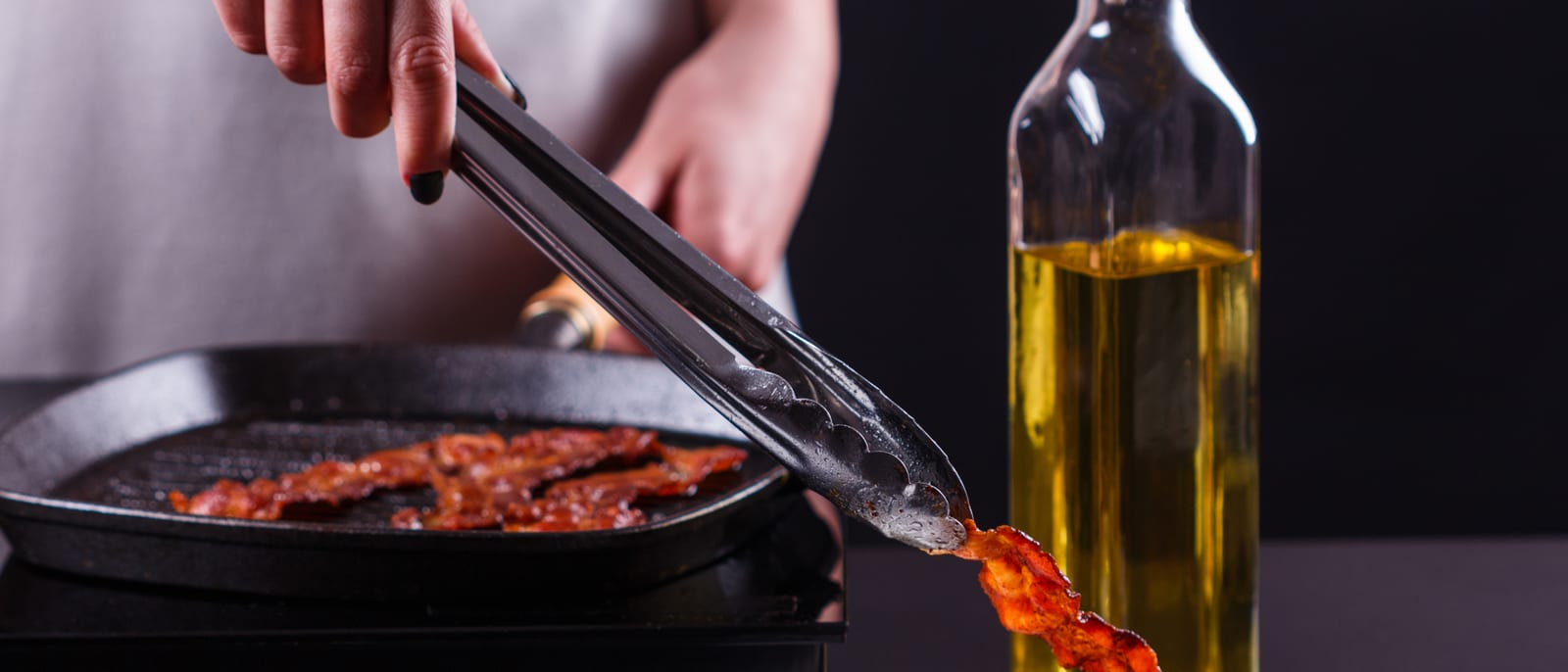
Disputes over who invented what can determine who owns a patent worth millions. HIP, Inc. v. Hormel Foods Corp., 66 F.4th 1346 (Fed. Cir. 2023), is a vivid example, set in the unglamorous world of industrial bacon production. A district court had ordered that David Howard, of HIP, be added as a joint inventor on Hormel’s patent for a method of precooking bacon. The Federal Circuit, in an opinion by Judge Alan Lourie, reversed. Howard’s claimed contribution (preheating meat with an infrared oven) appeared only once in the specification, as one of several alternatives, and was overshadowed by the patent’s central focus on microwave preheating. That was too “insignificant in quality” to make him a co-inventor. The case is a crisp reminder of how high the bar for joint inventorship stands.
At a glance
- Case: HIP, Inc. v. Hormel Foods Corp., No. 2022-1696, 66 F.4th 1346 (Fed. Cir. May 2, 2023), on appeal from the U.S. District Court for the District of Delaware.
- Court: U.S. Court of Appeals for the Federal Circuit; opinion by Judge Lourie, joined by Judges Clevenger and Taranto.
- Posture: Appeal from a judgment adding David Howard as a joint inventor of U.S. Patent No. 9,980,498 under 35 U.S.C. Section 256; the panel reversed.
- Holding: Howard’s alleged contribution was insignificant in quality when measured against the dimension of the full invention, so he did not qualify as a joint inventor.
- Significance: Reaffirmed the demanding Pannu v. Iolab standard for joint inventorship and underscored the value of contracting over inventorship in collaborations.
Hormel and HIP collaborated on methods of making better precooked bacon. The resulting patent, U.S. Patent No. 9,980,498, claims a two-step method: preheating meat pieces and then cooking them, using a hybrid system designed to develop flavor while avoiding the off-flavors of conventional precooking. Hormel was the named owner. HIP sued, contending that Howard had contributed the idea of using an infrared oven for the preheating step and should be recognized as a co-inventor. The district court agreed as to one claim. The Federal Circuit did not.
The Pannu test for joint inventorship
To correct inventorship under 35 U.S.C. Section 256, a putative co-inventor must satisfy the three-part test from Pannu v. Iolab Corp. The claimant must show that he (1) contributed in some significant manner to the conception of the invention; (2) made a contribution that is significant in quality when measured against the dimension of the full invention; and (3) did more than merely explain to the real inventors well-known concepts or the current state of the art. A would-be inventor who fails any one of these prongs is not a joint inventor. The standard is deliberately demanding, because issued patents enjoy a presumption that the named inventors are correct, and adding an inventor can shift ownership and licensing rights.
The Federal Circuit focused on the second Pannu factor (the quality and significance of the contribution measured against the full invention) and found it dispositive.
”Insignificant in quality” measured against the full invention
The court examined where Howard’s alleged contribution actually appeared in the patent. The claimed invention centered on preheating with a microwave oven. The specification, the claims, and the figures all dwelt on microwave preheating as the core of the inventive method. Infrared preheating, by contrast, surfaced only once in the specification, listed as an alternative to the microwave oven in a passage describing “preheating the sliced bacon with a microwave oven, or other suitable heating methods such as infrared or hot air,” and was recited in only a single claim of the patent: the Markush group of independent claim 5, which lists a microwave oven, an infrared oven, and hot air. Independent claims 1 and 13 recite preheating with a microwave oven and do not mention an infrared oven at all.
Against the “dimension of the full invention,” the court held, that lone mention of infrared preheating was insignificant in quality. A contribution that is barely referenced, presented as one option among many, and peripheral to the invention’s central teaching cannot satisfy the second Pannu prong. Because Howard failed that factor, he did not qualify as a joint inventor, and the Federal Circuit reversed the district court’s order adding him without needing to remand. Having found that factor dispositive, the panel expressly declined to reach the other Pannu factors, including Hormel’s argument that infrared preheating was already a well-known concept or part of the state of the art, and it did not reach the separate question whether Howard’s testimony was adequately corroborated.
Why the threshold sits so high
The decision reflects a broader policy. Inventorship determines ownership, and an erroneous addition or omission can cloud title, complicate licensing, and even render a patent unenforceable. The law therefore treats issued patents as presumptively naming the correct inventors and requires clear, convincing evidence to alter that designation. Collaboration on the path to an invention (brainstorming, suggesting alternatives, supplying ordinary skill) does not by itself confer inventor status. Only a significant contribution to the conception of what is actually claimed will do. HIP v. Hormel shows that even a genuine, named alternative in the specification can fall short if it is marginal to the heart of the invention.
Open questions
- How marginal is too marginal? The court found a single, alternative mention insufficient, but exactly where a contribution crosses from peripheral to significant remains a fact-specific line.
- Does claim-by-claim analysis change the calculus? A contribution might loom large in a single claim yet look trivial against the full invention; the district court had relied on the difference between claims 1 and 5, and how courts weigh that tension will recur.
- What evidence best proves a significant contribution? Contemporaneous records, lab notebooks, and design documents matter, but their sufficiency against the presumption of correct inventorship is still litigated case by case.
Implications
- Inventorship is a high bar. A passing suggestion or one alternative among many will not establish co-inventorship under the Pannu test.
- Measure against the whole invention. Courts weigh a claimed contribution against the full scope of the invention, not just whether the idea appears somewhere in the patent.
- Contract before you collaborate. Parties developing technology jointly should allocate inventorship and ownership by agreement rather than rely on later inventorship litigation.
- Document who did what. Detailed, dated records of each collaborator’s conception contributions are the strongest defense or claim when inventorship is disputed.
- Named inventors are presumed correct. Overturning the listed inventors requires clear and convincing evidence, reflecting the stakes of inventorship for ownership and validity.
Frequently asked questions
Who can be named as a joint inventor on a patent? A person qualifies as a joint inventor only if they contributed in a significant manner to the conception of the claimed invention. Under the Pannu test, the contribution must be significant in quality when measured against the full invention and must amount to more than explaining well-known concepts or the state of the art.
Why did the Federal Circuit reject the claimed co-inventor in HIP v. Hormel? David Howard’s alleged contribution was preheating meat with an infrared oven. The patent specification, claims, and figures focused overwhelmingly on preheating with a microwave oven, and infrared was mentioned only once as one of several alternatives. The court found that contribution insignificant in quality relative to the full invention and reversed the order naming him a co-inventor.
What practical lesson does HIP v. Hormel teach about collaborations? Companies that collaborate on R&D should document contributions carefully and address inventorship and ownership in advance by contract. A minor or passing suggestion will not establish co-inventorship, so parties cannot rely on inventorship law alone to secure rights in jointly developed technology.
Authorities and sources
- Federal Circuit opinion (No. 2022-1696, official PDF): https://www.cafc.uscourts.gov/opinions-orders/22-1696.OPINION.5-2-2023_2120058.pdf
- 35 U.S.C. Section 256 (correction of named inventor) (Cornell Legal Information Institute): https://www.law.cornell.edu/uscode/text/35/256
- Wolf Greenfield, “CAFC Update: HIP, Inc. v. Hormel Foods Corp.”: https://wolfgreenfield.com/articles/cafc-update-hip-inc.-v.-hormel-foods-corp
- Haug Partners analysis, “But I’m an Inventor! HIP v. Hormel Foods”: https://haugpartners.com/article/but-im-an-inventor-hip-v-hormel-foods-demonstrates-that-a-significant-contribution-is-required-to-be-a-co-inventor-on-a-patent/