In re Brana: Patent Utility Does Not Require FDA-Level Proof
The Federal Circuit held that in vitro and mouse-model data establish patent utility for a cancer drug candidate, well before FDA-grade human evidence exists.
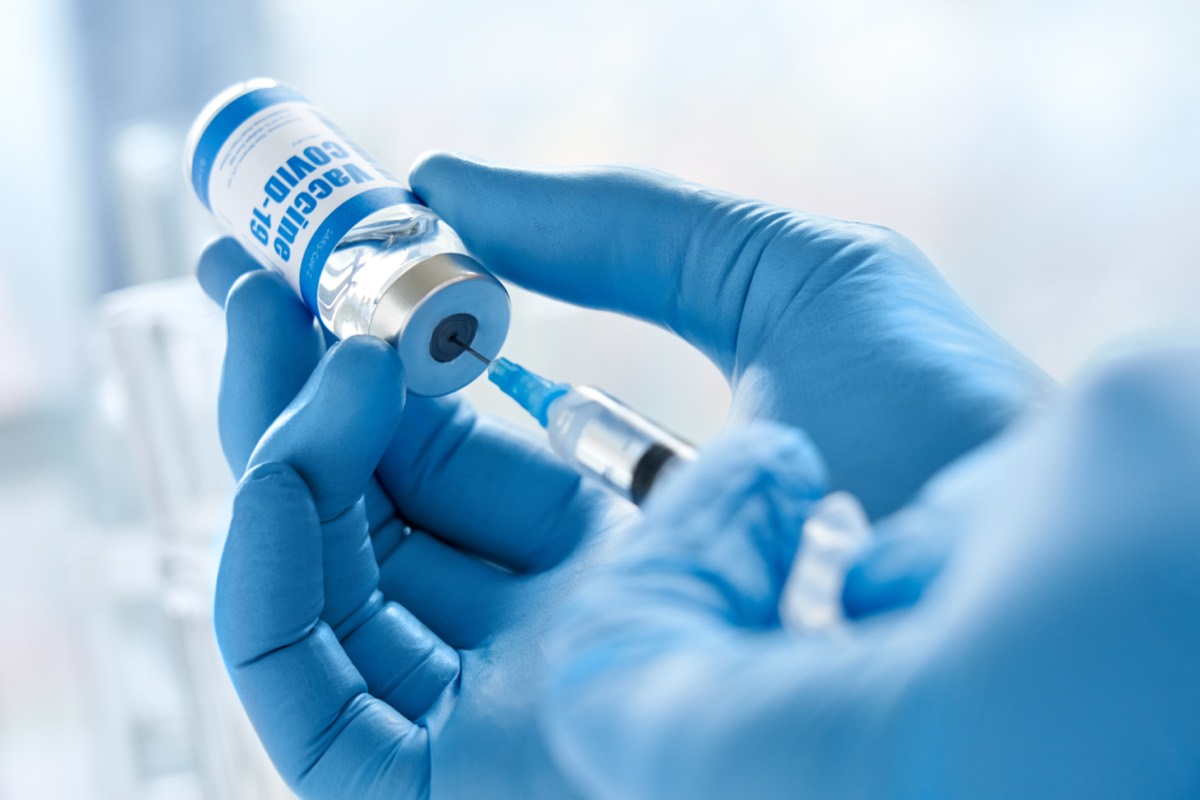
In re Brana, 51 F.3d 1560 (Fed. Cir. 1995), is the decision that fixed how early in the drug-development pipeline a pharmaceutical invention becomes patentable. Decided March 30, 1995, it reversed a Patent and Trademark Office rejection of claims to antitumor compounds and held that laboratory and animal-model evidence, not clinical proof of the kind the Food and Drug Administration demands, suffices to establish patent utility. The court also clarified who must prove what: the office bears the initial burden of casting doubt on an asserted utility before the applicant must respond. For the pharmaceutical and biotechnology bars, Brana remains the controlling statement on utility and burden allocation.
At a glance
- Case: In re Brana, 51 F.3d 1560 (Fed. Cir. 1995)
- Decided: March 30, 1995; U.S. Court of Appeals for the Federal Circuit; PTO rejection reversed
- Holding: In vitro cytotoxicity and efficacy in accepted animal tumor models establish practical utility for a claimed pharmaceutical compound; proof at the level required for FDA approval is not required, and the PTO bears the initial burden of showing a reason to doubt the asserted utility.
- Significance: The controlling authority on pharmaceutical utility and the allocation of the burden of proof during prosecution.
The statutory frame: utility and its enablement cousin
Two related requirements police whether a claimed invention does something. Section 101 of the Patent Act, 35 U.S.C. § 101, requires that an invention be “useful.” The first paragraph of 35 U.S.C. § 112 requires that the specification teach how to use the invention. The two are intertwined: if an invention has no established utility, then by definition the specification cannot teach a use for it, so a utility failure often surfaces as a § 112 how-to-use rejection. That is the posture in which Brana reached the Federal Circuit.
The utility bar for most inventions is famously low, tracing to Lowell v. Lewis, 15 F. Cas. 1018 (C.C.D. Mass. 1817), where Justice Story held that “useful” means only not frivolous or mischievous. But for new chemical compounds the Supreme Court had demanded more in Brenner v. Manson, 383 U.S. 519 (1966), where the Court tied the patent bargain to “an invention with substantial utility” and insisted that a “specific benefit exists in currently available form,” so that a compound is not merely an object of open-ended research. Later Federal Circuit cases distill that pairing into the familiar shorthand of a specific and substantial utility. Brana sits at the intersection: how much pharmacological evidence does a drug candidate need to clear the Brenner bar without waiting for the clinic?
The application and the rejection
Miguel F. Brana and co-inventors filed an application directed to a class of benzo-isoquinoline compounds asserted to be antitumor agents, claimed as more effective than structurally similar prior-art compounds. The specification supported the asserted anticancer use by reference to testing: the compounds showed cytotoxic activity against tumor cells in vitro and antitumor activity in mice implanted with specific lymphocytic leukemias, using a protocol widely employed by the National Cancer Institute.
The examiner rejected the claims under § 112, first paragraph, reasoning that the applicants had not established utility. Two objections drove the rejection. First, the examiner said the specification failed to disclose a specific disease against which the compounds were effective, faulting the generic reference to antitumor or anticancer activity. Second, the examiner concluded that the animal and in vitro data were insufficient to establish a reasonable expectation that the compounds would work as antitumor agents in humans. The Board of Patent Appeals and Interferences affirmed on the examiner’s reasoning. Brana appealed to the Federal Circuit.
The court’s reasoning: credible pharmacological evidence suffices
The Federal Circuit reversed, addressing both objections and, in the process, laying down the governing principles.
On the specific-disease objection, the court found the premise factually wrong. By favorably comparing the claimed compounds to the compounds in a prior-art reference tested against P388 and L1210 murine leukemias, the specification implicitly asserted effectiveness against those same identified diseases. A claim to a compound effective against a defined class of tumors in an accepted model is not the kind of vague, open-ended assertion that Brenner condemned. The compounds had an identified, concrete use.
On the sufficiency of the evidence, the court delivered its central holding. The office had, in effect, demanded proof that the compounds would be safe and effective antitumor drugs in humans, the standard the FDA applies before approving a new drug for market. That, the court held, is not the standard for patentability: “FDA approval, however, is not a prerequisite for finding a compound useful within the meaning of the patent laws.” Drawing on Scott v. Finney, the court explained that testing for full safety and effectiveness “is more properly left to the Food and Drug Administration (FDA),” and that “Title 35 does not demand that such human testing occur within the confines of Patent and Trademark Office (PTO) proceedings.” Requiring FDA-level proof would defeat the purpose of the patent system for pharmaceuticals, because it would render drug candidates unpatentable during exactly the period, early research and preclinical testing, when inventors most need the protection to justify the enormous downstream investment in clinical trials. Statistically significant tests in standard experimental animals, and the NCI recognizes both the P388 and L1210 murine models as standard antitumor screens, were enough to satisfy the utility and enablement requirements. Teaching the public that a compound shows a desirable pharmaceutical property in a standard experimental animal is a useful contribution to the art, the court said, even if the compound may eventually prove to be of no value in treating humans.
The burden of proof: the office must move first
Brana is cited as much for its procedural rule as for its substantive one. The court reaffirmed that in prosecution the burden of establishing a prima facie case of no utility rests with the Patent and Trademark Office. A specification’s assertion of utility carries a presumption of truth; the office cannot simply demand proof. To reject for lack of utility, the examiner must first produce “evidence showing that one of ordinary skill in the art would reasonably doubt the asserted utility.” Only when the office meets that initial burden does the burden shift to the applicant to come forward with rebuttal evidence sufficient to convince a skilled artisan that the invention is useful. Here the office had not carried its initial burden; its skepticism about extrapolating from mice to humans did not amount to a reasoned basis to doubt a use that skilled pharmacologists would credit.
Open questions
Brana answered how much evidence suffices for a compound tested in a recognized model, but the margins remain contested. How predictive an animal or in vitro model must be, and which models qualify as accepted for a given indication, are fact-bound questions that continue to arise, especially for novel mechanisms and diseases lacking a standard assay. The decision also predates the current framework for written description of genus claims in biologics, and the interplay between utility, enablement, and written description for broad pharmaceutical claims is still being worked out. Finally, the line between a specific and substantial utility under Brenner and a merely speculative one is drawn case by case, and Brana did not eliminate disputes at that edge.
Implications for inventors and businesses
- Preclinical data can support patentability. In vitro and accepted animal-model results establishing a credible, specific use are enough to satisfy utility. Inventors need not wait for clinical trials to file.
- Name a specific use tied to a recognized model. Assert a concrete indication and support it with data from assays the field regards as predictive. Generic claims of “antitumor” activity are strongest when anchored to defined disease models.
- Hold the office to its burden. An examiner cannot reject for lack of utility on skepticism alone. Applicants should insist that the office first articulate a reasoned basis, grounded in the view of a skilled artisan, to doubt the asserted use.
- File early, but disclose enough. The patent incentive depends on early filing, yet the specification must still contain the pharmacological support that makes the asserted utility credible. Thin data invites a utility and enablement attack.
Frequently asked questions
What utility evidence was enough in In re Brana? Evidence that the claimed compounds were cytotoxic against tumor cells in vitro and effective against specific lymphocytic leukemias in standard mouse models was sufficient to establish practical utility under the patent statute. The Federal Circuit held that this level of pharmacological data supported a credible antitumor use.
Does a drug need FDA approval to be patentable? No. The Federal Circuit expressly held that proof of utility to the degree required for FDA approval of a new drug is not the standard for patentability. Requiring full clinical proof would keep pharmaceutical inventions unpatentable during the very research phase when patent protection is most needed.
Who bears the burden on utility during prosecution? The USPTO bears the initial burden of producing evidence or reasons that would make a skilled person doubt the asserted utility. Only once the office meets that burden does the burden shift to the applicant to come forward with rebuttal evidence sufficient to convince a skilled artisan of the utility.
Authorities and sources
- In re Brana, 51 F.3d 1560 (Fed. Cir. 1995), No. 93-1393, full opinion text at law.resource.org.
- Scott v. Finney, 34 F.3d 1058 (Fed. Cir. 1994), quoted in Brana on FDA testing and Title 35, law.resource.org.
- 35 U.S.C. § 101, utility requirement, Cornell LII.
- 35 U.S.C. § 112, enablement and how-to-use, Cornell LII.
- Brenner v. Manson, 383 U.S. 519 (1966), the substantial-utility standard, Cornell LII.
- USPTO MPEP § 2107, utility examination guidelines discussing Brana and burden allocation, uspto.gov.
- Lowell v. Lewis, 15 F. Cas. 1018 (C.C.D. Mass. 1817), the minimal-utility baseline, reporter scan at law.resource.org.