The Incandescent Lamp Patent: When a Genus Claim Outruns Its Disclosure
In 1895 the Supreme Court voided Sawyer and Man's claim to all fibrous incandescing conductors. The case remains the ancestor of full-scope enablement.
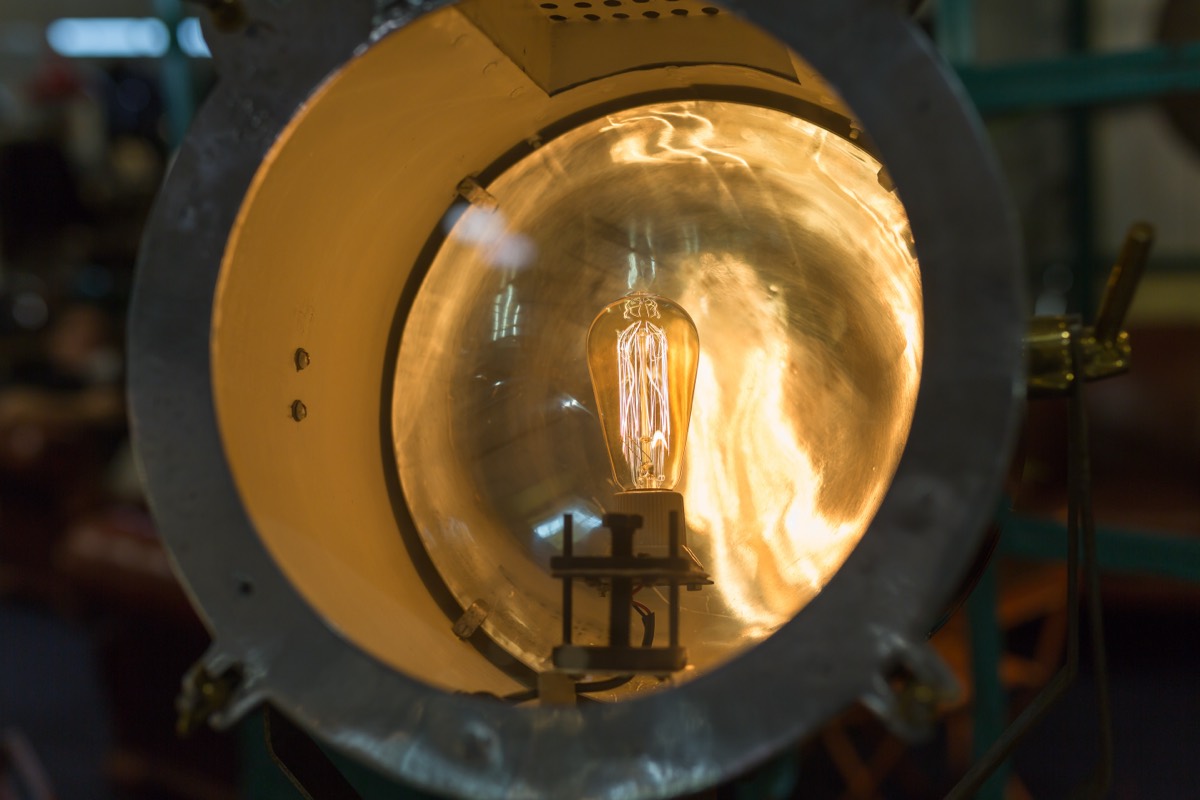
Consolidated Electric Light Co. v. McKeesport Light Co., 159 U.S. 465 (1895), universally known as The Incandescent Lamp Patent, is the case American courts still reach for when a patentee claims a whole class of things but has taught the public how to make only a few of them. Decided November 11, 1895, in an opinion by Justice Henry Billings Brown, it invalidated the Sawyer and Man claim to an incandescing conductor formed of any “carbonized fibrous or textile material.” More than a century later the Supreme Court leaned on it in Amgen Inc. v. Sanofi, 598 U.S. 594 (2023), to explain why a functional antibody genus failed enablement. The doctrine has a new vocabulary, but its spine is this 1895 lamp case.
At a glance
- Case: Consolidated Electric Light Co. v. McKeesport Light Co., 159 U.S. 465 (1895) (The Incandescent Lamp Patent)
- Decided: November 11, 1895; opinion by Justice Brown; decree below affirmed
- Holding: A claim to a broad genus of materials (all carbonized fibrous or textile substances) is invalid where the inventors did not show that the whole class shares the quality that makes the invention work and did not enable a skilled person to practice the full scope.
- Significance: The original full-scope enablement decision for functional genus claims, and a direct ancestor of modern enablement law reaffirmed in Amgen v. Sanofi.
The patent and the two lamp systems
The suit was a bill in equity to recover for infringement of Letters Patent No. 317,076, issued May 12, 1885, to the Electro-Dynamic Light Company as assignee of William Sawyer and Albon Man. The invention concerned the incandescent electric lamp, then a young and fiercely contested technology. In an incandescent lamp a current passes through a slender conductor sealed in a vacuum; resistance heats the conductor until it glows. The commercial problem was durability: most conductors burned out or disintegrated quickly.
Sawyer and Man’s specification said only that “we have made use of carbonized paper, and also wood carbon.” Their claims, however, reached much further. Claims 1, 2, and 4 covered an incandescing conductor made of “carbonized fibrous or textile material.” Only claim 3 was limited to the narrower embodiment they actually described, carbonized paper. The litigation pitted the Sawyer and Man patent against the Edison system, whose commercial lamps used a conductor of carbonized bamboo. If those broad claims were valid, they would capture Edison’s bamboo filament, because bamboo is a fibrous, vegetable material. Everyone agreed the narrow paper claim was not infringed.
The court’s reasoning: a class defined by a shared quality
Justice Brown framed the question as whether an inventor who has found that one species of a material works may claim the entire genus to which that species belongs. His answer was a qualified no, and the qualification is the heart of the doctrine.
An inventor may sometimes claim a class. If Sawyer and Man had discovered that fibrous and textile substances possess “some general quality, running through the whole fibrous and textile kingdom,” that made every member of the class peculiarly suited to incandescent lighting, a claim to the class might have been justified. But the record showed the opposite. Most fibrous and textile materials were wholly unsuitable. Success depended on the specific physical properties of particular materials, properties that varied enormously across the vast field of “fibrous and textile” substances, from paper to wood to grasses to countless others.
The Court illustrated the point with the history of Edison’s own research. An examination of over 6,000 vegetable growths, the opinion recounts, “showed that none of them possessed the peculiar qualities that fitted them for that purpose,” and Edison’s months of testing turned up only about three species of bamboo, one species of Amazonian cane, and one or two fibers from the agave family that would serve. Justice Brown drew the lesson by asking “how would it be possible for a person to know what fibrous or textile material was adapted to the purpose of an incandescent conductor, except by the most careful and painstaking experimentation?” That fact was decisive. If a workable filament could be found only through an exhaustive hunt across thousands of materials, then the class as a whole did not share a common enabling quality. Sawyer and Man had not invented every fibrous conductor; they had disclosed one, carbonized paper, and speculated about a universe they had never mapped.
The patent bargain: disclosure must match the claim
Beneath the technical discussion lies a principle about the consideration an inventor gives for a patent. The grant is a bargain: the public confers a period of exclusivity, and in exchange the inventor teaches the public how to make and use the invention. When the claim is broader than the teaching, the inventor takes more than the disclosure paid for. As the Court put it, the fact that paper “happens to belong to the fibrous kingdom did not invest them with sovereignty over this entire kingdom, and thereby practically limit other experimenters to the domain of minerals.”
To allow the sweeping claim would let Sawyer and Man foreclose an entire field of future research. Anyone who later discovered, through hard experimental work, that a particular fiber made a superior filament would be an infringer rather than an innovator. That inverts the patent system’s purpose, which is to reward and disclose real inventions, not to fence off unexplored territory in advance of any actual invention. The Court accordingly held that the claims of the patent, “with the exception of the third, are too indefinite to be the subject of a valid monopoly,” leaving Sawyer and Man with only the narrow claim 3 to carbonized paper, a claim the Edison lamp did not infringe.
From Morse to Amgen: the enablement lineage
The Incandescent Lamp Patent sits in a distinguished line of full-scope enablement cases. Its intellectual predecessor is O’Reilly v. Morse, 56 U.S. (15 How.) 62 (1854), where the Court struck down Samuel Morse’s eighth claim to every use of electromagnetism for marking characters at a distance, whatever the mechanism. Morse had invented the telegraph, not the whole future of electromagnetic communication, and could not claim what he had not enabled. The lamp case applied the same logic to a genus of materials rather than a genus of methods.
The lineage runs forward to the present. In Amgen Inc. v. Sanofi, the Supreme Court invalidated claims to a genus of antibodies defined by their function of binding to PCSK9 and blocking it. Writing for a unanimous Court, Justice Gorsuch expressly invoked The Incandescent Lamp Patent, observing that the more a party claims, the more it must enable, and that Amgen’s disclosure of some antibodies plus a screening method was no more sufficient than Sawyer and Man’s disclosure of paper plus a hope about all fibrous materials. Under 35 U.S.C. § 112(a), a specification must enable a person skilled in the art to make and use the full scope of the claimed invention, and a research assignment is not a teaching. The 1895 lamp case is the doctrine’s origin story.
Open questions
The lamp case supplies a principle but not a bright line. It does not tell us how much variation within a class is too much, or how many representative species a specification must disclose before a genus claim becomes enabled. Those questions remain intensely fact-specific and are relitigated in every chemical, biological, and materials-science dispute. The decision also predates the modern separation of enablement from the written-description requirement, which now polices genus claims through an additional lens. Courts today often deploy both doctrines against the same broad claim, and the boundary between them continues to generate argument.
Implications for inventors and businesses
- Claim only as broadly as you have taught. A claim that reaches an entire class must rest on a specification showing that the class shares the quality that makes the invention work. Disclosing one working species does not justify claiming the genus.
- Beware functional and genus claiming. Claims defined by what a material or molecule does, rather than by its structure, invite full-scope enablement attack. Anchor broad claims in disclosed structure and representative diversity.
- Do not fence off future research. A claim that would capture inventions others must still discover through experimentation is vulnerable. The patent rewards teaching, not the reservation of unexplored ground.
- Read old cases as live law. The Incandescent Lamp Patent is not a museum piece. It governs modern biologics and chemistry disputes because the Supreme Court chose to revive it in Amgen.
Frequently asked questions
What did Sawyer and Man claim that the Court found too broad? Claims 1, 2, and 4 of their patent covered an incandescing conductor made of any “carbonized fibrous or textile material.” The Court held that this genus embraced thousands of substances the inventors had never shown would work, so the claim swept far past what their specification actually taught.
Why did Edison’s bamboo filament matter to the decision? Edison found a workable filament (carbonized bamboo) only after testing roughly six thousand vegetable materials. That painstaking search proved that fibrous materials do not share a common quality making them all suitable, which is exactly why a claim to the entire class was not enabled.
Is The Incandescent Lamp Patent still good law? Yes. The Supreme Court relied on it in Amgen Inc. v. Sanofi (2023) as a foundational statement of the rule that a specification must enable the full scope of what a patent claims. It is a live authority against overbroad functional and genus claiming.
Authorities and sources
- Consolidated Electric Light Co. v. McKeesport Light Co., 159 U.S. 465 (1895), full opinion at Cornell Legal Information Institute.
- U.S. Reports scan of The Incandescent Lamp Patent, Library of Congress PDF.
- Amgen Inc. v. Sanofi, 598 U.S. 594 (2023), invoking the lamp case for full-scope enablement, supremecourt.gov opinion.
- O’Reilly v. Morse, 56 U.S. (15 How.) 62 (1854), the telegraph enablement precedent, Cornell LII.
- 35 U.S.C. § 112(a), enablement requirement, Cornell LII.
- Case brief and holding summary, Quimbee.