
A Secret Built From Public Parts: Metallurgical Industries v. Fourtek and the Combination Trade Secret
The Fifth Circuit held that a trade secret can live in a novel combination of publicly known elements, and that sharing information with a few partners need not destroy its secrecy.
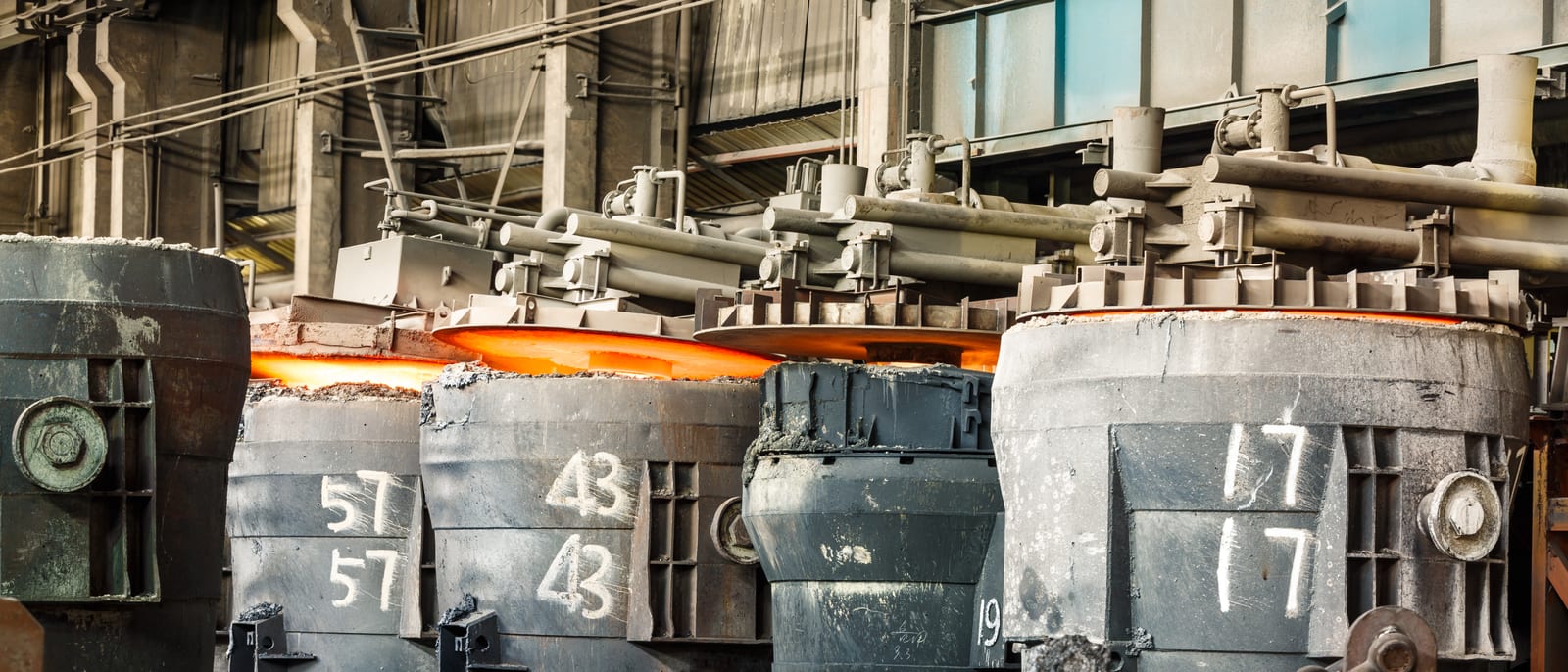
Trade-secret law has a deceptively simple riddle at its core: can you own a secret assembled entirely from pieces that anyone can find? In Metallurgical Industries Inc. v. Fourtek, Inc., 790 F.2d 1195 (5th Cir. 1986), decided June 2, 1986, the Fifth Circuit answered yes. The court held that a trade secret can exist in a unique combination of publicly known elements, and, just as importantly, that disclosing the technology to a handful of business partners does not automatically forfeit its protection. Applying Texas law, the panel reversed the directed verdict that had cut the case off against the former furnace salesman before the jury could weigh it, and in doing so it produced one of the most frequently taught decisions on what qualifies as a trade secret.
At a glance
- Case: Metallurgical Industries Inc. v. Fourtek, Inc., 790 F.2d 1195 (5th Cir. 1986) (applying Texas law).
- Court: U.S. Court of Appeals for the Fifth Circuit; opinion by Circuit Judge Gee.
- Posture: Appeal from directed verdicts for the defendants in a diversity trade-secret misappropriation suit; affirmed in part, reversed in part, and remanded for a new trial. The directed verdict for Irvin Bielefeldt was reversed; the one for Smith International was affirmed because Smith had not commercially used the furnace.
- Holding: A trade secret may consist of a novel combination of otherwise publicly known elements, and limited disclosures made to advance the holder’s economic interests do not necessarily destroy secrecy.
- Significance: A landmark articulation of the “combination” trade secret and of the principle that secrecy need not be absolute to be legally protected.
The furnaces and their modifications
Metallurgical Industries was in the business of reclaiming tungsten carbide, recovering valuable carbide from scrap using zinc-recovery furnaces. The company bought furnaces from Therm-O-Vac Engineering & Manufacturing and then spent considerable time, effort, and money modifying them to perform far better than off-the-shelf equipment. The improvements were four: chill plates to create a better temperature differential for distilling the zinc, several smaller crucibles in place of one large one, unitary graphite heating elements in place of segmented ones, and a filter in the vacuum pumps that zinc particles kept clogging. Individually, none of these features was exotic; engineers knew of each. The value lay in combining and tuning them into a furnace that reclaimed carbide efficiently.
After Therm-O-Vac went bankrupt in 1980, its representative Irvin Bielefeldt and three former Therm-O-Vac employees formed Fourtek, which then built a furnace for Smith International incorporating the very modifications Metallurgical had developed. Metallurgical sued for misappropriation of trade secrets. At the close of Metallurgical’s case in chief, the district court directed verdicts for the defendants, its principal reason being that no trade secret was involved at all: Texas law, it thought, protects no “modification process,” the know-how Bielefeldt picked up was too general, and “negative know-how” is unprotected. The Fifth Circuit disagreed.
Secrecy that survives limited disclosure
The opinion’s first major move concerns secrecy. Smith argued that Metallurgical had told outsiders about its furnace modifications (it gave its furnace-design information to Consarc, another furnace manufacturer, in 1978, and disclosed information in 1980 to La Floridienne, its European licensee), so the information could not be secret. Judge Gee rejected the idea that any disclosure is fatal. “Although the law requires secrecy, it need not be absolute,” the court wrote, and after quoting comment b to section 757 of the Restatement of Torts it concluded that “a holder may divulge his information to a limited extent without destroying its status as a trade secret.”
What mattered was the purpose and scope of the disclosures. They were not public announcements: Metallurgical had revealed the information to only two businesses it was dealing with, and it did so to further its own economic interests, hoping Consarc would build the second furnace and collecting royalties from La Floridienne under a long-standing license. That distinguished the case from Luccous v. J.C. Kinley Co., 376 S.W.2d 336 (Tex. 1964), where a patented design had been revealed to all the world. Metallurgical’s own security measures cut the same way: the furnaces sat in areas hidden from public view, signs warned of restricted access, and anyone authorized to see a furnace had to sign a non-disclosure agreement.
The combination trade secret
The second and more enduring holding addresses what can qualify as a secret. The defendants stressed that each modification (chill plates, pump filters, multiple crucibles, unitary graphite heating elements) was individually known in the industry. The court held that this misses the point. “That the scientific principles involved are generally known does not necessarily refute Metallurgical’s claim of trade secrets,” Judge Gee wrote, since a general description of the zinc recovery process reveals nothing about what unitary heating elements and vacuum-pump filters can do for it. Drawing on cases that had quoted the Second Circuit’s formulation, the panel accepted that a trade secret “can exist in a combination of characteristics and components each of which, by itself, is in the public domain, but the unified process, design and operation of which in unique combination, affords a competitive advantage and is a protectible secret.”
The court drew the elements from the Restatement of Torts definition Texas had adopted in Hyde Corp. v. Huffines, 314 S.W.2d 763 (Tex. 1958), and identified three criteria: secrecy, the value the information gives the holder over competitors who do not know it, and the cost of developing it. Patent-grade inventiveness is not among them. The panel was careful to add that not every factor need exist in every case: “Secrecy is always required, of course, but beyond that there are no universal requirements,” and the definition is settled by weighing all the equitable considerations. Because reasonable jurors could find that Metallurgical’s furnace combination was secret, valuable, and the product of substantial investment, the directed verdict for Bielefeldt was error and the claim against him had to go back for trial.
Open questions
- How much disclosure is too much? The court blessed “limited” disclosure for the holder’s benefit but did not draw a bright line; later cases still litigate where confidence ends and publication begins.
- What proof shows a combination is “unique”? The opinion leaves to the factfinder how a plaintiff demonstrates that a specific assembly of public elements rises above what competitors could readily piece together.
- How does this map onto modern statutes? Metallurgical predates the Uniform Trade Secrets Act’s adoption in Texas and the federal Defend Trade Secrets Act; courts continue to apply its reasoning under those regimes.
Implications
- For innovators: Protection is available even when you build from off-the-shelf parts. Document the development effort and the way the combination delivers a competitive edge.
- For licensing and vendor relationships: You can share know-how with the suppliers and partners who help you build, so long as the disclosures are limited, purposeful, and ideally bound by confidentiality. Reasonable, not absolute, secrecy is the standard.
- For litigators: Frame the secret carefully. Pleading and proving the protected combination as an integrated whole, rather than defending each public component, often decides whether the case survives summary judgment or directed verdict.
- For employers: Investment evidence matters. Time, money, and engineering poured into refining a process help show both value and secrecy when a former employee or partner walks the know-how out the door.
Frequently asked questions
Can something be a trade secret if all of its parts are publicly known? Yes. Metallurgical Industries holds that a unique combination of publicly available elements can be a protectable trade secret, even though no single component is itself secret, where the particular assembly provides a competitive advantage and is kept confidential.
Does telling a few business partners destroy a trade secret? Not necessarily. The court held that a holder may divulge information to a limited extent without losing trade-secret status. Metallurgical’s disclosures, to a prospective furnace builder and to a paying licensee, were not public announcements and were made to further its own economic interests, so they did not extinguish the secrecy its other evidence suggested.
Is novelty required for trade-secret protection? Not in the patent sense. Patent-grade inventiveness appears nowhere in the criteria the court drew from the Restatement of Torts: secrecy, the value the information gives the holder over competitors who do not know it, and the cost of developing it. As the opinion put it, that the scientific principles involved are generally known does not necessarily refute a claim of trade secrets.
Authorities and sources
- Full opinion (public.resource.org), 790 F.2d 1195, No. 84-1773: https://law.resource.org/pub/us/case/reporter/F2/790/790.F2d.1195.84-1773.html
- Opinion text (CaseMine): https://www.casemine.com/judgement/us/5914c247add7b049347bea6a
- Opinion text (LSU Biotech Law archive): https://biotech.law.lsu.edu/cases/ip/ts/Metallurigical_v_Fourtek.htm
- Case brief and discussion (Quimbee): https://www.quimbee.com/cases/metallurgical-industries-inc-v-fourtek-inc