
Rogers v. Koons: When Appropriation Art Is Infringement, Not Parody
The Second Circuit held that Jeff Koons's 'String of Puppies' sculpture infringed Art Rogers's photograph and rejected the parody defense because Koons did not target the original work itself.
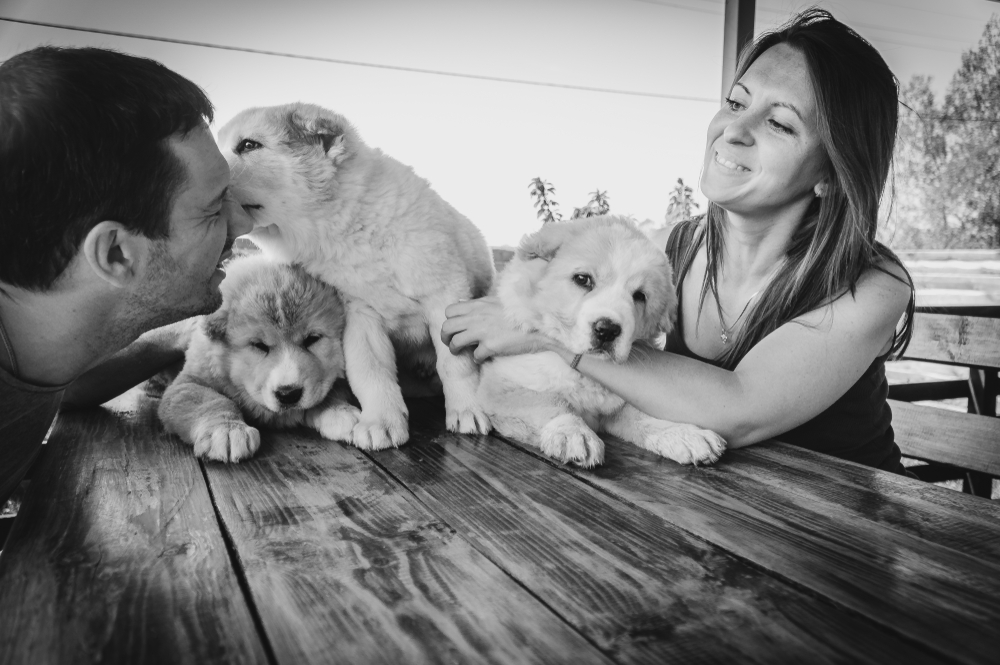
Rogers v. Koons, 960 F.2d 301 (2d Cir. 1992), is the case that drew a hard line between appropriation art and copyright infringement. The celebrated artist Jeff Koons took a modest commercial photograph of a couple holding a litter of puppies, tore the copyright notice off the notecard it appeared on, and had Italian artisans reproduce it as a large polychrome sculpture that he sold for hundreds of thousands of dollars. When the photographer sued, Koons defended on fair use, arguing that his sculpture was a satirical comment on a materialistic society. The Second Circuit was unpersuaded. It held that the sculpture infringed and that the parody defense failed because Koons had not made the photograph itself an object of his commentary. He simply needed a striking image, and he took someone else’s. The decision became the leading pre-Campbell statement on parody, appropriation, and the limits of the fair-use defense.
At a glance
- Case: Art Rogers v. Jeff Koons; Sonnabend Gallery, Inc., 960 F.2d 301 (2d Cir. 1992)
- Court: United States Court of Appeals for the Second Circuit, on appeal from the Southern District of New York
- Decided: April 2, 1992
- Opinion: Circuit Judge Richard J. Cardamone, for the panel (joined by Judges Pierce and Walker)
- Subject matter: Whether a fine-art sculpture copied from a commercial photograph infringes, and whether it is protected as parody or fair use
- Holding: The sculpture infringed the photograph’s copyright, and the fair-use/parody defense failed because the copying targeted the original work only as raw material, not as the subject of the artist’s commentary
The facts and posture
Art Rogers is a professional photographer. He took a black-and-white photograph titled “Puppies” of a man and a woman (the Scanlons) seated on a bench with their arms full of a litter of German Shepherd puppies, and licensed it for use on notecards and similar merchandise. Jeff Koons, a prominent artist working in the appropriation tradition, bought one of the notecards. For his 1988 “Banality” exhibition at the Sonnabend Gallery, he decided to turn the image into a sculpture.
Koons tore the copyright notice off the notecard and sent it to a studio of artisans in Italy with detailed instructions to reproduce the image faithfully in three dimensions: the “work must be just like photo,” the “features of photo must be captured,” and the puppies “need detail in fur. Details—Just Like Photo!” The resulting work, “String of Puppies,” was a polychromed wood sculpture produced in an edition; Koons sold three copies for a total of roughly $367,000, retaining an artist’s proof. He altered some details (the puppies were painted blue, the figures gained flowers in their hair, and the noses were exaggerated), but the underlying composition was unmistakably Rogers’s. Rogers sued for infringement. The district court granted him partial summary judgment on liability, and Koons appealed.
Infringement across media
Koons first argued that a sculpture could not infringe a photograph and that Rogers’s image lacked the originality copyright requires. The court dispatched both points. A photograph is copyrightable in its original elements (the selection of the subjects, their posing, the lighting, the angle, and the overall composition), and Rogers’s deliberate arrangement easily cleared the low originality threshold. Infringement, moreover, does not depend on identity of medium; it depends on copying of protected expression and substantial similarity. Access was undisputed (Koons literally worked from the notecard), and the sculpture reproduced the composition, poses, and expressions so closely that, in the court’s view, an ordinary observer would recognize the sculpture as having been appropriated from the photograph. The additions of color and flowers did not change the essential similarity. Copying was therefore established.
The parody defense and the four factors
The heart of the opinion is its fair-use analysis under 17 U.S.C. § 107, and in particular its treatment of parody. Koons argued that “String of Puppies” was a satire of the mass-produced sentimentality of modern consumer culture and thus a protected parody. The Second Circuit set out the governing limitation: though the satire “need not be only of the copied work” and may also be a parody of modern society, “the copied work must be, at least in part, an object of the parody, otherwise there would be no need to conjure up the original work.” A satirist who wishes to ridicule society at large can find countless images to make the point; only a parodist commenting on the specific original has a genuine need to conjure it up. Because Koons’s asserted target was society, not Rogers’s photograph, copying this work was not necessary to his message, and the parody rationale collapsed.
With parody off the table, the factors ran against Koons. On purpose and character, the use was plainly commercial (the sculptures sold for enormous sums), and the court found bad faith in Koons’s removal of the copyright notice, weighing the factor decisively against fair use. On the nature of the work, Rogers’s creative, published photograph fell within the core of copyright protection. On the amount and substantiality taken, Koons appropriated the essence of the image, copying its expression nearly in its entirety. And on the effect on the market, the court applied the then-prevailing presumption that commercial use causes market harm and noted the concrete threat to Rogers’s ability to license derivative works, including three-dimensional versions of his own photograph. Every factor favored the plaintiff, and the court affirmed liability.
Open questions
Rogers v. Koons announced a strict, target-based definition of parody, and the ground shifted almost immediately. Two years later, in Campbell v. Acuff-Rose Music, Inc., 510 U.S. 569 (1994), the Supreme Court recast the first fair-use factor around “transformative” use, rejected any presumption of market harm from commercial use, and articulated a more forgiving view of how parody and satire fit within § 107. Under that framework, appropriation art fared better: Koons himself won a fair-use judgment in Blanch v. Koons, 467 F.3d 244 (2d Cir. 2006), where the Second Circuit found his reuse of a fashion photograph transformative. The enduring question is how much of Rogers’s reasoning survives: whether its insistence that the parody comment on the original still binds, or whether transformative purpose has largely absorbed it. The 2023 decision in Andy Warhol Foundation v. Goldsmith revived attention to the commercial character of a use, suggesting Rogers’s skepticism of appropriation is far from dead.
Implications
- Parody must target the original. A fair-use parody defense requires that the new work comment, at least in part, on the copied work itself; general social satire that merely borrows a convenient image does not qualify.
- Medium-shifting is still copying. Turning a photograph into a sculpture (or any cross-media reproduction) infringes when the protected expression and composition are carried over; changing dimensions or adding decorative elements does not cure substantial similarity.
- Bad faith and notice-stripping hurt. Removing a copyright notice and copying deliberately can push the first factor firmly against a defendant and color the entire fair-use inquiry.
- The doctrine has moved. Campbell’s transformative-use analysis and Koons’s later win in Blanch show that Rogers’s rigid parody rule has softened, but the tension between appropriation and infringement remains live after Warhol v. Goldsmith.
Frequently asked questions
Why did Jeff Koons lose the fair use defense? The Second Circuit rejected Koons’s parody argument because a parody must comment, at least in part, on the copied work itself. Koons said he was satirizing society at large, not Art Rogers’s photograph, so copying that specific image was not necessary and the use was not a protected parody.
Did it matter that Koons made a sculpture from a photograph? No. Copyright infringement does not require copying in the same medium. The court found the sculpture substantially similar to the photograph (Koons instructed his artisans to replicate the composition, poses, and expressions faithfully), so changing dimensions and adding color did not avoid liability.
How does Rogers v. Koons compare to Campbell v. Acuff-Rose? Rogers narrowly defined parody as commentary on the original. Two years later, the Supreme Court in Campbell v. Acuff-Rose Music (1994) embraced transformative-use analysis and a more flexible view of parody, and Koons himself later prevailed on fair use in Blanch v. Koons (2006) under that transformative framework.
Authorities and sources
- Rogers v. Koons, 960 F.2d 301 (2d Cir. 1992) (decided April 2, 1992; Cardamone, J.). Full-text opinion (Public.Resource.Org).
- Facts, parody analysis, and four-factor holding corroborated by the U.S. Copyright Office Fair Use Index summary and Wikipedia: Rogers v. Koons.
- Later transformative-use framework: Campbell v. Acuff-Rose Music, Inc., 510 U.S. 569 (1994), Cornell LII; Koons’s later fair-use win, Blanch v. Koons, 467 F.3d 244 (2d Cir. 2006).