
Ink on Trial: Sedlik v. Von Drachenberg and the Fight Over Tattoos, Photographs, and the Ninth Circuit's Similarity Test
A photographer's Miles Davis portrait, a Kat Von D tattoo, and a jury verdict now headed for en banc rehearing that could remake how the Ninth Circuit measures substantial similarity.
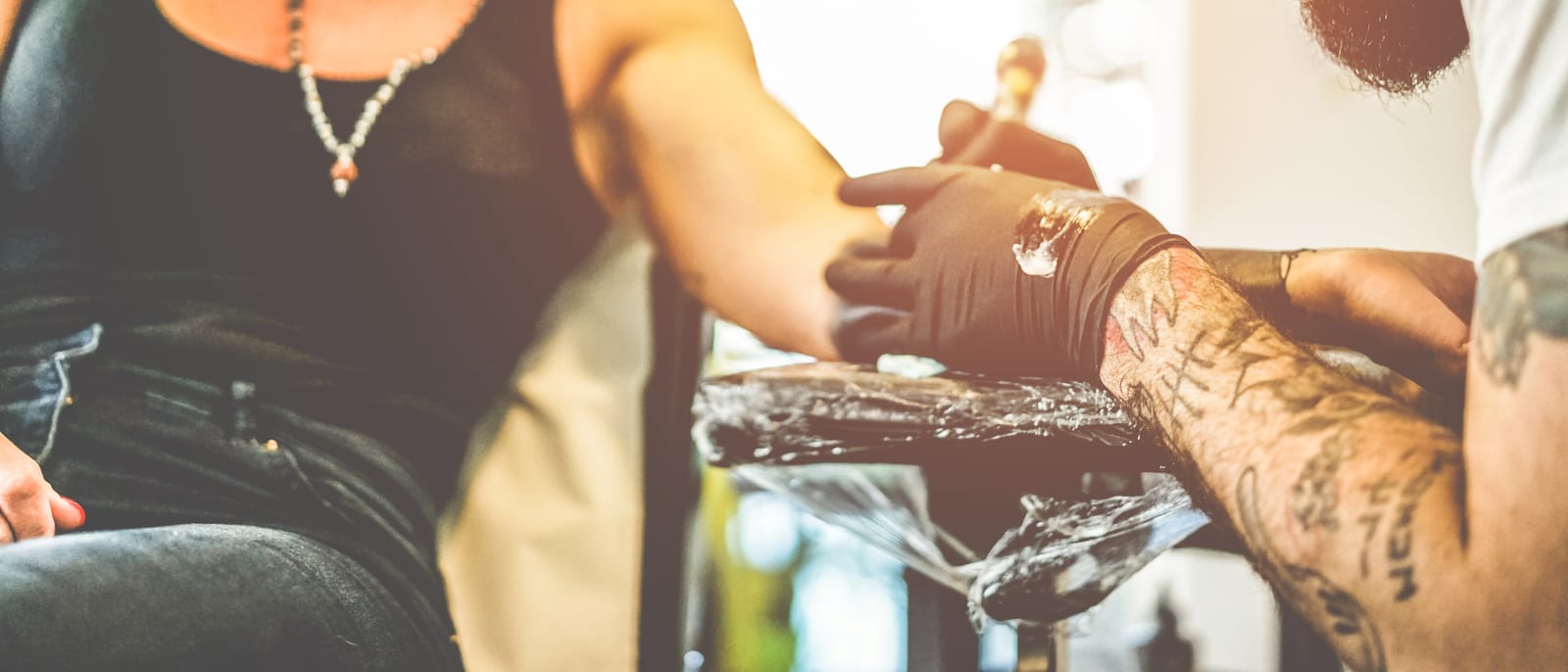
A celebrity tattoo artist, a jazz icon, and a decades-old portrait have combined into one of the most closely watched copyright disputes on the West Coast. In Sedlik v. Von Drachenberg, No. 24-3367 (9th Cir.), photographer Jeffrey Sedlik alleges that tattoo artist Katherine Von Drachenberg (Kat Von D) infringed his registered 1989 portrait of Miles Davis by using it as the reference for a tattoo and by posting images of the work in progress. A Los Angeles jury sided largely with Von Drachenberg in 2024, a Ninth Circuit panel affirmed in January 2026, and then, in June 2026, the full court granted en banc rehearing. That unusual step vacated the panel decision and put the circuit’s substantial-similarity doctrine itself on the table. This matter remains unsettled as of June 29, 2026, and nothing here should be read as a final ruling.
At a glance
- Case: Sedlik v. Von Drachenberg, No. 24-3367 (9th Cir.), on appeal from Sedlik v. Von Drachenberg, No. 2:21-cv-01102 (C.D. Cal.) before Judge Dale S. Fischer.
- Court: U.S. Court of Appeals for the Ninth Circuit; January 2, 2026 per curiam panel opinion by Judges Kim McLane Wardlaw, Salvador Mendoza, Jr., and Anthony D. Johnstone (with separate concurrences by Judges Wardlaw and Johnstone), vacated on grant of rehearing en banc.
- Posture: Plaintiff’s appeal from a defense jury verdict; panel affirmed; en banc rehearing granted June 9, 2026, vacating the panel opinion.
- Status: Pending before the en banc Ninth Circuit, unsettled as of June 29, 2026.
- Significance: Tests how copyright applies when a photograph is reproduced as a tattoo, and squarely teases the circuit’s “intrinsic test” and its “total concept and feel” standard for substantial similarity.
Sedlik created and registered a distinctive black-and-white portrait of Miles Davis in 1989, making deliberate choices about pose, lighting, and expression. In 2017, Von Drachenberg used the photograph as a reference to tattoo a friend, Blake Farmer, as a gift, and she shared sketches and process images on social media. Sedlik sued for infringement. The complaint alleges that the tattoo and the related images copied protected expression from his photograph; the defense has contended the works are not substantially similar and, where copying is conceded, that fair use applies.
What the jury decided
After trial, the jury returned a mixed but largely defense-favorable verdict. As to six works (the tattoo itself, an accompanying sketch, and four social-media posts), the jury found the works were not substantially similar to Sedlik’s photograph. Von Drachenberg had stipulated that four additional social-media posts, the “Process Images” depicting her in the act of inking the tattoo, were substantially similar because they contained a reproduction of the photograph, but the jury concluded those uses were fair use and therefore not infringing.
That outcome left Sedlik with no liability finding and prompted his appeal. The appeal does not rest on a claim that copying never occurred; rather, it challenges how the jury was instructed and how the governing substantial-similarity standard was applied. Because the case turns on contested applications of doctrine rather than a clean legal holding, its ultimate significance depends on what the appellate court does with that doctrine, which is now the open question.
The panel opinion and the concurrences that lit the fuse
The three-judge panel affirmed the verdict in a January 2, 2026 opinion, leaving the Ninth Circuit’s two-part substantial-similarity framework intact. That framework pairs an “extrinsic test” (an objective comparison of protectable elements) with an “intrinsic test” (whether an ordinary observer perceives the same “total concept and feel”). The panel applied the existing law and found no reversible error.
But two judges wrote separately to attack the doctrine. Judge Wardlaw, concurring in the judgment, wrote that the intrinsic test “has fundamental flaws, and we should consider dispensing with it altogether,” and quoted the circuit’s own Shaw v. Lindheim, 919 F.2d 1353 (9th Cir. 1990), for the point that the test is “virtually devoid of analysis.” She warned that its focus on the “total concept and feel of the works” contradicts 17 U.S.C. § 102(b), which excludes ideas and concepts from copyright protection. Judge Johnstone concurred separately and likewise questioned what role, if any, the intrinsic test should play going forward; each judge joined the other’s concurrence. Those concurrences signaled that the doctrine was vulnerable, an invitation the full court appears to have accepted.
Why the en banc grant matters
On June 9, 2026, Chief Judge Mary H. Murguia issued an order granting rehearing en banc. Under Ninth Circuit practice, that grant vacates the panel opinion, so the January 2026 decision no longer stands as precedent and the appeal will be reheard by a larger panel of the court. En banc rehearings are rare; the court grants only a handful each year. That it took this case suggests the full court wants to reconsider the “intrinsic test” and the “total concept and feel” standard that the concurrences criticized.
The stakes reach well beyond tattoos. The intrinsic test governs substantial-similarity analysis across the circuit, in music, software, film, and visual art. If the en banc court narrows or replaces it, the change would ripple through copyright litigation in the nation’s largest federal circuit. For now, though, the court has not decided the merits, and no appellate rule from this case currently governs. The complaint’s allegations, the jury’s findings, and the doctrinal critiques all remain live as the en banc process unfolds.
Open questions
- Will the en banc court keep, narrow, or discard the intrinsic test? The grant signals reconsideration of “total concept and feel,” but the court has not ruled, and several outcomes remain possible.
- How should fair use apply to tattoo reproductions of a photograph? The jury found fair use for the conceded process images, but the appellate court has not endorsed any general standard for tattoo-medium uses.
- What counts as protectable expression carried from a photo into a tattoo? The case probes how much of a portrait’s pose, lighting, and rendering a tattoo may borrow before it copies protected expression rather than an unprotectable idea.
Implications
- For photographers: A registered photograph’s expression can, in principle, be infringed when reproduced in another medium, but proving substantial similarity (and overcoming fair use) remains difficult and is exactly what is being relitigated.
- For tattoo artists and studios: Using a photo as a reference carries real legal risk; the safest course is licensed or original reference material, because the law here is in flux and no final ruling protects the practice.
- For litigators across the circuit: The intrinsic test and “total concept and feel” may be reshaped en banc; preserve arguments under both the current framework and any narrower successor standard.
- For everyone watching: Treat the January 2026 panel opinion as vacated and non-precedential; await the en banc decision before drawing conclusions. This matter remains unsettled as of June 29, 2026, and nothing here should be read as a final ruling.
Frequently asked questions
Did Kat Von D win the tattoo copyright case? A jury found in her favor in 2024, and a Ninth Circuit panel affirmed in January 2026. But the full court then granted en banc rehearing in June 2026, which vacated the panel opinion. The case is now being reheard, so there is no final appellate ruling governing it.
What is the Ninth Circuit’s intrinsic test that is under fire? It is the second half of the circuit’s two-part substantial similarity analysis, asking an ordinary observer whether two works share the same total concept and feel. Concurring judges criticized it as vague and possibly inconsistent with copyright’s exclusion of ideas, and the en banc court may reconsider it.
Can a tattoo based on a photograph infringe copyright? It can, in principle, because a photograph’s protected expression can be copied into another medium. Whether a particular tattoo infringes turns on substantial similarity and possible defenses like fair use, which is exactly what the courts are still sorting out here.
Authorities and sources
- Ninth Circuit panel opinion (Jan. 2, 2026), No. 24-3367 (vacated on rehearing en banc): https://cdn.ca9.uscourts.gov/datastore/opinions/2026/01/02/24-3367.pdf
- Plaintiff-appellant opening brief, No. 24-3367 (Berkeley Law copy): https://www.law.berkeley.edu/wp-content/uploads/2025/01/Opening-Brief_Sedlik-v.-Von-Drachenberg-et-al.-Docket-No.-24-3367-9th-Cir.-May-29-2024-Court-Docket.pdf
- 17 U.S.C. § 102 (subject matter; idea-expression exclusion, Cornell LII): https://www.law.cornell.edu/uscode/text/17/102
- Ninth Circuit order granting rehearing en banc and vacating the panel opinion (June 9, 2026), No. 24-3367: https://cdn.ca9.uscourts.gov/datastore/opinions/2026/06/09/24-3367.pdf
- ASMP report on the en banc rehearing grant: https://www.asmp.org/advocacy/sedlik-v-von-d/