
TianRui v. ITC: How Section 337 Reached a Theft That Happened in China
The Federal Circuit held that the International Trade Commission may bar imports based on trade-secret misappropriation occurring entirely in China, opening the ITC as a forum for cross-border theft.
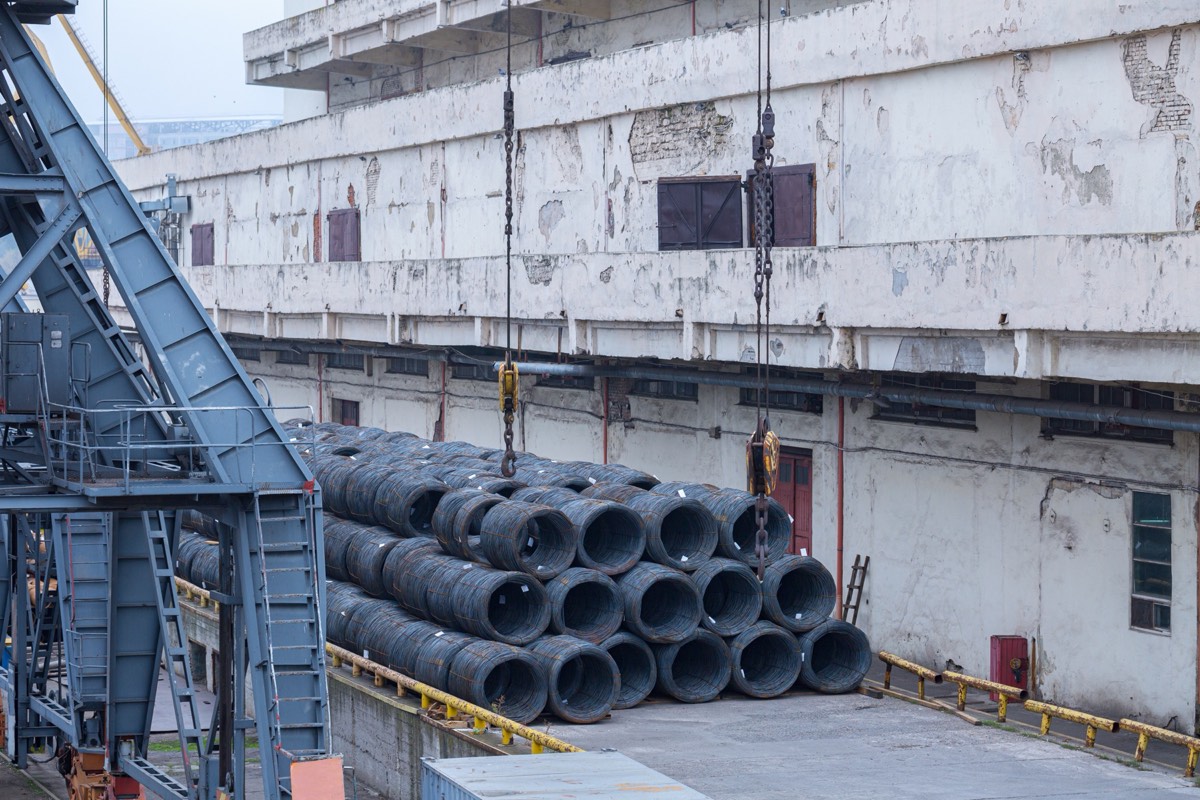
The caption reads TianRui Group Co. v. International Trade Commission, No. 2010-1395, decided by the United States Court of Appeals for the Federal Circuit on October 11, 2011, on appeal from the U.S. International Trade Commission in Certain Cast Steel Railway Wheels, Inv. No. 337-TA-655. In a 2-1 decision authored by Judge William C. Bryson, with Judge Kimberly A. Moore dissenting, the court answered a question no appellate court had squarely faced: may the Commission bar the importation of goods because of trade-secret misappropriation that took place entirely on foreign soil? The majority said yes. The dissent called the potential breadth of that holding “staggering.” More than a decade later, TianRui remains the foundational authority for using the ITC as a venue against international trade-secret theft.
At a glance
- Case: TianRui Group Co. v. International Trade Commission, No. 2010-1395
- Court: U.S. Court of Appeals for the Federal Circuit
- Decided: October 11, 2011
- Underlying proceeding: Certain Cast Steel Railway Wheels, Processes for Manufacturing or Relating to Same, and Certain Products Containing Same, ITC Inv. No. 337-TA-655
- Parties: Complainant Amsted Industries Inc.; respondents TianRui Group Company Ltd., TianRui Group Foundry Company Ltd., Standard Car Truck Company, and Barber TianRui Railway Supply LLC
- Panel: Bryson, J. (majority, joined by Schall, J.); Moore, J. (dissenting)
- Holding: Section 337 of the Tariff Act of 1930 permits the ITC to bar imports based on trade-secret misappropriation that occurred abroad, and a single federal standard (not state law) governs what constitutes misappropriation for that purpose
- Significance: The first appellate decision authorizing the ITC to reach wholly extraterritorial trade-secret theft, provided the resulting goods are imported and a domestic industry is injured
The conduct that happened entirely in China
Amsted Industries owns two secret processes for casting steel railway wheels, the “ABC process” and the “Griffin process.” It once practiced the ABC process at its foundry in Calera, Alabama, but no longer uses it in the United States; its three domestic foundries run the Griffin process instead. The ABC process it had licensed to several firms with foundries in China. In 2005 TianRui, a Chinese firm, sought a license to Amsted’s wheel technology, and the parties could not agree on terms. Rather than walk away, TianRui hired nine employees away from Datong ABC Castings Company, one of Amsted’s Chinese licensees. Some had been trained in the ABC process at the Calera plant and others at the Datong foundry. Datong’s written employee code of conduct had told all nine that ABC process information was proprietary and confidential, and eight of the nine had also signed confidentiality agreements before leaving. They joined TianRui and disclosed the ABC process. TianRui used that misappropriated know-how to manufacture cast steel railway wheels, which it then marketed in the United States through a joint venture with Standard Car Truck, Barber TianRui Railway Supply.
Every operative act of misappropriation (the recruitment, the disclosure of confidential information, the use of the secret process to make wheels) occurred in China. The only domestic touchpoint was the endpoint: importation of the finished wheels into the U.S. market. That geographic asymmetry framed the entire appeal. TianRui argued that Section 337 cannot reach conduct that takes place beyond U.S. borders, and that applying it to acts in China offended the longstanding presumption against the extraterritorial application of American statutes.
A single federal standard for misappropriation
Before reaching extraterritoriality, the Federal Circuit had to decide which body of law defined “misappropriation” for Section 337 purposes. The administrative law judge had analyzed the misappropriation under Illinois trade-secret law, applying the law of the state where Amsted and the domestic respondents had their principal place of business, and Amsted defended that choice on appeal. The court rejected it, holding that a uniform federal standard controls. What law applies in a Section 337 proceeding involving trade secrets was, the court said, a matter of first impression. Section 337 prohibits “unfair methods of competition and unfair acts in the importation of articles,” 19 U.S.C. § 1337(a)(1)(A), and the court reasoned that the meaning of that federal trade statute should not vary with the law of whatever state or nation the underlying conduct happened to touch. Drawing on the Restatement of Unfair Competition and the widely adopted Uniform Trade Secrets Act, the court articulated a generally accepted definition of misappropriation and applied it directly.
This choice mattered. By federalizing the substantive standard, the court detached the Section 337 inquiry from the accident of where the theft occurred. For purposes of defining misappropriation, it no longer mattered which state’s or nation’s rules would have governed the conduct; the question was whether it met the federal definition and produced an unfair act in importation. Foreign law did not drop out entirely, though: the court still asked, as a matter of comity, whether applying that federal standard conflicted with Chinese law.
Why the presumption against extraterritoriality did not bar relief
The heart of the opinion addressed the presumption against extraterritoriality: the default rule that Congress legislates with domestic concerns in mind. The majority offered three reasons the presumption did not defeat the Commission’s authority.
First, the court pointed to the statute’s express subject matter. Section 337 is directed at unfair methods of competition and unfair acts “in the importation of articles … into the United States,” so, in the court’s words, “this is surely not a statute in which Congress had only ‘domestic concerns in mind.’” The focus of Section 337, the majority wrote, is on “an inherently international transaction,” namely importation. The court analogized to immigration statutes that bar admission of an alien based on conduct or statements abroad: the point is not to punish that conduct but to set the conditions of entry, so Congress can be assumed to have contemplated that the statute would reach acts occurring overseas.
Second, the court emphasized that the Commission had not sanctioned purely extraterritorial conduct. The foreign activity mattered “only to the extent that it results in the importation of goods into this country causing domestic injury.” Section 337 relief is available only where the unfair acts threaten to “destroy or substantially injure an industry in the United States,” and Amsted’s domestic wheel-manufacturing industry supplied that nexus. Because foreign conduct was used only to establish an element of a claim alleging domestic injury and seeking what the court called “a wholly domestic remedy,” the presumption did not apply. An exclusion order does not enjoin TianRui’s conduct in China or reach its sales elsewhere; the Commission, as the majority put it, was not given authority to “police Chinese business practices.” It “only sets the conditions under which products may be imported into the United States.”
Third, the court read the legislative history to support the Commission’s interpretation. Congress first prohibited “unfair methods of competition” in Section 5 of the Federal Trade Commission Act of 1914, choosing that phrase because it was “broader and more flexible” than the narrower common-law term “unfair competition.” It carried the same language into the Tariff Act of 1922, acting on a recommendation the Tariff Commission (the ITC’s predecessor) had made in a 1919 report identifying gaps in U.S. trade law. That history, the majority reasoned, indicated a similarly broad and flexible meaning in the import context.
Judge Moore disagreed, and pointedly. In her view, the majority expanded both Section 337 and trade-secret law to punish conduct occurring entirely in China, with consequences whose breadth she found difficult to cabin. Her dissent has become the standard articulation of the concern that TianRui lets the ITC sit in judgment of foreign business conduct under the banner of import regulation.
Open questions
TianRui answered the threshold question of authority but left the contours of that authority unsettled. The opinion did not define how attenuated the domestic link may become before the importation nexus dissolves: what happens, for instance, when the misappropriator imports only a trickle of goods, or when the connection between the foreign theft and the imported article is indirect. It did not resolve how the Commission should treat parallel foreign proceedings adjudicating the same theft, an issue that would surface squarely in later cases. The court did take up comity, but on a record that made it easy: it found no conflict between the principles the Commission applied and Chinese trade-secret law, noting that TianRui had failed to identify one and had itself argued in its forum non conveniens motion that Chinese law would supply a “more than adequate” remedy, and that China’s accession to TRIPS left no discernible gap between article 39 and the standard applied below. What a genuine conflict between U.S. and foreign trade-secret regimes would require, or how the Commission should weigh comity when a respondent’s home jurisdiction has reached a contrary conclusion, the opinion had no occasion to decide. The decision settled that the door is open; it left for future investigations the question of how wide.
Implications
- The ITC is a viable forum for foreign theft. Where a competitor steals trade secrets abroad and imports the resulting goods, Section 337 offers a path to an exclusion order even when every act of misappropriation occurred overseas.
- Importation plus domestic injury is the nexus. Complainants must anchor the claim in goods entering the United States and harm to a domestic industry; the foreign theft is actionable because it taints those imports.
- A federal standard governs. Misappropriation is judged by a uniform federal definition drawn from the Restatement and the Uniform Trade Secrets Act, not by the law of the place where the theft occurred.
- The remedy is a border measure, not a global injunction. An exclusion order stops offending articles at the U.S. line; it does not reach the respondent’s conduct or sales abroad, which both narrows the relief and helps it survive extraterritoriality objections.
- Speed and leverage. ITC investigations move on a statutory schedule and can yield exclusion orders that a foreign defendant may find harder to evade than a district-court judgment requiring overseas enforcement.
Frequently asked questions
Did TianRui hold that U.S. trade-secret law applies in China? No. The court held that a federal standard defines misappropriation for purposes of Section 337, and that the Commission may consider conduct occurring abroad in deciding whether an unfair act in importation occurred. The remedy reaches only goods imported into the United States; it does not regulate the respondent’s conduct within China.
Why didn’t the presumption against extraterritoriality bar the claim? The majority gave three reasons. Section 337 is expressly aimed at unfair acts “in the importation of articles” into the United States, so it is not a statute enacted with only domestic concerns in mind; its focus is an inherently international transaction. The Commission had not sanctioned purely foreign conduct, because the theft in China mattered only insofar as it produced imports causing domestic injury, and the remedy was wholly domestic. And the legislative history of the “unfair methods of competition” language supported a broad reading. So applying the statute to bar tainted imports was not an impermissible extraterritorial application, even though the underlying theft happened in China.
What relief did Amsted obtain? The Commission found a Section 337 violation and issued a limited exclusion order barring importation of unlicensed cast steel railway wheels manufactured using Amsted’s misappropriated ABC process. The Federal Circuit affirmed the Commission’s determination.
Authorities and sources
- TianRui Group Co. v. International Trade Commission, 661 F.3d 1322, No. 2010-1395 (Fed. Cir. Oct. 11, 2011), slip opinion from the court’s own site: https://cafc.uscourts.gov/opinions-orders/10-1395.pdf
- WIPO Lex entry, TianRui Group Co. Ltd. v. International Trade Commission (Fed. Cir. 2011): https://www.wipo.int/wipolex/en/judgments/details/954
- Notice of Investigation, Certain Cast Steel Railway Wheels, Inv. No. 337-TA-655, 73 Fed. Reg. 53,441 (Sept. 16, 2008): https://www.govinfo.gov/content/pkg/FR-2008-09-16/html/E8-21588.htm
- Notice of Commission Determination Not To Review a Final Initial Determination Finding a Violation of Section 337, Inv. No. 337-TA-655 (Dec. 23, 2009): https://www.govinfo.gov/content/pkg/FR-2009-12-23/html/E9-30509.htm
- Issuance of a Limited Exclusion Order and Cease and Desist Orders; Termination of the Investigation, Inv. No. 337-TA-655, 75 Fed. Reg. 8,114 (Feb. 23, 2010): https://www.govinfo.gov/content/pkg/FR-2010-02-23/html/2010-3421.htm
- Morrison & Foerster, “Post-TianRui: A Survey of Trade Secret Litigation and Extraterritoriality in the ITC” (May 14, 2021): https://www.jdsupra.com/legalnews/post-tianrui-a-survey-of-trade-secret-1521517/
- 19 U.S.C. § 1337 (Section 337 of the Tariff Act of 1930): https://www.law.cornell.edu/uscode/text/19/1337