Vans v. MSCHF: The Wavy Baby Gives Jack Daniel's Its First Appellate Test
The Second Circuit affirms the Wavy Baby injunction, holding Jack Daniel's bars Rogers when a parody sneaker uses Vans' marks as source identifiers.
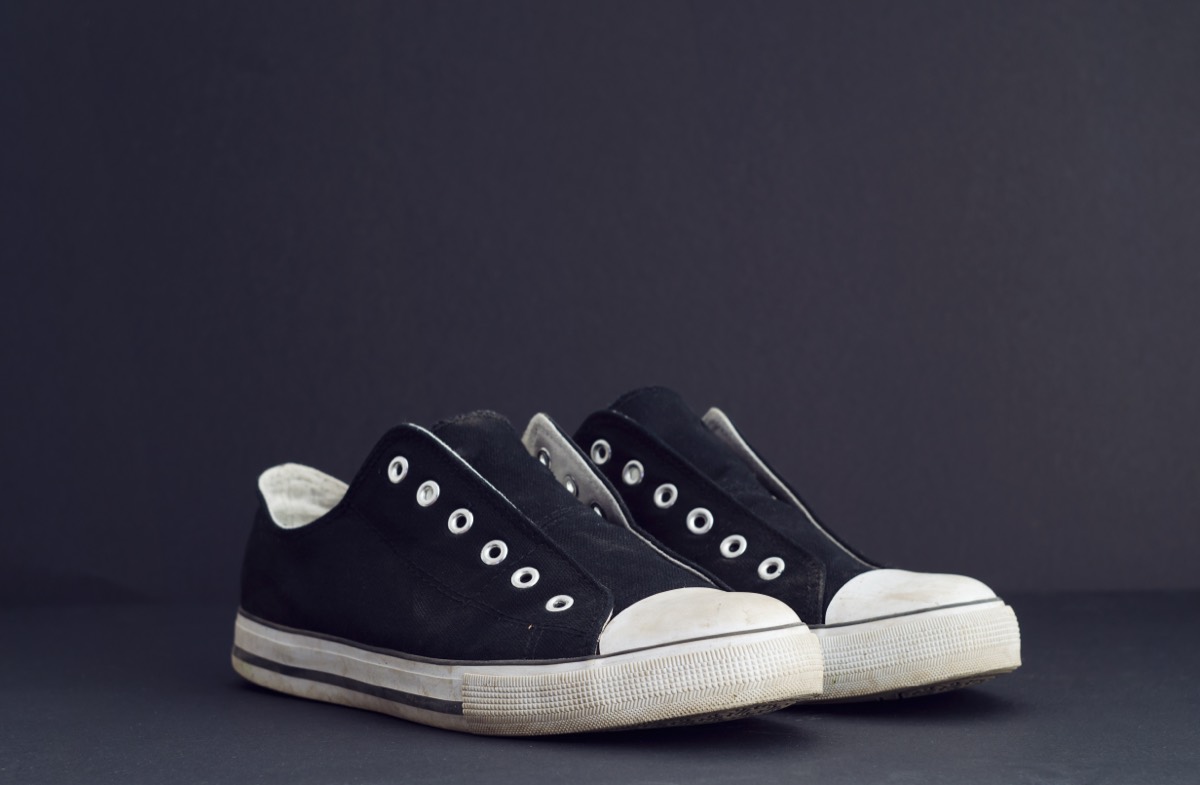
In Vans, Inc. v. MSCHF Product Studio, Inc., 88 F.4th 125 (2d Cir. 2023) (No. 22-1006), decided December 5, 2023, the Second Circuit became the first federal court of appeals to apply the Supreme Court’s decision in Jack Daniel’s Properties, Inc. v. VIP Products LLC, 599 U.S. 140 (2023). In a per curiam opinion for a panel of Judges Jacobs, Chin, and Robinson, the court affirmed a preliminary injunction barring MSCHF, the Brooklyn art collective behind a string of provocative limited-edition product drops, from selling its “Wavy Baby” sneaker, a deliberately distorted take on Vans’ Old Skool skate shoe.
The decision matters because it answered the first practical question left open by Jack Daniel’s: how aggressively would lower courts apply the new rule that the speech-protective Rogers test is unavailable when an accused infringer uses another’s trademark as a source identifier for its own goods? The Second Circuit’s answer was emphatic. A parody sold as a competing product is an ordinary trademark case, the parodic message earns no threshold First Amendment screen, and a parody that leaves consumers confused about source has failed on its own terms.
At a glance
- Case: Vans, Inc. v. MSCHF Product Studio, Inc., 88 F.4th 125 (2d Cir. 2023) (No. 22-1006)
- Court: United States Court of Appeals for the Second Circuit
- Decided: December 5, 2023; per curiam (Jacobs, Chin, and Robinson, JJ.); preliminary injunction affirmed
- Holding: Under Jack Daniel’s, MSCHF’s use of Vans’ marks and trade dress as source identifiers for the Wavy Baby foreclosed heightened First Amendment scrutiny under Rogers, and the district court properly found likely confusion under the Polaroid factors.
- Status: Final. The parties settled in August 2024, and the district court entered a consent judgment with a permanent injunction against the Wavy Baby.
The doctrinal frame: Rogers, parody, and the Jack Daniel’s trigger
For three decades, defendants who borrowed trademarks for expressive purposes had a powerful threshold shield. Rogers v. Grimaldi, 875 F.2d 994 (2d Cir. 1989), held that the Lanham Act does not reach the use of a mark in an expressive work unless the use has no artistic relevance to the work or explicitly misleads as to source. Born as a rule about movie titles, Rogers migrated outward to song lyrics, video games, and, increasingly, physical products that claimed an artistic message.
Jack Daniel’s stopped that migration. The Supreme Court held unanimously that whatever Rogers’ merits for genuinely expressive works, the test does not apply when the accused infringer uses the plaintiff’s mark “as a designation of source for the infringer’s own goods.” VIP Products’ Bad Spaniels dog toy poked fun at the Jack Daniel’s bottle, but it also used the borrowed look to brand VIP’s own product, so the claim went to the ordinary likelihood-of-confusion analysis. Parody did not become irrelevant; an obvious, successful parody still tends to defeat confusion on the merits. But parody lost its power to end the case at the threshold. The open question was how courts would locate the line between source-identifying uses and purely expressive ones, especially for objects marketed as art. Vans v. MSCHF drew it first.
A one-hour sellout: the facts and the posture
MSCHF built its reputation on scarce, conceptually loaded drops. In April 2022 it released the Wavy Baby, a sneaker created in collaboration with the rapper Tyga. The shoe took the visual vocabulary of Vans’ Old Skool, the black-and-white colorway, the side stripe, the perforated sole, and the heel logo, and ran it through a funhouse mirror, producing a shoe the record described as exceedingly wavy. MSCHF framed the distortion as commentary on consumerism in sneakerhead culture: a collectible so warped it mocked the very idea of a wearable skate shoe. It sold like footwear anyway. Priced at $220, all 4,306 pairs sold out in one hour on April 18, 2022 through MSCHF’s own app.
Vans moved before the shoes ever shipped. It sent cease and desist letters to Tyga on April 5, 2022 and to MSCHF the next day, then filed suit in the Eastern District of New York on April 14, four days ahead of the drop, asserting six state and federal claims including trademark infringement, trade dress infringement, dilution, and unfair competition. MSCHF launched the pre-planned drop anyway. Judge William F. Kuntz II granted a temporary restraining order and preliminary injunction that barred further marketing and sales and ordered MSCHF to escrow the revenues from the pairs it had already sold. MSCHF appealed. While the appeal was pending, the Supreme Court decided Jack Daniel’s, transforming the legal landscape the parties had briefed. The Second Circuit then decided the appeal under the new framework.
Source identifiers all the way down: the court’s reasoning
The panel held that Jack Daniel’s “forecloses MSCHF’s argument that Wavy Baby’s parodic message merits higher First Amendment scrutiny” under Rogers. The court found that MSCHF used Vans’ marks in much the same way that VIP Products had used Jack Daniel’s marks: as source identifiers. The Wavy Baby was a shoe, sold as a shoe, branded with distorted versions of the very marks and trade dress that tell consumers a shoe comes from Vans. Even accepting that the product carried an expressive message, the court explained that special First Amendment protections do not apply when trademarks are used for source identification.
With Rogers off the table, the case became a conventional confusion dispute under Polaroid Corp. v. Polarad Electronics Corp., 287 F.2d 492 (2d Cir. 1961), and nearly every factor ran against MSCHF. Vans’ marks were strong; MSCHF had chosen the Old Skool precisely because it was iconic. The marks and trade dress were similar despite the wavy distortion, and the court treated MSCHF’s admitted intent to evoke the Old Skool as evidence of similarity rather than as a defense. The products were proximate: both were sneakers sold to the general sneaker-buying public. Vans submitted evidence of actual confusion, including consumers who believed the Wavy Baby was a Vans collaboration. And the buyers were ordinary consumers, not sophisticated professionals, notwithstanding the $220 price.
The panel then addressed parody directly. Echoing Jack Daniel’s, it acknowledged that a parody must create enough contrast with its subject that the “message of ridicule or pointed humor comes clear,” in which case “a parody is not often likely to create confusion.” The Wavy Baby, the panel concluded, is a parody, just not one entitled to protection under Rogers. Its holding was blunt: if a parodic use of protected marks and trade dress leaves confusion as to the source of a product, the parody has not “succeeded” for purposes of the Lanham Act, and the infringement is unlawful. The district court had made the same point below by way of Harley-Davidson, Inc. v. Grottanelli, 164 F.3d 806 (2d Cir. 1999), noting that courts “have not hesitated to prevent a manufacturer from using an alleged parody of a competitor’s mark to sell a competing product.” On this record, the joke had not landed clearly enough to erase the confusion the Polaroid factors predicted and the evidence confirmed.
Escrow, bond, and the mechanics of preliminary relief
Two remedial rulings give the opinion practical bite. First, the court affirmed the district court’s order requiring MSCHF to escrow its gross revenues from the completed Wavy Baby sales. Because 15 U.S.C. § 1117 authorizes an award of the defendant’s profits to a prevailing plaintiff, securing those revenues during the litigation was within the district court’s discretion, and MSCHF had not established its production costs so as to justify escrowing a lesser net figure. Second, the court rejected MSCHF’s complaint that the injunction issued without a security bond. Vans had argued waiver, but the panel decided the point on the merits: under Clarkson Co. v. Shaheen, 544 F.2d 624 (2d Cir. 1976), a district court does not err by failing to order security under Rule 65(c) when the enjoined party never requested it, and Corning Inc. v. PicVue Electronics, Ltd., 365 F.3d 156 (2d Cir. 2004), does not say otherwise. The panel added that nothing in its analysis stopped MSCHF from seeking security in the district court going forward. Both rulings are now standard citations in preliminary-injunction practice against drop-based product releases.
Aftermath: a consent judgment closes the loop
The case never reached trial. On August 20, 2024, the parties notified the district court that they had resolved the dispute, and on August 21 Judge Kuntz entered a consent judgment imposing a permanent injunction that bars MSCHF from marketing, distributing, importing, manufacturing, promoting, offering for sale, or selling the Wavy Baby. MSCHF acknowledged Vans’ ownership of the asserted trademarks and trade dress, admitted it had used versions of the registered marks, and consented to judgment on the infringement, trade dress, dilution, and unfair competition claims. As of July 2026, the Second Circuit’s opinion stands undisturbed as the leading appellate application of Jack Daniel’s.
Open questions
- Where is the source-identifier line for art objects? MSCHF insisted the Wavy Baby was art, not footwear. The panel did not need to decide whether a truly non-functional gallery piece using a brand’s trade dress would trigger Jack Daniel’s, so the boundary between a source-identifying product and a pure artwork remains unmapped.
- How much confusion defeats a “successful” parody? The court held that a parody leaving source confusion has failed, but it did not quantify how strong the confusion showing must be before the parodic message loses its exculpatory force in the Polaroid analysis.
- What remains of Rogers in the Second Circuit? The court applied Jack Daniel’s faithfully but said little about how Rogers now operates for titles and traditional expressive works, questions that continue to percolate in the district courts as of July 2026.
- Does the trigger operate claim by claim? Jack Daniel’s also narrowed the dilution exclusions for parody in 15 U.S.C. § 1125(c). How the source-identifier concept maps onto dilution and unfair competition theories in future contested cases was not tested here because the case settled.
Implications for brands and businesses
- Parody products are now ordinary confusion cases. After Vans, a defendant who sells a branded product cannot expect a First Amendment off-ramp, however sharp its commentary. The fight will be waged inside the confusion factors, where intent to evoke a famous design is evidence for the plaintiff.
- Speed converts rights into remedies. Vans sent cease and desist letters as soon as the collaboration was announced and sued four days before the shoes went on sale. It did not stop the one-hour drop, but it did secure a TRO, a preliminary injunction, and an escrow of the revenues before the hype cycle faded. For limited-edition releases, the realistic window for meaningful relief is measured in days, and preliminary relief can reach money already collected, not just future sales.
- Distortion is not a design-around. Warping a famous silhouette did not defeat similarity; it proved deliberate evocation. Businesses building “inspired by” products should assume that recognizability, the very quality that makes the reference work, is what creates liability.
- Defendants must protect the record early. MSCHF lost its bond argument because it never asked the district court for one. Parties facing expedited injunction practice need to raise security, cost evidence for escrow calculations, and survey rebuttals at the first opportunity.
Frequently asked questions
Why didn’t the Rogers test protect the Wavy Baby? Because MSCHF used Vans’ marks and trade dress as source identifiers for its own competing shoe. Under Jack Daniel’s, the Rogers threshold test is unavailable when a mark is used to designate the source of the defendant’s goods, so the case proceeded straight to the ordinary likelihood-of-confusion analysis, which strongly favored Vans.
Did Vans v. MSCHF eliminate parody as a trademark defense? No. Parody remains relevant inside the confusion analysis, and a parody so obvious that no consumer could be confused should still prevail. The Second Circuit held only that a parodic message does not earn heightened First Amendment scrutiny when the parodist brands a competing product with the plaintiff’s marks, and that a parody that leaves source confusion has failed for Lanham Act purposes.
How did the litigation end? The parties settled. In August 2024 they notified the Eastern District of New York that they had resolved the case, and Judge Kuntz entered a consent judgment with a permanent injunction barring MSCHF from marketing or selling the Wavy Baby. MSCHF acknowledged Vans’ ownership of the asserted marks and trade dress, so the Second Circuit’s opinion stands as final precedent.
Authorities and sources
- Vans, Inc. v. MSCHF Product Studio, Inc., No. 22-1006 (2d Cir. Dec. 5, 2023) (slip opinion, govinfo.gov)
- Opinion text, Vans, Inc. v. MSCHF Product Studio, Inc. (FindLaw)
- Jack Daniel’s Properties, Inc. v. VIP Products LLC, 599 U.S. 140 (2023) (slip opinion, supremecourt.gov)
- 15 U.S.C. § 1125 (Cornell LII)
- 15 U.S.C. § 1117 (Cornell LII)
- Greenberg Traurig, “Second Circuit Hands Vans a Win in First Appellate Decision to Apply Jack Daniel’s” (Dec. 2023)
- Kluwer Trademark Blog, “Trademark case: Vans, Inc. v. MSCHF Product Studio, Inc., USA”
- The Fashion Law, “Vans, MSCHF Settle Lawsuit Over Infringing Wavy Baby Sneakers” (Aug. 2024)