
Can You Copyright a Clothing Design? Fashion, Jewelry & Furniture IP
Can you copyright a clothing design? The cut and shape of a garment, no. But prints, appliqués, jewelry, and furniture art can qualify. Here’s the real map.
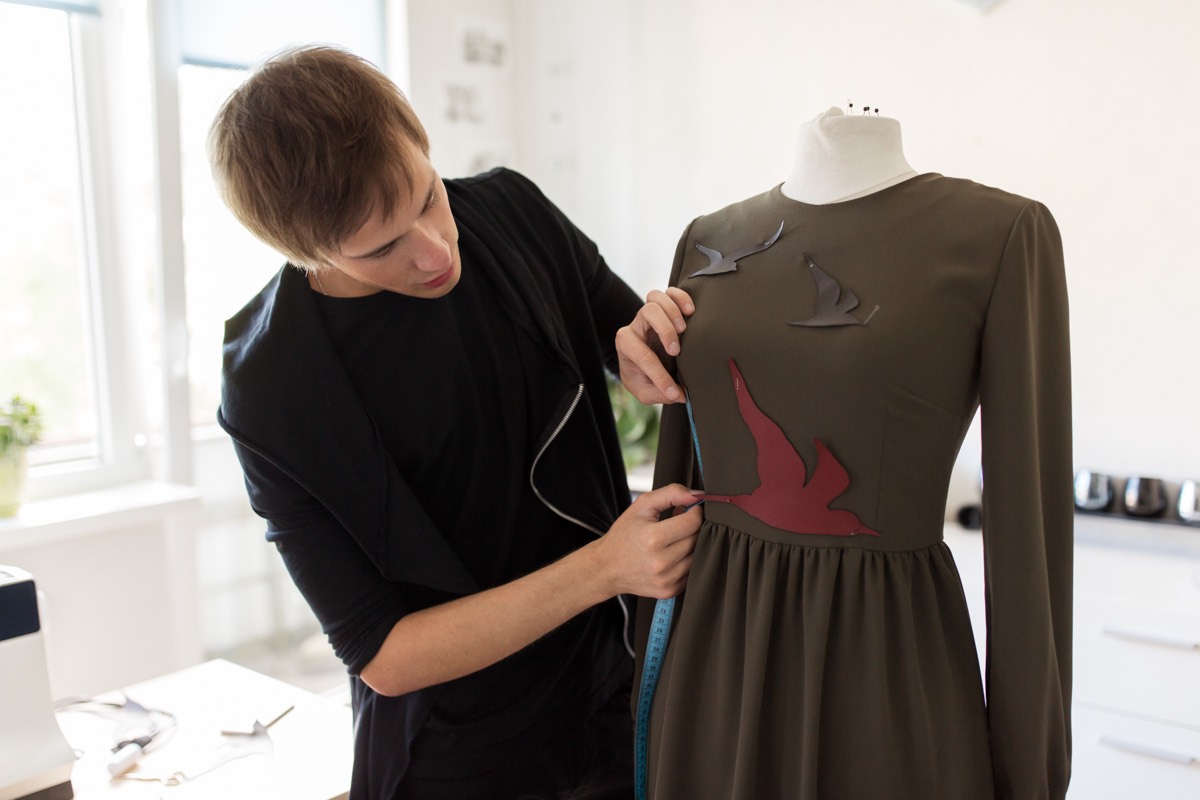
You spent a season perfecting a dress, and eight weeks after it ships, a fast-fashion giant is selling a $24 version of it. Or your handmade jewelry line just appeared, stone for stone, in someone else’s Etsy shop. Whether the law helps you depends on a doctrine most designers have never heard of. So, can you copyright a clothing design? This guide answers honestly, then maps what is protectable in fashion, jewelry, and furniture, and the design patents, trade dress, and trademarks that fill copyright’s gaps.
Why clothing itself can’t be copyrighted
U.S. copyright protects “pictorial, graphic, and sculptural works,” but it draws a hard line at useful articles: objects with an intrinsic utilitarian function, defined at 17 U.S.C. § 101. Clothing keeps you warm and covered; it is a useful article. So the cut, fit, silhouette, and construction of a garment are not copyrightable, no matter how creative or labor-intensive the design.
This is a policy choice, not an oversight. Congress worried that granting exclusive rights in useful designs would let copyright owners monopolize functional objects for a century, so functional design was left to the patent system’s higher bar and shorter term. Fashion-specific design protection bills (the Design Piracy Prohibition Act, the Innovative Design Protection Act) have been introduced repeatedly since 2006 and have never passed.
The blunt consequence: fast fashion’s core business model is legal. Copying a runway silhouette, a neckline, a sleeve shape, or a color story infringes no copyright. What crosses legal lines is copying the protected layers (the print, the logo, a patented design, or trade dress), which is where every real fashion case is actually fought.
The Star Athletica separability test
The dividing line comes from Star Athletica, L.L.C. v. Varsity Brands, Inc., 580 U.S. 405 (2017), where the Supreme Court considered the stripes, chevrons, and zigzags on cheerleading uniforms. The Court held that a feature incorporated into a useful article is copyrightable if it:
- Can be perceived as a two- or three-dimensional work of art separate from the useful article, and
- Would qualify as a protectable pictorial, graphic, or sculptural work (on its own or fixed in some other medium) if imagined apart from the article.
Picture peeling the design off the garment and hanging it on a wall. If what’s left in your imagination is a work of art (a print, a graphic, a sculptural ornament), it’s protectable. If you can’t separate it without reproducing the garment itself (the shape of the dress is the “design”), it isn’t. The uniform decorations passed the test; the uniform’s cut never could.
One more filter: the separated element still needs originality. Standard chevrons, plaids, polka dots, and public-domain motifs don’t become protectable just because you printed them on fabric, though your original arrangement of common elements can be.
What’s actually protectable, industry by industry
Fashion
- Protected: original fabric prints and surface patterns (textile designs are routinely registered and litigated), original embroidery and appliqué designs, original lace patterns, graphic tees’ artwork, and jacquard or knit patterns perceivable as 2D art. Fabric-print lawsuits are a cottage industry in the Ninth Circuit. Print houses win real judgments against garment makers who copy swatches.
- Not protected: the dress’s shape, cut, fit, silhouette, stitching construction, pockets, color of the garment, or the “vibe” of a collection.
Jewelry
Jewelry gets the friendliest treatment because most pieces are analyzed as sculptural works, not useful articles. Adornment isn’t a “utilitarian function” under the statute. An original pendant, ring, or brooch design is generally copyrightable and registrable. The catch is thin protection for common forms: plain bands, hearts, crosses, initials, standard solitaire settings, and basic chain styles are unprotectable building blocks, so courts often find infringement only where the copy is near-identical. Functional elements (clasps, hinge mechanisms) stay unprotectable.
Furniture
Furniture is a useful article, so the analysis mirrors clothing: a chair’s shape, however iconic, is not copyrightable, which is why mid-century “replica” furniture is openly sold in the U.S. What survives Star Athletica are separable sculptural elements: a carved lion’s-head armrest, a decorative relief on a headboard, an ornamental base that reads as sculpture apart from the table it holds up. If the beauty is the functional form (an elegantly curved shell chair), copyright offers nothing, and designers must look to design patents and trade dress.
The gap-fillers: patents, trade dress, and trademarks
Copyright’s holes are why fashion and furniture IP is a layering exercise.
Design patents. A design patent (35 U.S.C. § 171) protects the ornamental design of an article (including a garment, shoe, handbag, chair, or ring) for 15 years from grant, with no separability problem and no need for consumer recognition. Crocs, Nike, and Lululemon maintain large design-patent portfolios on hero products for exactly this reason. The unforgiving rule: you must file within 12 months of first public disclosure, so the decision has to happen at design time, not after the copying starts. See design vs. utility patents for costs and strategy.
Trade dress. A product look that consumers have come to associate with one brand (the red-soled shoe, an iconic bag shape) can be protected as trade dress, but product designs always require secondary meaning and nonfunctionality, which makes this a mature-brand tool rather than a launch-day one. The full doctrine is in what trade dress protects.
Trademarks. The brand name, logo, and label are usually the strongest rights in a fashion business, and they’re what turn a copy into a counterfeit when the copier fakes them. If you haven’t locked these down, start with how to trademark a clothing brand.
Print-on-demand and pattern piracy
For independent designers, the most common copying today isn’t a factory in another country. It’s pattern piracy on print-on-demand and marketplace platforms: your textile print or artwork scraped from a product photo and uploaded onto someone else’s leggings, phone cases, and mugs. Two pieces of good news. First, this is copyright infringement of the print, the strongest claim a designer can have, with no useful-article problem at all. Second, every major platform operates a DMCA takedown system, and a registered copyright in the print (register unpublished collections of designs to save on fees) unlocks statutory damages of up to $150,000 per work for willful infringement if you ever need to escalate. Registration mechanics are covered in how to copyright your work.
Why Europe protects fashion more
The U.S. gap is not universal. The EU grants an unregistered design right automatically: any new design with individual character (including a garment’s shape and cut) is protected for three years from first disclosure in the EU against deliberate copying, no filing required. (Registered EU designs extend that to renewable five-year terms up to 25 years, and the EU design-law reform adopted in October 2024 modernized the system without shrinking these terms, phasing in from May 2025 through July 2026.) The UK has its own unregistered design rights as well. That’s why European houses can and do sue copyists at home over garment designs that would be freely copiable in the United States, and why a U.S. designer selling into Europe should think about EU registered designs for hero pieces.
A practical protection plan, and what to do when you’re copied
For a working designer or maker, the layered plan looks like this:
- Register the brand (word mark and logo) before anything else; it’s the right you’ll use most.
- Register your prints and artwork with the Copyright Office each season, using group registration for unpublished works where possible.
- File design patents within 12 months on the small number of designs that will define the line for years.
- Keep dated design files (sketches, CADs, tech packs, first-sale records) so authorship and priority are provable.
- Watermark and monitor: reverse-image-search your bestsellers and watch the marketplaces where copies of your category surface.
When a copy appears, the response depends on which layer it hit: a copied print gets a DMCA takedown and, if needed, a federal copyright claim; a faked label is a counterfeiting matter; a copied silhouette alone may, honestly, be legal unless a design patent or trade dress covers it. The full escalation ladder, from takedown to cease-and-desist to lawsuit, is mapped in the pillar guide on fighting copycat products, and you can see how courts have handled real disputes in the copyright case archive.
The bottom line
Copyright protects the art on the object, not the object itself. A garment’s cut and silhouette, a chair’s shape, and a jewelry line’s generic forms are free for anyone to copy in the U.S. But original prints, patterns, embroidery, separable sculptural ornament, and most original jewelry designs are fully protectable, and Star Athletica’s imagine-it-as-standalone-art test is how the line gets drawn. Smart designers don’t mourn the gap; they layer around it with copyright registrations for surface art, design patents filed inside the 12-month window, trademarks on the brand, and (with time and recognition) trade dress on the icons.
This article is general legal information for educational purposes only. It is not legal advice, does not create an attorney-client relationship, and may not reflect the most current law in your area. Design-protection disputes turn on specific facts. For advice about your situation, consult an attorney licensed in your jurisdiction.
Frequently asked questions
Can you copyright a clothing design?
Not the garment itself. Under U.S. copyright law, clothing is a ‘useful article,’ so the cut, fit, silhouette, and construction of a dress or jacket cannot be copyrighted, which is why fast-fashion copies of runway shapes are legal. What you can copyright are the artistic elements that can be perceived separately from the garment: fabric prints, surface patterns, embroidery, appliqués, and original graphic designs. That separability rule comes from the Supreme Court’s decision in Star Athletica v. Varsity Brands (2017).
Why is it legal for fast fashion brands to copy runway designs?
Because U.S. copyright deliberately excludes the functional design of useful articles, and a garment’s shape, cut, and construction are treated as functional. Congress has repeatedly declined to pass fashion-specific design protection, so a competitor can lawfully reproduce a silhouette as long as it doesn’t copy protected surface art, a design-patented design, protected trade dress, or the label. The EU is different: an unregistered design right there protects new designs for three years automatically, which is one reason European fashion houses have more copying remedies at home.
Is jewelry protected by copyright?
Generally yes, and more easily than clothing. Jewelry is usually analyzed as a sculptural work rather than a useful article, so an original pendant, ring, or bracelet design can be registered with the Copyright Office and enforced against copiers. The limits are originality and scope: common shapes like plain bands, simple hearts, crosses, and standard solitaire settings are unprotectable or receive only thin protection, meaning only near-identical copying infringes.
How do fashion designers protect their designs if copyright doesn’t cover clothing?
They stack other rights. Design patents can protect a garment’s, shoe’s, or accessory’s ornamental design for 15 years if filed within 12 months of first disclosure. Crocs and major sneaker brands use them heavily. Trademarks and trade dress protect brand names, logos, and iconic looks that have acquired secondary meaning, like the red-soled shoe. Copyright still covers prints, patterns, and original lace or embroidery. Registering the brand, filing design patents on hero products, and copyrighting each season’s prints is the standard layered playbook.