
No Damages, Still Liable: Applied Medical v. Jarrells and the Costs of Cleaning Up a Trade-Secret Theft
A California appellate court held that a trade-secret plaintiff can win an injunction and fees without proving damages, and that the cost of stopping the misappropriation is recoverable actual loss.
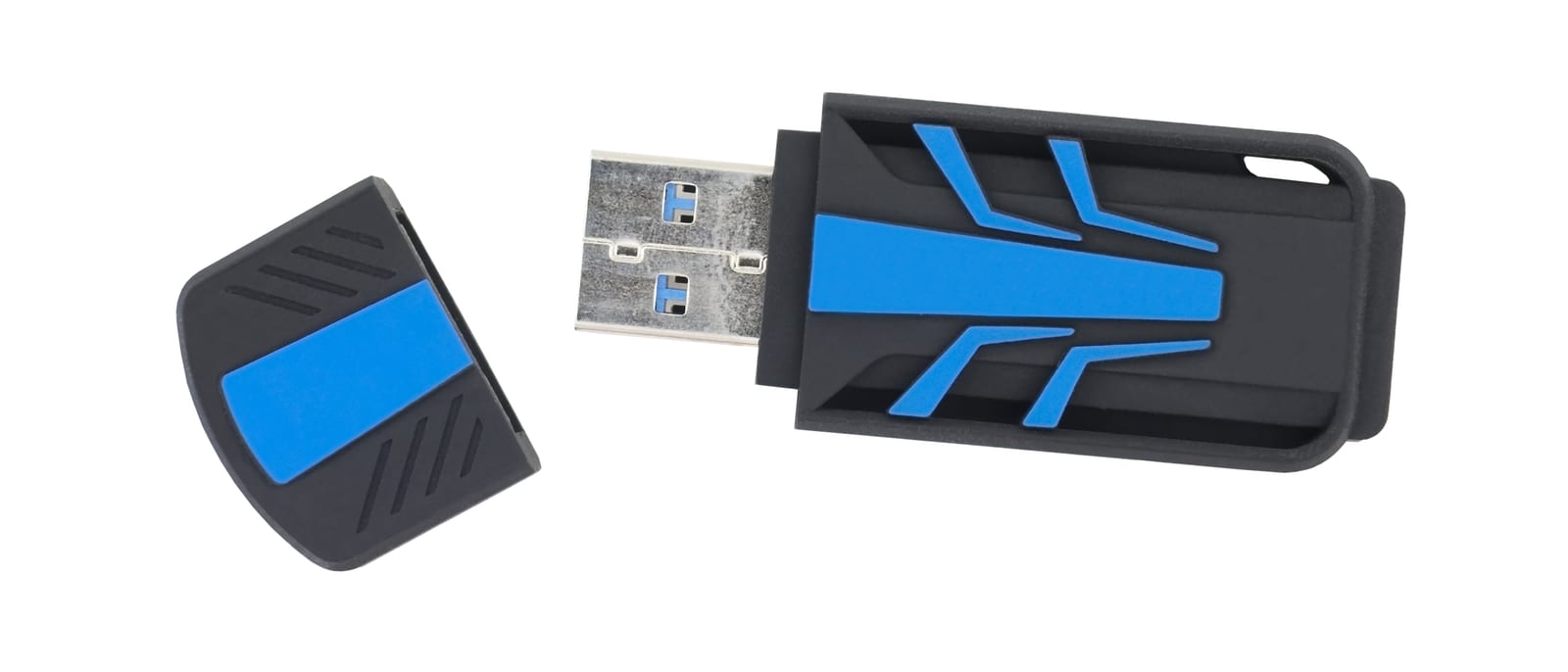
When a departing vice president drops a folder labeled “Good Stuff” onto a thumb drive on his way out the door, the litigation almost writes itself. In Applied Medical Distribution Corp. v. Jarrells, 100 Cal. App. 5th 556 (Cal. Ct. App. 2024), the California Court of Appeal for the Fourth District, Division Three, used exactly that fact pattern to settle two recurring questions under the California Uniform Trade Secrets Act (CUTSA): whether a plaintiff must prove money damages to prevail, and whether the money a company spends cleaning up after a theft is itself recoverable. The answers (no, and sometimes) reshape the calculus for both employers and the employees who change jobs in one of the most mobility-protective states in the country.
At a glance
- Case: Applied Medical Distribution Corp. v. Stephen Jarrells, No. G062056 (Cal. Ct. App., Fourth Dist., Div. Three, filed Mar. 8, 2024), published at 100 Cal. App. 5th 556.
- Court: California Court of Appeal, Fourth Appellate District, Division Three.
- Posture: Cross-appeals from a jury verdict and post-trial rulings; the jury found misappropriation but no damages, and the trial court granted a permanent injunction and partial attorney’s fees.
- Holding: Causation and damages are not elements of a CUTSA misappropriation claim; a plaintiff may obtain injunctive relief without proving loss, and, under a fee-shifting contract, the fees incurred to obtain that relief; reasonable expert costs incurred to stop or mitigate misappropriation can be recovered as actual loss under Civil Code section 3426.3.
- Significance: Confirms that a defendant can be liable for trade-secret misappropriation even where the jury awards nothing, and clarifies the line between non-recoverable investigation costs and recoverable mitigation costs.
The “Good Stuff” folder
Stephen Jarrells joined Applied Medical, which sells and distributes medical devices made by its parent company, in January 2011 and rose to vice president in charge of group purchasing organizations. In December 2018 he accepted a position as vice president of sales at Bruin Biometrics, another medical device company. Before he left in January 2019, Jarrells assembled a folder on his company laptop titled “Good Stuff” that gathered Applied’s confidential business plans, research-and-development materials, sales strategies, training documents, and customer pricing. He copied the folder to a thumb drive and later loaded the contents onto a computer issued to him by Bruin. Applied sued for misappropriation under CUTSA, breach of a proprietary-information agreement, and breach of fiduciary duty.
The jury found that Jarrells had misappropriated Applied’s trade secrets. But it also found that the misappropriation caused Applied no damages and produced no unjust enrichment for Jarrells or Bruin, a verdict that left Applied with a liability finding but an empty money column. The trial court nevertheless entered a permanent injunction and awarded a reduced slice of Applied’s attorney’s fees under the parties’ contract. Both sides appealed.
Damages are not an element of liability
The most consequential ruling addresses the structure of a CUTSA claim. Jarrells argued that without damages or unjust enrichment, there could be no actionable misappropriation. The Court of Appeal rejected that premise outright. Reading the statutory definition in Civil Code section 3426.1(b), the court held that misappropriation requires only two elements: the existence of a trade secret and its improper acquisition, use, or disclosure. Jarrells had pointed to the standard jury instruction, CACI No. 4401, as making causation and damages essential elements. The court answered that a CACI instruction is not itself authority for a legal proposition, that a statute controls over a conflicting instruction, and that in any event CACI No. 4401 does not say what Jarrells claimed. Causation and resulting harm are relevant to remedies (damages under Civil Code section 3426.3 and injunctions under section 3426.2), but they are not prerequisites to liability.
That distinction matters because it decouples the wrong from the recovery. A defendant who takes trade secrets but cannot be shown to have profited, or to have cost the owner a quantifiable sale, has still misappropriated them. The owner remains entitled to an injunction restraining further use and, where a contract or the statute permits, to attorney’s fees. The court accordingly affirmed the permanent injunction even though the jury awarded zero. Its reasoning was straightforward: Jarrells had attacked the injunction solely on the ground that Applied did not prevail on the misappropriation claim, and once that premise failed, section 3426.2(a) permitted the trial court to enjoin actual or threatened misappropriation. The court added that the Agreement independently authorized injunctive relief, and that an injunction was appropriate given evidence Jarrells still held Applied’s confidential documents even after a preliminary injunction had issued.
Investigation versus mitigation: drawing the actual-loss line
The opinion’s most practically useful contribution is its treatment of forensic costs. Applied had spent money on outside experts to examine devices and trace what Jarrells took, and it sought those expenditures as “actual loss” under section 3426.3. The trial court had excluded all such fees. The Court of Appeal called that a mistake, but it refused to bless a blanket rule that all forensic spending is recoverable.
Instead, the court drew a line. Costs incurred merely to investigate whether misappropriation occurred are not recoverable actual loss; they are the ordinary expense of building a lawsuit. But costs incurred to stop or mitigate an ongoing misappropriation (to contain the damage once it is known) can qualify as actual loss the statute compensates. Because the trial court had barred Applied’s damages expert from presenting any of the forensic firm’s fees to the jury, the appellate court reversed that ruling and held that on remand Applied may seek the portion of those fees it can prove was incurred exclusively on the containment phase of the work. The court likewise faulted the trial court’s mechanical 75 percent reduction of contractual attorney’s fees, instructing it to reconsider whether the trade-secret and contract claims were inextricably intertwined.
Why employee-mobility states still police data theft
California voids most noncompetes under Business and Professions Code section 16600, and its courts guard employee mobility jealously. Jarrells does not change that. What it underscores is that trade-secret law remains the principal check on departing employees, and that the check bites even when harm is hard to quantify. An employer that cannot prove a lost sale can still secure a liability finding, an injunction, and (after remand) the costs of mitigation and a fuller fee award. For the employee, the lesson is starker: the safest exit is one in which no confidential files leave with you, because the act of copying, not the eventual profit, is what creates exposure.
Open questions
- How far does “mitigation” reach? The court drew the investigation/mitigation line but left its precise contours to the trial court, and future cases will test which forensic and remediation costs count as containment rather than litigation prep.
- What injunction is justified by a zero-damages verdict? The opinion affirms equitable relief without proven loss but does not map how broad such an injunction may be before it edges into a de facto noncompete that section 16600 forbids.
- When are intertwined claims fully fee-shifted? The remand on attorney’s fees leaves open how trial courts should apportion fees between CUTSA and contract theories that share a common factual core.
Implications
- Liability without a dollar figure. A CUTSA defendant can be held liable, enjoined, and exposed to fees even where the jury finds no damages and no unjust enrichment.
- Document your cleanup, not just your investigation. Employers should separate the costs of finding out whether theft occurred from the costs of stopping it; only the latter reliably qualifies as recoverable actual loss.
- Injunctions remain available. The threat of future use supports equitable relief independent of past harm, making injunctive relief the practical centerpiece of many trade-secret cases.
- Departing employees: take nothing. In a state that protects mobility, the surviving constraint is trade-secret law, and copying confidential files (even a folder of “Good Stuff”) is enough to trigger it.
- Fee awards demand real analysis. Courts cannot mechanically slash contractual fees; they must assess whether the claims are inextricably intertwined.
Frequently asked questions
Do you have to prove money damages to win a trade-secret case in California? No. Applied Medical confirms that misappropriation under the California Uniform Trade Secrets Act has only two elements: the existence of a trade secret and its improper acquisition, use, or disclosure. A plaintiff can obtain an injunction even if the jury awards zero damages, and can recover the attorney’s fees incurred to obtain that relief where a contract provides for them. Applied’s fees were awarded under its proprietary information agreement, not under the statute; statutory fees under Civil Code section 3426.4 require willful and malicious misappropriation.
Can an employer recover the cost of investigating a suspected theft? Only partly. The court distinguished pure investigative costs, incurred to find out whether misappropriation happened, which are generally not recoverable, from costs incurred to stop or mitigate the misappropriation, which can qualify as actual loss under Civil Code section 3426.3.
Does this decision weaken California’s strong protection of employee mobility? Not directly. Section 16600 still voids most noncompetes. But Jarrells shows that trade-secret claims remain a powerful tool against departing employees who take confidential files, and that a clean exit without copied data is the only safe course.
Authorities and sources
- Opinion (official slip opinion, Judicial Branch of California), Applied Medical Distribution Corp. v. Jarrells, No. G062056 (filed Mar. 8, 2024): https://www4.courts.ca.gov/opinions/archive/G062056.PDF
- Opinion (FindLaw): https://caselaw.findlaw.com/court/ca-court-of-appeal/115916075.html
- California Uniform Trade Secrets Act, Civ. Code § 3426.3 (California Legislative Information): https://leginfo.legislature.ca.gov/faces/codes_displaySection.xhtml?lawCode=CIV§ionNum=3426.3
- California Uniform Trade Secrets Act, Civ. Code § 3426.4 (attorney’s fees for willful and malicious misappropriation): https://leginfo.legislature.ca.gov/faces/codes_displaySection.xhtml?lawCode=CIV§ionNum=3426.4
- Sheppard Mullin analysis, “Attorney’s Fees May Be Recoverable in Trade Secret Cases, Even Without Damages”: https://www.sheppard.com/insights/blogs/attorneys-fees-may-be-recoverable-in-trade-secret-cases-even-without-damages