
Bikram's Yoga v. Evolation: A Sequence of Poses Is a System, Not Expression
The Ninth Circuit held Bikram Choudhury's 26-pose hot yoga Sequence is an unprotectable idea, process, or system under § 102(b), not expression or choreography.
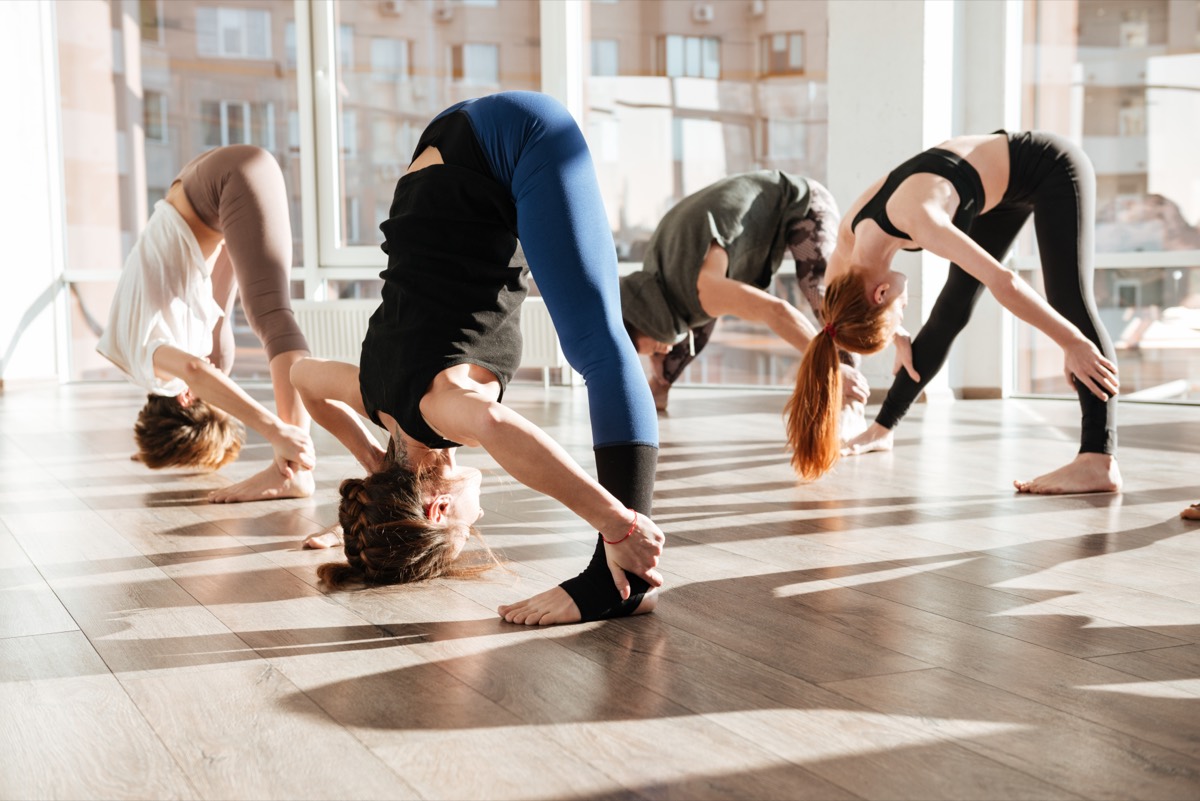
By the time Bikram’s Yoga College of India, L.P. v. Evolation Yoga, LLC, 803 F.3d 1032 (9th Cir. 2015), reached decision on October 8, 2015, Bikram Choudhury had spent a decade wielding copyright registrations against studios that taught his sequence of twenty-six postures and two breathing exercises in a room heated to roughly 105 degrees. Judge Kim McLane Wardlaw’s opinion for the Ninth Circuit ended the campaign. The “Sequence,” the court held, is an idea, process, or system designed to improve health, and under 17 U.S.C. § 102(b) copyright protection may in no case extend to such a thing, no matter how it is labeled: not as a work described in a copyrighted book, not as a compilation, and not as choreography.
The decision is the leading modern application of Baker v. Selden’s idea-expression dichotomy to a physical method, and it draws the outer boundary of copyright for every functional sequence of human movement, from fitness programs to therapeutic protocols.
At a glance
- Case: Bikram’s Yoga College of India, L.P. v. Evolation Yoga, LLC, 803 F.3d 1032 (9th Cir. 2015)
- Decided: October 8, 2015; opinion by Judge Wardlaw, joined by Judges Noonan and Murguia; affirming partial summary judgment for Evolation Yoga
- Holding: The Bikram Sequence of 26 poses and 2 breathing exercises is an unprotectable idea, process, or system under § 102(b), and its unprotectability cannot be evaded by recasting it as a compilation or a choreographic work.
- Status: Final; the controlling appellate authority on copyright in exercise sequences.
Hot yoga, a 1979 book, and two former trainees
Bikram Choudhury arrived in Beverly Hills from Calcutta in 1971 and built an empire on a standardized product: a ninety-minute class of twenty-six asanas and two breathing exercises, performed in a fixed order, in heat, to a memorized script he called the Dialogue. In 1979 he published Bikram’s Beginning Yoga Class, a book describing the Sequence with text, photographs, and drawings, and registered it with the Copyright Office. In 2002 he filed a supplementary registration claiming the “compilation of exercises” in the 1979 book.
Mark Drost and Zefea Samson completed Choudhury’s three-month teacher training in 2002 and 2005 respectively, then founded Evolation Yoga in 2009. Evolation’s “hot yoga” classes tracked the Bikram formula: the same twenty-six postures and two breathing exercises, about ninety minutes, about 105 degrees. Choudhury and his college sued in the Central District of California in July 2011 for copyright infringement, among other claims. Judge Otis D. Wright II granted Evolation partial summary judgment, ruling that the Sequence was a collection of facts and ideas outside copyright. The remaining claims settled, and Choudhury appealed only the Sequence ruling.
Baker v. Selden and the scope of a book’s copyright
The Ninth Circuit framed the question as one of scope, not validity. No one doubted that Choudhury’s 1979 book was copyrighted. The question was what that copyright covered, and the answer came from Baker v. Selden, 101 U.S. 99 (1879), where the Supreme Court held that copyright in a treatise explaining a bookkeeping system protected the author’s explanation but gave him no exclusive right to the system itself. Congress codified the principle at § 102(b), which excludes any “idea, procedure, process, system, method of operation, concept, principle, or discovery” from protection regardless of the form in which it is described.
The court placed the Sequence squarely on the unprotected side of that line. “Though Choudhury emphasizes the aesthetic attributes of the Sequence’s ‘graceful flow,’ at bottom, the Sequence is an idea, process, or system designed to improve health,” Judge Wardlaw wrote. The decisive evidence came from Choudhury himself, who marketed the Sequence as a system of hatha yoga that would cure, heal, or at least alleviate illness. “Choudhury thus attempts to secure copyright protection for a healing art: a system designed to yield physical benefits and a sense of well-being,” the court observed, and that attempt is precluded by the idea-expression dichotomy. The opinion drew on Baker’s progeny across subject matters: meditation exercises held to be a process in Palmer v. Braun, 287 F.3d 1325 (11th Cir. 2002), recipes in Publications International, Ltd. v. Meredith Corp., 88 F.3d 473 (7th Cir. 1996), and roller-derby race rules in Seltzer v. Sunbrock, 22 F. Supp. 621 (S.D. Cal. 1938). Copyright in a book about surgery, the court noted by analogy, gives no exclusive right to perform the operation it describes.
Beauty did not change the analysis. Like an elegant recipe, the Sequence remained unprotectable as a process whose design primarily reflects function, not expression. That a process may be performed gracefully, the court reasoned, does not convert the process into expression.
Closing the compilation and choreography escape hatches
Choudhury’s two fallback theories gave the opinion its lasting doctrinal value, because each tested whether § 102(b) can be evaded by relabeling.
The compilation theory invoked § 103 and Feist Publications, Inc. v. Rural Telephone Service Co., 499 U.S. 340 (1991): even if individual poses are unprotectable, the argument ran, the selection and arrangement of twenty-six of them is an original compilation. The court rejected the premise. Section 103 works must still satisfy § 102, and § 102(b) applies “in no case” language to ideas, processes, and systems. Breaking a process into constituent parts and pointing to their arrangement does not transform it, particularly where, as Choudhury’s own marketing insisted, medical and functional considerations compelled the very selection and arrangement at issue. The order of the poses was the mechanism of the claimed healing; protecting the order would protect the system.
The choreography theory fared no better. Choreographic works became expressly protectable in the 1976 Act, § 102(a)(4), and the court discussed Horgan v. Macmillan, Inc., 789 F.2d 157 (2d Cir. 1986), and the Copyright Office’s Compendium definitions. But choreographic works, like every other category in § 102(a), remain subject to § 102(b). “The Sequence is not copyrightable as a choreographic work for the same reason that it is not copyrightable as a compilation: it is an idea, process, or system to which copyright protection may ‘[i]n no case’ extend.” Successions of bodily movement that serve basic functional purposes, the court explained with pointedly unglamorous analogies to churning butter, drilling for oil, and brushing teeth, are part and parcel of a process. The panel also noted that the Copyright Office had refused Choudhury’s attempt to register the Sequence as a work of the performing arts, and that the Office’s 2012 policy statement, 77 Fed. Reg. 37605 (June 22, 2012), announced it would refuse claims in compilations of exercises or selections and arrangements of yoga poses. The court affirmed on de novo grounds without deciding how much deference that position deserved.
Open questions
- Where does functional movement end and choreography begin? The court protected the category of choreographic works while excluding functional sequences, but the line between a dance and a regimen is not self-defining. Competitive routines, artistic fitness formats, and staged movement with claimed health benefits all sit near the boundary.
- How far does the marketing-as-evidence move extend? Choudhury’s own healing claims supplied the proof of functionality. Whether a creator who markets a movement work purely as art can avoid § 102(b) for an otherwise similar sequence remains untested.
- What protection remains for method-based businesses? The opinion leaves the book, the photographs, the Dialogue script, and the trademarks intact, but the method itself is open. How much competitive moat those remaining rights provide is a business question the case answers only by negative implication.
- Deference to the Copyright Office. The panel expressly declined to decide whether the district court over-relied on the 2012 policy statement, leaving the weight of Office registrability positions for another day.
Implications for creators and businesses
- You cannot own a method through copyright, so build the moat elsewhere. Fitness, wellness, and training businesses should protect brands through trademark, instructional content through copyright, and genuinely novel apparatus or techniques, where eligible, through patent, rather than claiming the routine itself.
- Your marketing can defeat your copyright theory. Choudhury’s health claims proved the Sequence was a functional system. Statements positioning a work as a method that produces results are evidence of § 102(b) exclusion, and litigation positions cannot outrun years of advertising.
- Instructional works are protected as descriptions only. Books, videos, and scripts teaching a method stop copyists of the pages and footage, not practitioners of the method. Certification programs and contracts with trainees are the tools for controlling downstream teaching.
- Registrations are not immune from scope challenges. Choudhury held registrations, including a supplementary compilation claim, and still lost. A certificate cannot extend protection into subject matter § 102(b) forbids.
Frequently asked questions
If Choudhury’s 1979 book was copyrighted, why could others perform the Sequence? Because copyright in a book describing a system protects the description, not the system. Under Baker v. Selden and § 102(b), the words, photographs, and drawings in Bikram’s Beginning Yoga Class are protected against copying, but the sequence of postures those pages teach is an idea, process, or system that anyone remains free to practice and teach.
Why was the Sequence not protectable as a compilation? Because § 103 compilations must still satisfy § 102, and § 102(b) excludes ideas, processes, and systems in every case. The court held that arranging 26 poses and 2 breathing exercises does not transform an unprotectable process into protectable expression, especially where the selection and arrangement are driven by the claimed medical and functional benefits of performing them in that order.
Did the decision hold that choreography can never be copyrighted? No. Choreographic works have been expressly protectable under § 102(a)(4) since the 1976 Act. The court held only that the Sequence is not choreography in the copyright sense: successions of bodily movements that serve basic functional purposes, like a healing exercise regimen, are part of a process and stay outside copyright no matter how graceful they look.
Authorities and sources
- Bikram’s Yoga College of India, L.P. v. Evolation Yoga, LLC, 803 F.3d 1032 (9th Cir. 2015) (official slip opinion PDF)
- Bikram’s Yoga College v. Evolation Yoga, No. 13-55763, opinion via govinfo (U.S. Courts Opinions)
- 17 U.S.C. § 102 (subject matter of copyright), Cornell LII
- Baker v. Selden, 101 U.S. 99 (1879), Cornell LII
- U.S. Copyright Office, Registration of Claims to Copyright, 77 Fed. Reg. 37605 (June 22, 2012)
- Stanford Copyright & Fair Use Center: Bikram’s Yoga College v. Evolation Yoga
- National Law Review, “Exhale: Ninth Circuit Rules Sequence of Yoga Poses Not Copyrightable”
- NBC News, “Bikram Yoga Founder Can’t Copyright Ancient Poses, Court Rules”