
Brammer v. Violent Hues: The Fourth Circuit Ends the Found-It-on-Google Fair Use Defense
The Fourth Circuit held that a festival website's use of a photographer's cityscape photo found via Google failed all four fair use factors.
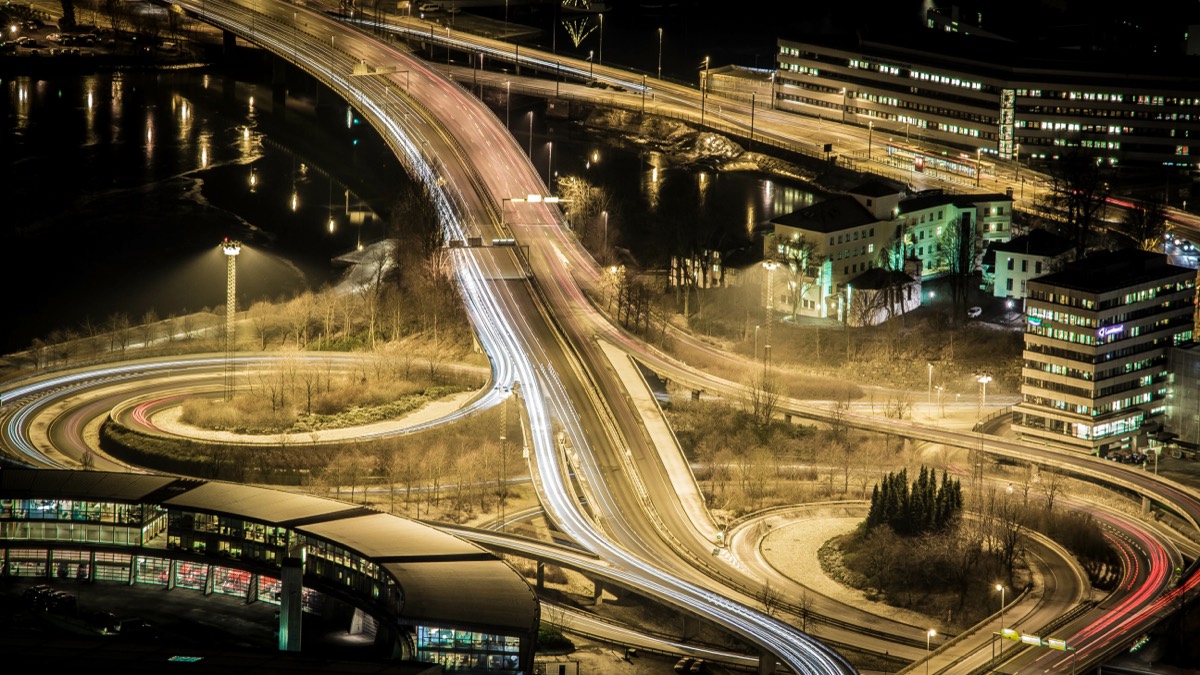
Brammer v. Violent Hues Productions, LLC, 922 F.3d 255 (4th Cir. 2019), is the decision that put a stake through one of the internet’s most persistent copyright myths: that a photograph found through a Google search is free to reuse. A film festival organizer had downloaded a professional photographer’s long-exposure cityscape from Flickr, cropped it, and used it to decorate a tourism page on the festival’s website. The district court called that fair use. On April 26, 2019, a unanimous Fourth Circuit panel reversed, holding that every one of the four statutory factors weighed against the defense.
The opinion arrived at the height of judicial enthusiasm for “transformative use” and drew a line the Supreme Court would echo four years later in Andy Warhol Foundation v. Goldsmith: a claimed new purpose does not transform a work used for exactly what it depicts. For photographers, whose work is the most casually copied on the internet, Brammer remains the leading appellate statement that ordinary commercial reuse of stock-style imagery must be licensed.
At a glance
- Case: Brammer v. Violent Hues Productions, LLC, 922 F.3d 255 (4th Cir. 2019), No. 18-1763.
- Decided: April 26, 2019, by a unanimous panel; Judge Diana Gribbon Motz wrote the opinion, joined by Judges King and Thacker, reversing the Eastern District of Virginia (Senior Judge Claude M. Hilton) and remanding.
- Holding: Using a cropped copy of a copyrighted photograph, found online, to illustrate a commercial festival website is not fair use; all four factors of 17 U.S.C. § 107 favored the photographer.
- Status: Final. No rehearing or Supreme Court review followed, and as of July 2026 the decision remains the Fourth Circuit’s controlling authority on fair use of photographs online.
The statutory frame: four factors and an “ultimate test”
Fair use, codified at 17 U.S.C. § 107, excuses otherwise infringing copying through four statutory factors: the purpose and character of the use, the nature of the copyrighted work, the amount and substantiality of the portion taken, and the effect on the potential market for the original. Since Campbell v. Acuff-Rose Music, Inc., 510 U.S. 569 (1994), the first factor has centered on whether the use is “transformative,” meaning it adds new expression, meaning, or message rather than merely superseding the original.
Judge Motz opened with a framing borrowed from Kienitz v. Sconnie Nation LLC, 766 F.3d 756 (7th Cir. 2014): fair use “is not designed to protect lazy appropriators.” Its goal is to enable uses that could not happen if every user had to negotiate with every rights holder. And quoting Cariou v. Prince, 714 F.3d 694 (2d Cir. 2013), she described the “ultimate test” as whether the progress of human thought would be better served by allowing the use than by preventing it.
A rooftop photo, a Google search, and a festival website
The facts were almost a law school hypothetical. On November 19, 2011, commercial photographer Russell Brammer shot “Adams Morgan at Night” from a private rooftop in Washington, D.C., experimenting with shutter speeds and apertures until passing traffic dissolved into red and white light trails. He published it on his website and on Flickr with the caption ”© All rights reserved,” sold prints for $200 to $300, and licensed it online twice, for $1,250 and $750.
In 2016, Fernando Mico, owner of the film production company Violent Hues Productions, posted a cropped version on novafilmfest.com, the website promoting his for-profit Northern Virginia International Film and Music Festival. It appeared on a “Plan Your Visit” page above the caption “Adams Morgan, DC,” with no attribution. Mico said he found the image through a Google Images search, saw no indication it was copyrighted, and cropped out the negative space “for stylistic reasons.” When Brammer’s counsel demanded compensation, Violent Hues removed the photo but refused to pay, and Brammer sued for infringement.
Senior Judge Hilton granted summary judgment to Violent Hues, finding the use transformative because it was “informational” rather than expressive, crediting Mico’s good faith, and finding no market harm. The ruling was widely criticized, and the appeal drew supporting amicus briefs for Brammer from ten organizations, including the American Society of Media Photographers, the Copyright Alliance, and the National Press Photographers Association.
Cropping is not transformation, and neither is “providing information”
The heart of the opinion is its first-factor analysis. Comparing the original and the copy side by side, the court found “no apparent transformation.” The only change was a functional crop that gave the photo the same dimensions as neighboring images on the site. That does not alter the original with new expression, meaning, or message under Campbell.
Violent Hues argued that placing the image in a list of tourist attractions was a transformative new context. Judge Motz acknowledged, citing Perfect 10, Inc. v. Amazon.com, Inc., 508 F.3d 1146 (9th Cir. 2007), that even wholesale reproduction can be transformed by a new context serving a different purpose. But she identified the two recurring situations in which contextual change has actually carried the day. The first is technological use, where a work becomes raw material for a function indifferent to its expressive content, as with the plagiarism-detection database in A.V. ex rel. Vanderhye v. iParadigms, LLC, 562 F.3d 630 (4th Cir. 2009), the searchable corpus in Authors Guild v. Google, Inc., 804 F.3d 202 (2d Cir. 2015), and the Perfect 10 thumbnails. The second is documentary use, where a work is reproduced as part of historical or journalistic treatment, as with the concert posters in Bill Graham Archives v. Dorling Kindersley Ltd., 448 F.3d 605 (2d Cir. 2006).
Violent Hues’ use fit neither category. It used the photo “expressly for its content,” to show what Adams Morgan looks like, which is precisely what the photo was created and licensed to do. The claim that the image gave festival attendees “information” proved too much: if that sufficed, virtually every illustrative use of photography would be transformative. Quoting Infinity Broadcast Corp. v. Kirkwood, 150 F.3d 104 (2d Cir. 1998), the court observed that a “difference in purpose is not quite the same thing as transformation.” And unlike the search engines in the technological cases, Violent Hues’ ability to communicate about tourist attractions “would not be hindered if it had to comply with Brammer’s copyright.”
The court also dismantled the district court’s reliance on good faith. Infringement is a strict liability offense, and because fair use presupposes good faith and fair dealing under Harper & Row Publishers, Inc. v. Nation Enterprises, 471 U.S. 539 (1985), most courts ask only whether bad faith weighs against the user; a copyist’s good faith cannot weigh in its favor. In any event, Mico’s belief that the photo was freely available was negligent at best: contemporary photographs are presumptively copyrighted under 17 U.S.C. § 302(a), and the Flickr page he downloaded from said ”© All rights reserved.”
Thick protection, the heart of the work, and presumed market harm
The remaining factors fell quickly. On the second, the court held that photographs are creative works entitled to thick copyright protection even though they capture reality. Brammer’s rooftop vantage and exposure experiments produced a “stylized image, with vivid colors and a bird’s-eye view” depicting a scene that does not, in reality, appear as shown. The court also refused to hold the photo’s published status against Brammer: the Harper & Row concern for unpublished works implies no mirror-image rule favoring copiers of published photographs, which are made to be viewed and licensed repeatedly.
On the third factor, Violent Hues used roughly half the photo, but the half it kept was the most expressive portion, the “heart of the work”; only negative space was trimmed. Because the use was non-transformative, that considerable taking was unjustified, particularly when Violent Hues could have shot its own photo or found a freely licensed one.
On the fourth, the court applied the Campbell common-sense presumption of market harm for commercial, non-transformative duplication, and Brammer had proof besides: a real estate company once paid $1,250 to make essentially the same use of the same photo. The court rejected the argument that Brammer’s later sales defeated market harm, since on that logic commercially successful works could almost never satisfy the factor. Weighing everything, the copying failed the “ultimate test”: as the court put it, if the ordinary commercial use of stock photography constituted fair use, “professional photographers would have little financial incentive to produce their work.” The use would not be fair in print, “and it does not constitute fair use on the Internet.”
Open questions
The panel was careful about what it did not decide. It expressly reserved judgment on participatory “sharing” on platforms like Twitter, Facebook, and Instagram, noting only that Violent Hues’ use “is not of this kind.” Whether embedding or in-platform resharing is fair use, or even a display at all under the server test of Perfect 10, remains contested territory. The court also doubted, without deciding, the First Circuit’s rule that attribution and good faith can affirmatively favor a defendant. And the remand produced no further published decision, so Brammer offers no guidance on damages. Finally, its two-category map of transformative contextual uses must now be read alongside Warhol’s purpose-focused first-factor test; the results align, but the vocabulary courts will standardize on is still settling as of July 2026.
Implications for creators and businesses
- License what you display. Brammer makes the rule concrete for any business illustrating a website: it is customary to buy licenses for stock-style imagery, and skipping the customary fee is itself evidence of exploitative commercial use under factor one.
- “I found it online” is negligence, not a defense. Every contemporary photograph is presumptively copyrighted the moment it is fixed; a missing watermark means nothing, and a rights-reserved caption on the source page makes the copier’s position worse.
- Photographers should paper the market. Brammer’s two prior licenses, at $1,250 and $750, gave the court an easy fourth-factor ruling. Creators who keep records of licensing history walk into fair use disputes with their strongest factor pre-proven.
- Claimed informational purpose will not save decorative uses. After Brammer and Warhol, a use that shares the aesthetic purpose of the original, showing the thing depicted, needs permission. Transformation requires new function or meaning, commentary, or genuinely different technological use, not a new caption.
Frequently asked questions
Is it fair use to use a photo you found on Google Images? Almost never, by itself. Brammer holds that copying a photo from the internet to illustrate a commercial website is non-transformative, commercial, and presumptively harmful to the licensing market, so the use failed every fair use factor. A search engine gives the finder no rights; contemporary photographs are presumptively copyrighted under 17 U.S.C. § 302(a) whether or not a notice appears.
What made Violent Hues’ use non-transformative? The company used the photo precisely for its content, to show what Adams Morgan looks like, which is the same purpose the photo originally served. The court explained that contextual changes are usually transformative in two recurring situations: technological uses such as search engines, and documentary uses that accompany commentary or historical treatment. Cropping out negative space and calling the use informational fit neither category, and a difference in purpose is not the same thing as transformation.
Does good faith matter to fair use after Brammer? Bad faith can weigh against a defendant, but Brammer holds that good faith does essentially nothing to help one. Copyright infringement is a strict liability offense, and because fair use presupposes good faith, most courts ask only whether bad faith cuts against the user. Violent Hues’ owner believed the photo was freely available, but the court called that belief negligent at best, since the Flickr page displayed an all-rights-reserved notice.
Authorities and sources
- Brammer v. Violent Hues Productions, LLC, 922 F.3d 255 (4th Cir. 2019) (opinion PDF)
- Brammer v. Violent Hues Productions, LLC, No. 18-1763 (4th Cir. Apr. 26, 2019) (opinion on govinfo.gov)
- U.S. Copyright Office Fair Use Index case summary, Brammer v. Violent Hues (Apr. 26, 2019)
- 17 U.S.C. § 107, Limitations on exclusive rights: fair use (Cornell LII)
- Cowan, DeBaets, Abrahams & Sheppard LLP, “Fourth Circuit Rules in Favor of Stock Photographer, Overturning Widely Discussed Fair Use Decision”
- Copyright Alliance, case page for Brammer v. Violent Hues
- Stanford Copyright and Fair Use Center, Brammer v. Violent Hues Productions, LLC