
Kelley v. Chicago Park District: Why a Living Garden Cannot Be Copyrighted
The Seventh Circuit held Chapman Kelley's wildflower garden was neither authored nor fixed, so neither copyright nor VARA could protect it, however original.
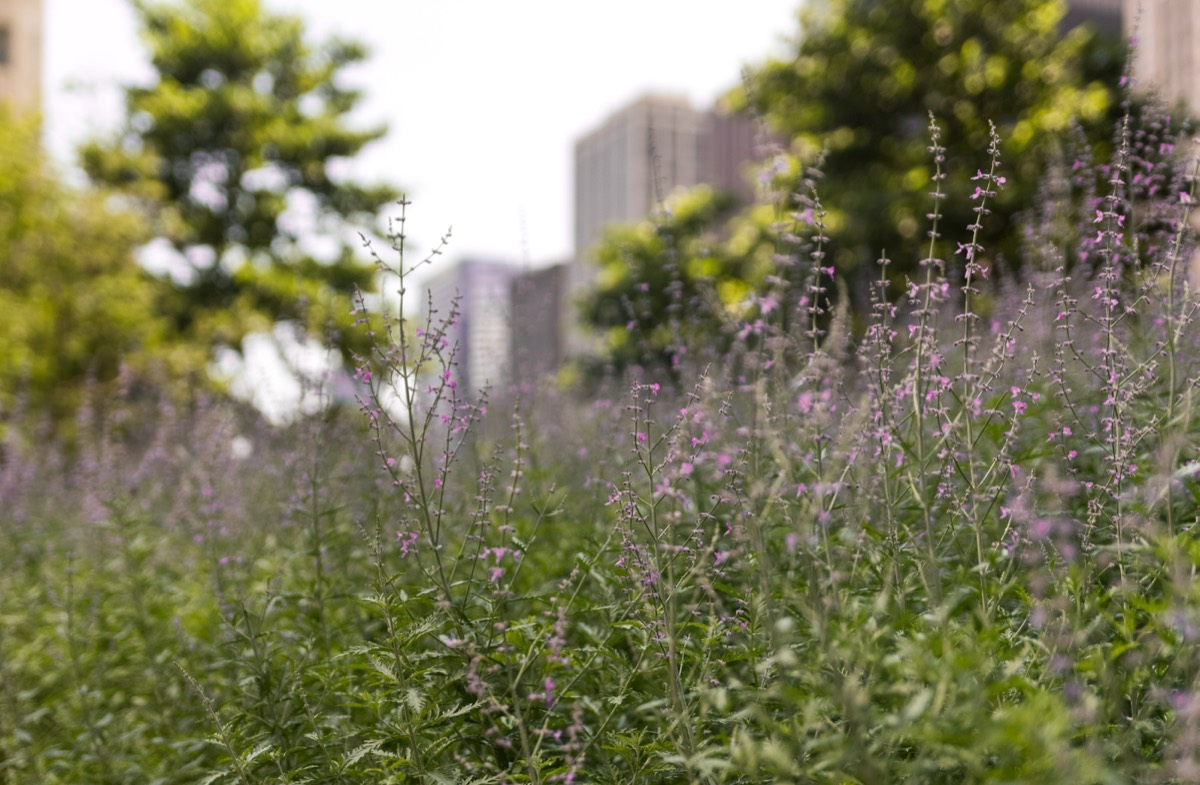
In Kelley v. Chicago Park District, 635 F.3d 290 (7th Cir. 2011), the Seventh Circuit confronted a work of art that was indisputably beautiful, arguably famous, and alive. Chapman Kelley, a nationally recognized painter of romantic floral landscapes, had planted Wildflower Works, two enormous elliptical beds of native wildflowers, in Chicago’s Grant Park in 1984. Twenty years later the Park District cut the installation roughly in half and reshaped it, and Kelley sued under the Visual Artists Rights Act of 1990 (VARA), 17 U.S.C. § 106A. Writing for the panel on February 15, 2011, Judge Diane Sykes held that the garden could not support moral rights because it could not support copyright at all: a living garden is neither “authored” nor “fixed” in the senses the Copyright Act requires.
The decision is the leading modern authority on copyright’s two least-litigated thresholds. Originality dominates the casebooks, but Kelley is the case that shows authorship and fixation doing independent work, denying protection to a work the court conceded was original, attributable to a single artist’s vision, and celebrated as art.
At a glance
- Case: Kelley v. Chicago Park District, 635 F.3d 290 (7th Cir. 2011)
- Decided: February 15, 2011; opinion by Judge Diane Sykes, joined by Judges Manion and Tinder; affirming judgment for the Park District on the VARA claim and reversing Kelley’s contract judgment (cert. denied, 132 S. Ct. 380 (2011))
- Holding: A living wildflower garden is neither authored nor fixed as basic copyright requires, so it is not a “work of visual art” eligible for VARA’s moral-rights protections.
- Significance: The controlling illustration that originality is not the only floor of copyrightability; authorship and fixation are separate statutory requirements that living, self-changing works cannot meet.
Wildflower Works and the 2004 reconfiguration
Kelley installed Wildflower Works with the Park District’s permission at the north end of Grant Park: two elliptical flower beds, each nearly the size of a football field, planted with native wildflowers and edged in gravel and steel. The ellipse was Kelley’s signature; his gallery paintings set floral and woodland scenes within the same form. He promoted the installation as “living art,” and for years volunteers helped him maintain it.
By 2004, with Millennium Park rising next door and the garden’s condition deteriorating, the Park District dramatically modified the work. It shrank the installation from roughly 66,000 square feet to under 30,000, converted the ellipses into rectangles, removed weeds, and replanted. Kelley sued, claiming the reconfiguration violated his VARA right of integrity, which lets the author of a “work of visual art” prevent intentional distortion, mutilation, or modification prejudicial to the author’s honor or reputation. He also alleged that a Park District commissioner’s assurances had created an implied contract not to alter the garden without notice.
After a bench trial, the Northern District of Illinois split the difference. It held that Wildflower Works was both a painting and a sculpture, and so within VARA’s subject matter, but that it lacked sufficient originality for copyright; alternatively, as site-specific art it fell outside VARA entirely under the First Circuit’s Phillips v. Pembroke Real Estate, Inc., 459 F.3d 128 (1st Cir. 2006). On the contract claim, the court found a breach but awarded one dollar in nominal damages. Both sides appealed.
VARA rides on copyright, and copyright has more than one floor
The Seventh Circuit’s starting point was structural. VARA does not create a freestanding regime; it grafts moral rights onto the Copyright Act, and a “work of visual art” must first be a work eligible for copyright. That framing routed the case through 17 U.S.C. § 102(a), which extends protection to “original works of authorship fixed in any tangible medium of expression.” The provision packs three requirements: originality, authorship, and fixation.
On originality, the panel rebuked the district court. The trial judge had denied protection because gardens and the elliptical form were not new, but under Feist Publications, Inc. v. Rural Telephone Service Co., 499 U.S. 340 (1991), originality means independent creation plus a minimal spark of creativity, not novelty. Wildflower Works, the court said, plainly possessed more than a little creative spark. If originality were the only question, Kelley likely would have prevailed.
The real barriers were the other two floors. On authorship, the court reasoned that copyright’s concept of an author presupposes human creative control over the work’s form, and that a garden’s form is supplied in decisive part by nature. “Simply put, gardens are planted and cultivated, not authored,” Judge Sykes wrote. The colors, shapes, and textures a visitor experiences originate in living material that grows, blooms, dies, and reseeds on its own schedule. Kelley selected and arranged; the garden did much of the rest.
On fixation, the court held that a garden is simply too changeable to serve fixation’s purpose of defining a stable, perceivable work. Section 101 requires embodiment in a copy “sufficiently permanent or stable” to be perceived “for a period of more than transitory duration.” The plants were tangible, but the work they constituted was in constant flux. The barrier, the court explained, was not merely temporal but essential: the work’s own nature prevented it from ever being fixed. The panel then worked through the analogies pressed on it and found each one inapt, for different reasons. Jaume Plensa’s Crown Fountain, which Kelley invoked, fails as a comparison because the Copyright Act expressly treats transmitted sounds and images as fixed when a fixation is made simultaneously with the transmission. A Calder mobile moves with the air currents, but the mobile itself is fixed and stable. Jeff Koons’s Puppy is thousands of blooming flowers on a huge metal frame, which the court said may be sufficient fixation, while venturing no opinion on the question. Wildflower Works, the panel concluded, is quintessentially a garden; Puppy is not. And it sounded a note of caution about conceptual art generally: the law must have some limits, and not all conceptual art may be copyrighted.
Because Wildflower Works failed at the copyrightability threshold, the court never had to decide the site-specific question. But it pointedly criticized Phillips’s categorical rule that VARA can never apply to site-specific art, calling that conclusion open to question. The dicta preserved a circuit disagreement that remains unresolved.
The contract claim falls on authority, not damages
Kelley’s cross-issue, and the Park District’s cross-appeal, concerned the implied contract the district court found in a commissioner’s assurance that the garden would not be disturbed. The Seventh Circuit reversed on a threshold ground of municipal law: under the Chicago Park District Act and the Illinois Park District Code, only the Board of Commissioners acting as a body can bind the District. An individual commissioner’s offhand assurance was ultra vires and created no contract, so the court never reached Kelley’s argument that his damages should have been measured in the millions rather than at one dollar. Judgment was directed for the Park District across the board.
Open questions
- Where is the line between a garden and a fixed work with organic elements? The opinion condemns gardens as a class but distinguishes works like Puppy that use plants within a defined frame, while expressly declining to say whether Puppy itself is fixed. How much natural variability a copyrightable work can tolerate remains unsettled.
- Is site-specific art categorically outside VARA? The First Circuit says yes in Phillips; the Seventh Circuit’s dicta doubts it. No later decision has squarely resolved the split, so the answer still depends on the forum as of July 2026.
- How far does the human-authorship reasoning reach? Kelley’s insistence that authorship is a human endeavor, later echoed in disputes over machine- and animal-created works, leaves open how much human direction over a partly autonomous process suffices to make the human an author.
- What protects environmental artists? The opinion suggests plans, drawings, and photographs remain protectable, but the built work itself may not be, leaving the integrity of installed ecological art to contract.
Implications for creators and businesses
- Artists working in living media should protect the work by contract. Because copyright and VARA may not attach to the installation itself, site agreements should spell out maintenance obligations, notice before modification, removal rights, and remedies, and must be signed by someone with actual authority to bind the institution.
- Verify signing authority when dealing with public bodies. Kelley’s contract judgment evaporated because a single commissioner could not bind the Park District. Agreements with municipal entities need board-level approval or they may be ultra vires and void.
- Register the fixed embodiments. Plans, planting diagrams, photographs, and models of an unfixable work are themselves copyrightable and give the artist enforceable rights over reproductions even if the installation is unprotected.
- Institutions commissioning installation art should still tread carefully. Kelley is a copyrightability holding, not a license to destroy. Stable sculptural works on the same site remain covered by VARA, and the site-specific question is unresolved outside the First Circuit.
Frequently asked questions
Did the Seventh Circuit hold that Wildflower Works lacked originality? No, and the court went out of its way to correct the district court on this point. The district court had confused originality with novelty. Under Feist, the originality bar is minimal, and the panel said the garden plainly possessed more than a little creative spark. The claim failed on the distinct statutory floors of authorship and fixation, not on originality.
Does Kelley mean no living or natural artwork can ever be protected? The opinion reasons that gardens as such are unprotectable because their form owes too much to natural forces and is inherently changeable. But the artist’s plans, drawings, and photographs of the work remain fully copyrightable, and stable works that incorporate organic elements in a fixed arrangement present a different and closer question the court did not decide.
What happened to Kelley’s breach of contract claim? He won it at trial, with one dollar in nominal damages, but the Seventh Circuit reversed. Under Illinois law only the Park District’s Board of Commissioners could bind the District, so an individual commissioner’s assurance could not create an implied contract. The court ordered judgment for the Park District on every claim.
Authorities and sources
- Kelley v. Chicago Park District, 635 F.3d 290 (7th Cir. 2011) (slip opinion PDF)
- Kelley v. Chicago Park District, opinion via CourtListener
- 17 U.S.C. § 102 (subject matter of copyright), Cornell LII
- 17 U.S.C. § 106A (Visual Artists Rights Act), Cornell LII
- Harvard Journal of Law & Technology Digest: Kelley v. Chicago Park District
- 17 U.S.C. § 101 (definitions of “fixed” and “work of visual art”), Cornell LII
- Tulane Journal of Technology & IP, “Copyright Protection of a Garden: Kelley v. Chicago Park District”
- Quimbee case brief: Kelley v. Chicago Park District