
Meshwerks v. Toyota: When a Digital Copy Is Too Faithful for Copyright
The Tenth Circuit held Meshwerks' digital wireframe models of Toyota vehicles were unoriginal copies, not copyrightable works, applying Feist to 3D modeling.
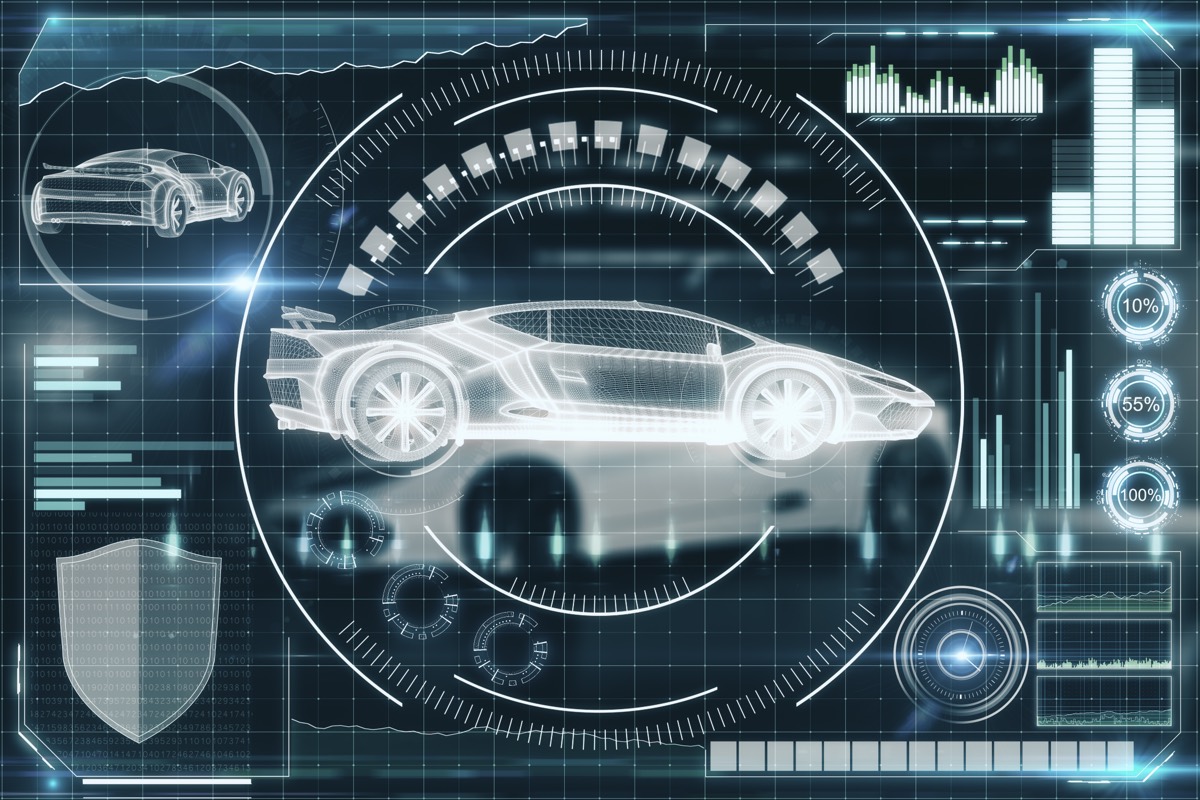
In Meshwerks, Inc. v. Toyota Motor Sales U.S.A., Inc., 528 F.3d 1258 (10th Cir. 2008), the Tenth Circuit confronted a question that digitization had made unavoidable: when a skilled technician builds a precise digital model of a real-world object, has anyone authored anything? Writing for the panel on June 17, 2008, then-Judge Neil Gorsuch answered no, at least where the modeler’s whole aim was fidelity. Meshwerks’ unadorned wireframe models of Toyota vehicles “owe their designs and origins to Toyota,” the court held, and deliberately added nothing original of the modeler’s own. They were copies, not works, and copies fall outside copyright no matter how much labor they absorb.
The decision has become the leading appellate authority on originality in digital reproductions. Every dispute over 3D scans of sculptures, digitized archives, photogrammetry assets, and faithful game-engine replicas of real products now runs through Meshwerks, which translated the Supreme Court’s Feist originality standard into the language of the digital studio.
At a glance
- Case: Meshwerks, Inc. v. Toyota Motor Sales U.S.A., Inc., 528 F.3d 1258 (10th Cir. 2008)
- Decided: June 17, 2008; opinion by Judge Gorsuch, joined by Judges Briscoe and Holmes; affirming summary judgment for Toyota and its co-defendants (cert. denied, 129 S. Ct. 1006 (2009))
- Holding: Digital wireframe models that faithfully depict Toyota’s vehicles, without any original expression contributed by the modeler, are unoriginal copies and therefore not copyrightable.
- Significance: The controlling application of Feist to 3D digital modeling and the foundation of modern doctrine on slavish digital copies, from museum scans to advertising assets.
A subcontractor’s models and a single-use license
The dispute grew out of Toyota’s model-year 2004 advertising campaign. Toyota and its agency, Saatchi & Saatchi, decided to replace conventional product photography with digital models of the vehicle line, which could be reused and manipulated across web and broadcast media. They engaged Grace & Wild, Inc., a digital production house, and Grace & Wild in turn subcontracted two tasks to Meshwerks: digitizing the vehicles and building the initial models.
Meshwerks’ process was painstaking. Technicians covered each vehicle with a grid of tape, measured thousands of data points with an articulated arm, and then spent, on the court’s account, eighty to one hundred hours per vehicle fine-tuning the resulting lines in modeling software. The deliverables were bare wireframes: no color, no texture, no lighting, no background. Grace & Wild’s artists added all of that downstream to produce the finished advertising images.
Meshwerks contended it had licensed the models for a single use, one Toyota television commercial, and that the defendants’ reuse of the models in other advertisements infringed its copyrights. The District of Utah granted summary judgment to the defendants on the threshold ground that the models were not copyrightable at all, and the Tenth Circuit affirmed.
Feist in the modeling studio
The panel’s starting point was Feist Publications, Inc. v. Rural Telephone Service Co., 499 U.S. 340 (1991), which reoriented copyright around originality rather than effort. Originality, the “sine qua non of copyright,” requires that a work be independently created by the author rather than copied, and that it display at least a minimal degree of creativity. Feist buried the sweat-of-the-brow theory under which industrious collection alone earned protection, and Meshwerks applied that burial to digital craftsmanship: as the court put it, “the fact that intensive, skillful, and even creative labor is invested in the process of creating a product does not guarantee its copyrightability.”
Measured against that standard, the wireframes failed. Toyota designed the vehicles; Meshwerks measured them. Everything expressive in the models, the sweep of a fender, the rake of a windshield, originated with Toyota’s designers, and everything Meshwerks contributed was in service of eliminating deviation from the originals. The court found it significant that the models depicted nothing but the vehicles: no environment, no lighting scheme, no interpretive choices survived into the deliverable.
The photography analogy and the problem of copying reality
The most influential portion of the opinion is its use of photography doctrine to evaluate a new medium. Since Burrow-Giles Lithographic Co. v. Sarony, 111 U.S. 53 (1884), courts have protected photographs not because cameras capture reality but because photographers make original choices in posing subjects, selecting lighting and angle, and arranging the scene. Sarony’s staged portrait of Oscar Wilde was authored; the camera merely executed. The corollary, developed in cases like Bridgeman Art Library, Ltd. v. Corel Corp., 36 F. Supp. 2d 191 (S.D.N.Y. 1999), is that a reproduction whose only aim is exactitude, a slavish copy of a public-domain painting, adds no authorship and earns no copyright.
Judge Gorsuch placed Meshwerks’ models on the Bridgeman side of that line. The wireframes were the digital analogue of a mere mechanical reproduction of the vehicles’ physical features. The opinion also gave doctrinal weight to the modeler’s objective intent: Meshwerks “set out to copy Toyota’s vehicles, rather than to create, or even to add, any original expression.” Intent was not the whole test, but where the record showed a purpose of exact replication and a product that achieved it, purpose and result together confirmed the absence of originality.
Importantly, the court disclaimed any rule against the medium. Digital modeling, it emphasized, can be the vehicle for fully protectable works. A modeler who invents a lighting scheme, imagines a scene, stylizes proportions, or adds coloration and texture of the modeler’s own devising contributes exactly the kind of expression photography cases have always protected. The defect was not that Meshwerks worked in polygons; it was that Meshwerks, by design, contributed nothing that Toyota had not already authored.
Contract, not copyright, protects the faithful copyist
Meshwerks’ commercial grievance was really about reuse: it believed it had sold one use and watched its work recycled across a campaign. It did plead a state-law contract claim, but that claim was never decided. Once summary judgment went against Meshwerks on the federal copyright claim, the district court declined to exercise supplemental jurisdiction over the contract claim, and the Tenth Circuit noted in a footnote that it had “not been asked to address Meshwerks’ contract claim,” adding that supplemental jurisdiction would have to be reconsidered if the copyright holding were reversed. The opinion says nothing about license drafting as a substitute for copyright.
That silence is itself the practical lesson, though it is an inference from the case rather than anything the court held. A firm in the business of producing accurate digital reproductions cannot conjure a copyright out of unoriginal subject matter to fill the gaps in its paperwork. If reuse is to be metered, priced by media, or subject to deletion obligations, those terms have to be bargained for on the front end. The statute’s originality floor, codified in 17 U.S.C. § 102(a)‘s requirement of “original works of authorship,” is not adjusted for parties who bargained badly.
Open questions
- How much added expression is enough? Meshwerks marks the zero point, a deliverable with nothing original, but does not quantify the minimum. Whether modest texturing decisions, mesh-topology choices, or reconstruction judgments where scan data is incomplete cross Feist’s low creativity threshold remains contested case by case.
- What about scans that require interpretive reconstruction? Photogrammetry and 3D scanning of damaged, occluded, or irregular objects force the technician to make judgment calls. Courts have not resolved when such judgment becomes authorship rather than skilled restoration in the Bridgeman sense.
- How does the intent inquiry generalize? The opinion treated Meshwerks’ replicative purpose as probative of unoriginality. Whether a creator’s declared intent should count in closer cases, where the output arguably contains original touches despite a copyist’s purpose, is an open doctrinal seam.
- Application to AI-era asset pipelines. Meshwerks is regularly invoked in commentary on machine-generated and scan-derived assets, but as of July 2026 its extension to those pipelines rests on analogy in scholarship and Copyright Office practice rather than on a controlling appellate holding.
Implications for creators and businesses
- Fidelity work needs contract protection, not copyright registration. Studios that digitize existing products, artworks, or environments should assume their most faithful deliverables are unprotectable and should control reuse, additional media, and retention through express license terms and pricing.
- Document the original contributions you do make. Where a modeling team adds invented lighting, stylization, composed scenes, or design elements not present in the source object, contemporaneous records of those choices are the evidence that separates a protectable work from a Meshwerks copy.
- Commissioning parties gain leverage from the decision. Brands and agencies that hire digitization vendors can resist copyright-based holdup over faithful models of the client’s own products, though they should still secure written assignments or work-made-for-hire terms to avoid disputes over any original additions.
- The originality floor is low but real. Feist demands only minimal creativity, and most commissioned digital art clears it easily. The cases that fail are those, like Meshwerks, where exact replication of someone else’s design is the entire brief.
Frequently asked questions
Are digital 3D models ever copyrightable after Meshwerks? Yes. The Tenth Circuit was careful to say that digital modeling as a medium is fully capable of supporting copyright. Protection failed here because Meshwerks set out to replicate Toyota’s vehicles exactly and added nothing of its own. A modeler who contributes original choices, such as invented lighting, coloring, texture, stylization, or a scene of the modeler’s own design, creates protectable expression.
Why did the court analogize digital models to photographs? Because photography is the settled body of law on copying reality. Since Burrow-Giles v. Sarony, photographs are protected for the photographer’s original choices of pose, lighting, angle, and arrangement, not for mechanically capturing a subject. The court reasoned that a wireframe model that faithfully reproduces an existing car is like a mere mechanical reproduction, closer to the slavish copies denied protection in Bridgeman Art Library v. Corel than to Sarony’s staged portrait of Oscar Wilde.
Did Meshwerks lose everything, including its contract claim? The copyright claim failed because the models were not original works of authorship. The contract claim was never reached: after summary judgment on the federal claim, the district court declined to exercise supplemental jurisdiction over it, and the Tenth Circuit stated in a footnote that it had not been asked to address it. So the case decided nothing about whether Meshwerks’ single-use bargain was breached. Reading the outcome as a lesson that reuse must be controlled by contract is a fair inference from the case, but it is not something the court held.
Authorities and sources
- Meshwerks, Inc. v. Toyota Motor Sales U.S.A., Inc., 528 F.3d 1258 (10th Cir. 2008) (opinion text, Wikisource)
- Meshwerks v. Toyota, official Tenth Circuit slip opinion (No. 06-4222, filed June 17, 2008), govinfo PDF
- 17 U.S.C. § 102 (subject matter of copyright), Cornell LII
- Feist Publications, Inc. v. Rural Telephone Service Co., 499 U.S. 340 (1991), Cornell LII
- Quimbee case brief: Meshwerks, Inc. v. Toyota Motor Sales U.S.A., Inc.
- Casey, “Fender Bender: 3D Computer Modeling of Commercial Objects and the Meshwerks v. Toyota Decision,” 8 J. Marshall Rev. Intell. Prop. L. 429 (2009)
- William Patry, “A Model Opinion Affirmed” (The Patry Copyright Blog, June 2008)